Breakfast · Part 2 of 3: Instructions
Stuffed Nutella Strawberry French Toast Step-by-step instructions
- Prep
- Cook
- Total
- Serves
- 2
Before you start
Before starting, gather all ingredients and equipment. If using a piping bag, have it ready. Hull and slice the strawberries, and measure out the Nutella and mascarpone. Cut the brioche into thick slices if not already thick.
Set up a shallow dish for the custard and a plate for the cinnamon sugar. Have a large skillet and a spatula nearby. It's also helpful to have a clean surface for rolling the finished toast in cinnamon sugar. The prep is quick, so keep everything within reach.
Ingredients at a glance (10)
- 2 slices thick-cut brioche (about 2 inches thick)
- 70 g Nutella or chocolate-hazelnut spread
- 50 g mascarpone cheese
- 80 g strawberries, hulled and sliced
- 2 large eggs
- 1/4 cup whole milk
- 1 tsp ground cinnamon
- 2 tbsp unsalted butter
- 2 tbsp cinnamon sugar
- Confectioners' sugar, for dusting, to taste
Instructions
Preparation and Stuffing
- Cut and stuff the briocheUsing a sharp knife, cut a deep pocket into the side of each thick brioche slice, leaving the other three sides intact. In a small bowl, stir together the Nutella and mascarpone until smooth. Transfer the mixture to a piping bag or a zip-top bag with a corner snipped off. Pipe the filling into each pocket, then tuck the sliced strawberries into the opening, distributing them evenly.Look for The bread should feel full but not bursting; the filling should stay inside when gently pressed.Tip If the brioche is very soft, chill it for 5 minutes before cutting to make the pocket easier.
- Make the cinnamon custardIn a shallow dish, whisk together the eggs, milk, and ground cinnamon until well combined and slightly frothy. The mixture should be a uniform golden color with the cinnamon fully incorporated.Look for The custard should be smooth, with no streaks of egg white.Tip Whisk thoroughly to ensure the cinnamon is evenly distributed; otherwise, some bites will be spicier than others.
At this stage, the brioche slices are cut and filled. The filling should be evenly distributed, and the strawberries should be tucked inside. The custard is mixed and ready. The kitchen smells of cinnamon and sweet chocolate. The bread is still firm and dry, but the pockets are sealed. Check that the filling doesn't spill out when the bread is pressed gently. The custard should be smooth and seasoned, with the cinnamon fully incorporated. The stage is set for the frying process.
Cooking and Coating
- Dip and coat the stuffed briocheCarefully dip each stuffed brioche slice into the custard, holding it for about 10 seconds per side, allowing the bread to soak up the liquid without becoming soggy. Let any excess drip off before placing the slices on a plate.Look for The bread should be moist but still hold its shape; the custard should not pool around the edges.Tip Do not soak too long—thick brioche absorbs quickly. If the bread tears, the filling may leak out during frying.
- Fry in foaming butterHeat a large skillet over medium heat and add the butter. Let it melt and foam, but not brown. Place the soaked brioche slices in the skillet and cook for 3.5 minutes per side, until the underside is golden brown and the filling is warm and beginning to melt. Flip carefully and cook the other side until golden and the center is set.Look for The exterior should be deep golden brown and crisp; the filling should be visibly oozing from the edges.Safe temperature 160°F (71°C) internal temperature (egg dishes)Tip If the skillet gets too hot, the butter will burn. Adjust the heat to keep a gentle sizzle.
- Roll in cinnamon sugarWhile the French toast is still hot, roll the edges in a plate of cinnamon sugar, pressing lightly so the sugar adheres. The sugar will melt slightly on contact, creating a sweet, crunchy crust.Look for The sugar should stick evenly and begin to caramelize on the warm surface.Tip Work quickly while the toast is hot for maximum adhesion.
The French toast is now frying in butter. The kitchen fills with the aroma of toasted brioche and warm chocolate. The exterior turns golden brown and crisp, while the filling begins to melt. The butter foams and sizzles as the toast cooks.
After flipping, the second side browns evenly. The toast is then rolled in cinnamon sugar, which clings to the warm surface and starts to caramelize. The texture is crunchy on the outside, and the filling is visibly oozing from the edges. The toast is ready to be plated.
Finishing and Serving
- Dust and servePlace the stuffed French toast on serving plates and dust generously with confectioners' sugar. Serve immediately while the chocolate is still molten and the strawberries are warm.Look for The sugar should fall like snow over the golden crust.Tip Cut into the toast at the table to show off the oozing filling.
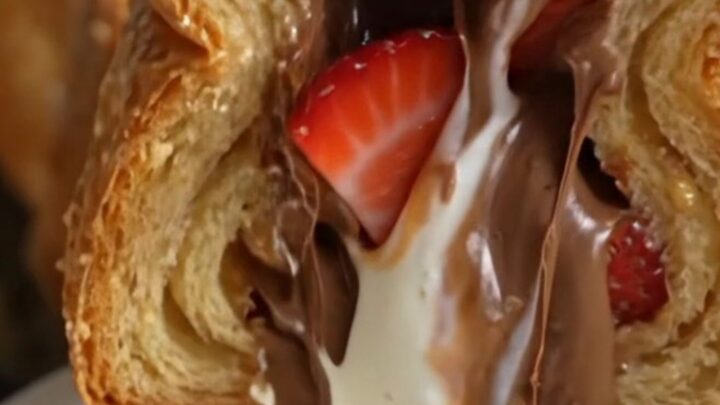
The finished French toast is dusted with confectioners' sugar and served immediately. The sugar creates a snowy contrast against the golden crust. When cut, the filling flows out in a molten ribbon, with strawberries nestled in the chocolate. The aroma is irresistible—sweet, buttery, and fruity. The toast is warm and crisp, with a soft, custardy interior. This is the moment to enjoy the visual and sensory payoff of the recipe. Serve hot, and savor every bite.
Common mistakes
One common mistake is using bread that is too thin or too soft, which can tear when you cut the pocket or fall apart during soaking. Another is over-soaking the bread in the custard, making it soggy and difficult to flip. The custard should be absorbed, but the bread should still hold its shape.
Overcooking can dry out the toast, so watch the heat and adjust as needed. Also, be careful not to overfill the pocket, as the filling can leak out during frying. Finally, use a spatula to flip gently, as the toast is delicate.
How to tell it’s done
The French toast is done when both sides are deep golden brown and the center is set, meaning the custard has cooked through and the filling is hot and melted. The internal temperature of the egg custard should reach 160°F (71°C) to ensure the eggs are fully cooked.
To test, insert an instant-read thermometer into the center of the toast, avoiding the filling if possible. The exterior should be crisp and caramelized, and the filling should be oozing slightly from the edges. The toast should feel firm but spring back when pressed.
- Egg dishes: 160°F (71°C) in the thickest part
Up next · Part 3 of 3
4 variations · storage & make-ahead · 5 answers · printable card
Tips, FAQ & printable recipe (Part 3)← Back to the ingredients (Part 1)