Dinner · Part 2 of 3: Instructions
Sticky Pineapple Teriyaki Chicken Thighs Step-by-step instructions
- Prep
- Cook
- Total
- Serves
- 4
Before you start
Before beginning, ensure all ingredients are measured and ready to use. Pat the chicken thighs dry with paper towels to remove excess surface moisture, which helps achieve a better sear. Have your tongs and a clean serving platter ready near the stove.
If using canned pineapple, drain the juice thoroughly. Clear your workspace to allow for easy movement between the stove and the prep area, and ensure you have a meat thermometer available to verify the final cooking temperature of the poultry.
Ingredients at a glance (3)
- 4 lbs chicken thighs, boneless and skinless
- 1 cup teriyaki sauce, store-bought or made ahead
- 1 cup pineapple chunks, fresh or canned
Instructions
Searing the chicken
- Sear the chickenPlace the chicken thighs in a large skillet over medium-high heat. Sear them until they are golden brown on both sides. Ensure the pan is not overcrowded to allow for proper browning.Look for The chicken should have a deep golden crust on the exterior.Tip Pat the chicken dry with paper towels before searing to ensure a better crust.
The chicken should be seared until it reaches a deep golden brown color on all sides. This phase is about building flavor through the Maillard reaction. Ensure the skillet is hot before adding the chicken, and do not move the pieces too frequently, allowing them to develop a crisp, flavorful crust that will hold up well when the sauce is added later.
Glazing the chicken
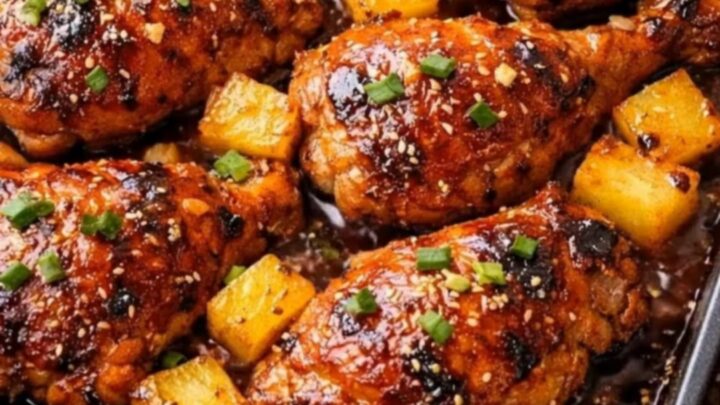
- Glaze the chickenPour the teriyaki sauce and add the pineapple chunks to the skillet with the seared chicken. Reduce the heat to medium and let the mixture simmer gently. Use tongs to coat each chicken thigh thoroughly in the bubbling, sticky sauce.Look for The sauce will thicken and become glossy, coating the chicken completely.Tip Baste the chicken occasionally with the sauce to build up a deeper flavor.
The sauce should begin to bubble and coat the chicken pieces evenly. During this phase, the pineapple chunks start to soften and release their juices, mingling with the teriyaki sauce.
The mixture should smell fragrant and sweet. Check that the chicken is coated on all sides and that the sauce is starting to look glossy and thick as the sugars begin to concentrate.
Final cook and rest
- Finish cookingContinue to cook the chicken in the sauce until the internal temperature reaches 165°F (74°C). Once reached, remove the chicken from the heat and let it rest for at least 5 minutes before serving to ensure the juices redistribute throughout the meat.Look for The chicken should be opaque throughout and the sauce should be thick and syrupy.Safe temperature 165°F (74°C) internal temperature (poultry)Tip Check the temperature with a meat thermometer inserted into the thickest part of the thigh.
The chicken is finished when it reaches 165°F (74°C) and the glaze is thick and syrupy. The meat should be tender and easily pierced with a fork. Let the chicken rest on a warm plate for at least 5 minutes; this allows the juices to stabilize, ensuring the final bite is succulent and flavorful rather than dry, while the sauce continues to thicken slightly.
Common mistakes
A common mistake is overcrowding the skillet, which causes the chicken to steam instead of sear, resulting in a pale exterior rather than a golden brown one. Cooking the chicken over heat that is too high can cause the sugars in the teriyaki sauce to burn before the meat is cooked through.
Always monitor the heat levels closely and adjust as necessary to keep the sauce at a gentle simmer, ensuring the flavors develop without scorching the pan or the chicken.
How to tell it’s done
The chicken is done when it is cooked through and reaches an internal temperature of 165°F (74°C). The meat should be tender, juicy, and opaque throughout. The sauce should have reduced into a thick, sticky glaze that clings to the chicken pieces.
If the sauce is still too runny, remove the chicken to a plate and continue simmering the liquid in the pan for a few more minutes until it reaches a syrupy consistency before pouring it back over the cooked meat.
- Poultry: 165°F (74°C) in the thickest part
Up next · Part 3 of 3
2 variations · storage & make-ahead · 3 answers · printable card
Tips, FAQ & printable recipe (Part 3)← Back to the ingredients (Part 1)