Dinner · Part 2 of 3: Instructions
Sticky Pineapple Glazed Chicken for a Quick Dinner Step-by-step instructions
- Prep
- Cook
- Total
- Serves
- 4
Before you start
Before starting, ensure all ingredients are measured and ready to go, as the cooking process moves quickly once the heat is turned on. Pat the chicken thighs dry with paper towels to ensure a better sear. If using canned pineapple, drain the chunks thoroughly to avoid diluting the glaze.
Have your tongs and a meat thermometer nearby to monitor the cooking progress, which helps in achieving the perfect texture and ensuring the chicken is safely cooked through. Preparing your workspace in advance allows you to focus entirely on the technique of searing and glazing, ensuring that the chicken remains tender and the sauce achieves the perfect consistency.
Ingredients at a glance (3)
- 4 lbs chicken thighs, boneless and skinless
- 2 cups pineapple chunks
- 1/2 cup soy sauce
Instructions
Searing the Chicken Thighs
- Sear the ChickenPlace the chicken thighs in a large skillet over medium-high heat. Sear the chicken until golden brown on both sides, which creates a flavorful crust before adding the sauce. Ensure the chicken is not crowded in the pan to allow for proper browning.Look for The chicken should have a deep golden-brown sear on both sides.Tip Avoid moving the chicken too early to ensure a better crust forms on the surface.
The chicken should be golden-brown on the exterior and smell fragrant as the fats render. The skillet will have some browned bits on the bottom, which will contribute to the depth of the final sauce. Ensure the pieces are evenly spaced to promote uniform browning across all sides of the meat.
Creating the Glaze
- Simmer with Pineapple GlazePour the soy sauce into the skillet with the chicken. Add the pineapple chunks. Reduce the heat to medium-low and simmer the mixture, allowing the sauce to thicken and coat the chicken thighs completely in a sticky, glossy glaze. Baste the chicken occasionally with the sauce as it thickens to maximize flavor absorption.Look for The sauce will reduce and thicken into a syrupy consistency that coats the back of a spoon.Tip Keep the heat low to prevent the natural sugars in the pineapple from burning.
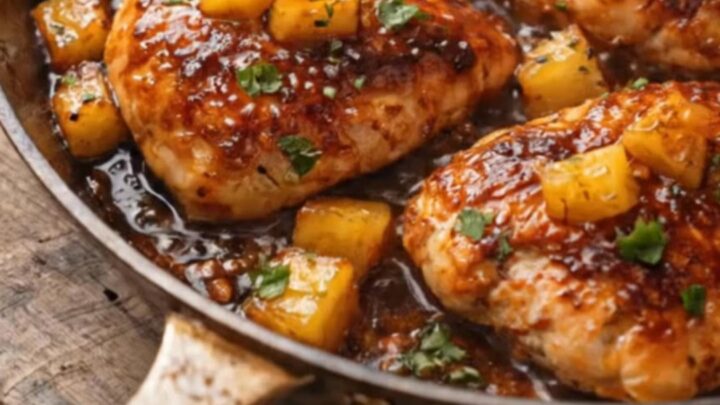
The sauce should begin to bubble and thicken, turning into a dark, syrupy liquid that coats the back of a spoon. The pineapple chunks will become slightly translucent as they absorb the soy mixture. Check the consistency to ensure it is thick enough to cling to the chicken.
Final Reduction and Resting
- Finish CookingContinue cooking until the chicken reaches an internal temperature of 165°F (74°C). Remove the skillet from the heat and let the chicken rest for at least 5 minutes before serving, which ensures the juices redistribute throughout the meat for maximum tenderness.Look for The chicken is tender when pierced with a fork and the internal temperature reaches 165°F (74°C).Safe temperature 165°F (74°C) internal temperature (poultry)Tip Use a digital meat thermometer inserted into the thickest part of the thigh to verify doneness.
The chicken will be fully cooked and coated in a shiny, dark glaze that looks appetizing. The sauce should be reduced enough that it does not pool excessively at the bottom of the skillet. The aroma should be a balance of savory soy and sweet tropical pineapple.
Common mistakes
A common mistake is overcrowding the skillet, which causes the chicken to steam instead of sear, resulting in a pale, less flavorful crust. Another error is using too high a heat during the simmering phase, which can cause the sugars in the pineapple to burn rather than thicken.
Always maintain a gentle simmer to ensure the pineapple softens properly and the sauce reduces into a rich, sticky consistency without developing a bitter, burnt aftertaste. Patience during the searing phase is also critical; moving the chicken too soon will prevent the crust from forming, leading to a less satisfying texture in the final dish.
How to tell it’s done
The chicken is done when it is opaque throughout and reaches an internal temperature of 165°F (74°C). The glaze should be thick, glossy, and clinging to the meat. When tested with a fork, the meat should be tender and pull apart easily without resistance.
Ensure the chicken rests for 5 minutes after removing it from the heat to allow the internal juices to stabilize, which makes the meat significantly more succulent and easier to slice or serve.
Checking the internal temperature is the most reliable way to ensure the chicken is cooked safely while maintaining its juicy, tender texture for the best possible eating experience.
- Poultry: 165°F (74°C) in the thickest part
Up next · Part 3 of 3
2 variations · storage & make-ahead · 3 answers · printable card
Tips, FAQ & printable recipe (Part 3)← Back to the ingredients (Part 1)