Dinner · Part 2 of 3: Instructions
Sticky Pineapple Glazed Chicken in One Skillet Step-by-step instructions
- Prep
- Cook
- Total
- Serves
- 4
Before you start
Before turning on the stovetop, organize and prepare all your ingredients to ensure a smooth cooking process. Pat the chicken thighs completely dry with paper towels and cut them into uniform, bite-sized pieces.
Measure out the pineapple chunks and the sweet and savory glaze. Having everything measured and ready at your workstation prevents the skillet from overheating and ensures the glaze coats the chicken perfectly without burning.
Ingredients at a glance (4)
- 1 1/2 lbs boneless skinless chicken thighs, cut into bite-sized pieces
- 1 cup pineapple chunks
- 1/2 cup sweet and savory glaze (store-bought or made ahead)
- 2 tbsp chopped fresh herbs, for garnish
Instructions
Searing the Chicken Thighs
- Sear the Chicken ThighsHeat a large heavy-bottomed skillet over medium-high heat. Add the chicken thighs in a single layer, ensuring they are not crowded. Sear the chicken undisturbed for 4 to 5 minutes to develop a golden-brown crust, then turn and cook the other side for another 3 minutes until beautifully browned.Look for The chicken should have a rich, golden-brown crust on both sides.Tip Avoid moving the chicken too much during the first few minutes to get a deep sear.
At the end of this phase, the chicken thighs should be beautifully browned on all sides with a deeply caramelized exterior. You will hear a loud, active sizzling sound as the meat cooks in the hot skillet, and the kitchen will fill with a rich, savory aroma.
The chicken does not need to be fully cooked through at this stage, but it must have a solid sear to lock in the juices and build a foundation of flavor for the glaze.
Simmering the Glaze and Pineapple
- Pour the GlazePour the sweet and savory glaze directly into the hot skillet with the seared chicken. Stir the glaze constantly to coat the chicken thighs and scrape up any browned bits from the bottom of the pan, allowing the liquid to begin to simmer and bubble gently.Look for The liquid should begin to simmer and bubble gently around the chicken.Tip Stir continuously to ensure the glaze integrates smoothly with the pan juices.
- Toss the PineappleAdd the pineapple chunks to the skillet, tossing them gently with the chicken and the simmering glaze. Reduce the heat to medium-low to maintain a gentle simmer, allowing the pineapple to warm through and release its natural juices into the sauce.Look for The pineapple chunks should look glossy and be heated through.Tip If using canned pineapple, drain the chunks thoroughly before adding them.
By the end of this phase, the glaze will begin to bubble vigorously and transform from a thin liquid into a slightly thickened, amber-colored sauce. The pineapple chunks should be thoroughly warmed through and starting to release their sweet aroma, blending with the rich notes of the glaze. The bubbling sound will shift from a watery hiss to a deeper, slower popping sound as the sugars begin to caramelize.
Thickening and Basting
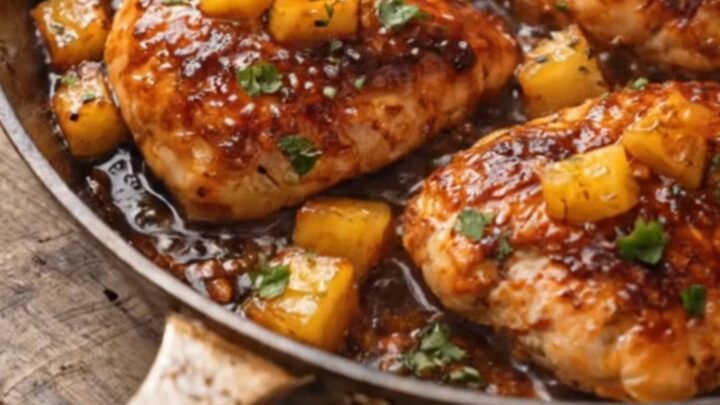
- Thicken and GarnishSimmer the mixture for 3 to 5 minutes, basting the chicken frequently with the sauce, until the glaze thickens into a sticky amber coating and the chicken reaches a safe internal temperature of 165°F (74°C). Remove the skillet from the heat and garnish with chopped fresh herbs before serving.Look for The glaze should be thick, sticky, and cling to the chicken thighs.Safe temperature 165°F (74°C) internal temperature (poultry)Tip Let the dish rest for 2 minutes before serving to let the glaze set completely.
At this final checkpoint, the glaze should be incredibly glossy, thick, and cling tightly to the chicken and pineapple chunks. When you draw a spoon through the sauce, it should leave a clear path on the bottom of the skillet. The chicken must be fully cooked, tender, and coated in a sticky, amber lacquer. A gentle steam will rise from the skillet, carrying a perfect balance of sweet pineapple and savory aromas.
Common mistakes
One of the most common mistakes is crowding the skillet when searing the chicken. If the pieces of chicken are packed too closely together, they will steam in their own released moisture rather than sear, resulting in a gray color and a rubbery texture instead of a crisp, golden crust.
Cook the chicken in batches if your skillet is not large enough. Another mistake is letting the glaze boil rapidly for too long, which can burn the sugars and turn the sauce bitter. Keep the heat at a steady simmer.
How to tell it’s done
To ensure the chicken is perfectly done and safe to consume, always use a digital meat thermometer inserted into the thickest piece of meat. The chicken thighs are fully cooked when they reach an internal temperature of 165°F (74°C).
Because dark meat contains more connective tissue, it remains tender and juicy even when cooked slightly past this temperature, making it highly forgiving. The glaze itself is done when it achieves a sticky, syrupy consistency that coats the back of a spoon without running off.
- Poultry: 165°F (74°C) in the thickest part
Up next · Part 3 of 3
2 variations · storage & make-ahead · 3 answers · printable card
Tips, FAQ & printable recipe (Part 3)← Back to the ingredients (Part 1)