Dinner · Part 2 of 3: Instructions
Sticky Oven-Baked Barbecue Ribs for Tender Results Step-by-step instructions
- Prep
- Cook
- Total
- Serves
- 4
Before you start
Before beginning, ensure that your ribs are completely thawed if they were previously frozen. Pat the meat dry with paper towels to help the sauce adhere better later on.
Prepare your workspace by laying out a large, rimmed baking sheet and enough heavy-duty aluminum foil to fully wrap the ribs. Having your barbecue sauce and a pastry brush ready nearby will make the final glazing step seamless and efficient once the ribs have finished their slow-roast.
Ingredients at a glance (2)
- 3 racks pork baby back ribs
- 2 cups barbecue sauce
Instructions
Preparation and seasoning
- Prepare the ribsPreheat the oven to 300°F (150°C). Place the pork ribs on a large baking sheet lined with aluminum foil for easy cleanup. If desired, remove the thin membrane from the underside of the ribs to ensure maximum tenderness during the slow roasting process.Look for The oven reaches the set temperature.Tip Removing the membrane allows the seasoning and sauce to penetrate the meat more effectively.
The ribs are clean, trimmed of excess fat, and securely wrapped in foil on the baking sheet. Ensure the seal is airtight to prevent moisture loss during the long cooking period.
Check that the oven is preheated to the correct temperature before placing the tray inside, as a stable environment is essential for the initial breakdown of the meat fibers.
Slow-roasting for tenderness
- Slow bake the ribsCover the ribs tightly with another sheet of foil to trap the moisture. Bake in the preheated oven for approximately 2.5 to 3 hours until the internal temperature reaches 145°F (63°C). Let the meat rest at least 3 minutes before proceeding to the final glaze.Look for The ribs are tender and pulling slightly away from the bone.Safe temperature 145°F (63°C) internal temperature (steaks, chops and roasts)Tip Do not skip the foil cover; it creates a steam environment that prevents the meat from drying out.
At the end of this phase, the meat should be soft and beginning to detach from the ends of the bones. The ribs will appear pale and very moist inside the foil. Carefully open the foil to check for tenderness; if the meat still feels firm to the touch, you may need to continue baking for another 20 minutes before proceeding to the glazing step.
Glazing and caramelization
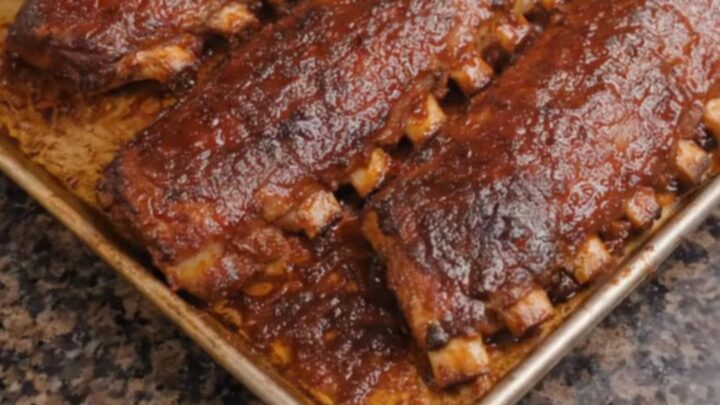
- Glaze and finishRemove the foil and brush the ribs generously with the barbecue sauce. Increase the oven temperature to 400°F (200°C) and bake for another 15 minutes, uncovered, until the sauce is bubbly, caramelized, and sticky. Let the ribs rest for 10 minutes before slicing to keep the juices inside.Look for The sauce is dark, glossy, and caramelized.Tip Watch closely during the final high-heat phase to ensure the sugars in the sauce do not burn.
The ribs are now coated in a thick, bubbly, and deeply colored layer of barbecue sauce. The edges should look slightly charred and crispy, while the meat remains soft and juicy. Verify that the sauce has reached a sticky, tacky consistency that clings to the meat. Once these visual cues are met, remove the ribs from the oven and let them rest.
Common mistakes
A common mistake is failing to seal the foil tightly enough, which allows precious steam to escape and leads to dry, tough meat. Another error is neglecting the resting period after the final bake; slicing the ribs too early causes the flavorful juices to run out, leaving the meat less succulent.
Finally, avoid using a sauce with too high a water content, as it will struggle to caramelize properly during the final high-heat phase.
How to tell it’s done
The ribs are finished when the meat is extremely tender and pulls away from the bones easily. Using a meat thermometer, ensure the internal temperature reaches at least 145°F (63°C) in the thickest part of the meat.
Visually, the sauce should look dark, glossy, and slightly charred at the edges, indicating that the sugars have properly caramelized. Always allow the meat to rest for at least 10 minutes to let the juices redistribute.
- Steaks, chops and roasts: 145°F (63°C) in the thickest part, then a 3-minute rest
Up next · Part 3 of 3
2 variations · storage & make-ahead · 3 answers · printable card
Tips, FAQ & printable recipe (Part 3)← Back to the ingredients (Part 1)