Dinner · Part 2 of 3: Instructions
Sticky Honey Glazed Baked Ham for Easy Entertaining Step-by-step instructions
- Prep
- Cook
- Total
- Serves
- 12
Before you start
Before beginning, ensure the ham is removed from its packaging and placed in the roasting pan. Check that your oven rack is positioned in the center. Have your basting brush and the honey measured out and ready to go.
Preheat the oven fully before inserting the ham, as a consistent temperature is vital for the success of this recipe. Clear enough space on your counter for the carving station, as the ham will be large and hot when it comes out of the oven.
Ingredients at a glance (2)
- 1 whole bone-in smoked ham (about 10 lbs)
- 1 cup honey
Instructions
Initial Baking
- Prepare the HamPreheat the oven to 325°F (163°C). Place the ham in a large roasting pan. Cover the pan tightly with aluminum foil to trap moisture inside and prevent the exterior from drying out during the initial long bake.Look for The oven reaches the set temperature.Tip Bring the ham to room temperature for 30 minutes before baking to ensure even heating.
The ham should be tightly covered and placed in the oven. The kitchen will begin to smell faintly of smoke as the ham warms through. At this stage, the goal is to gently bring the internal temperature of the meat up without sacrificing any moisture, ensuring the foundation for the final glaze is perfectly set.
Glazing Process
- Glaze and CaramelizeRemove the foil and brush generously with honey. Return the ham to the oven, uncovered, basting every 20 minutes until sticky and caramelized, reaching a safe internal temperature of at least 145°F (63°C), then remove and let the meat rest for at least 3 minutes.Look for The glaze is thick, dark, and bubbling on the surface of the ham.Safe temperature 145°F (63°C) internal temperature (steaks, chops and roasts)Tip Watch the sugar closely during the final minutes to prevent it from burning.
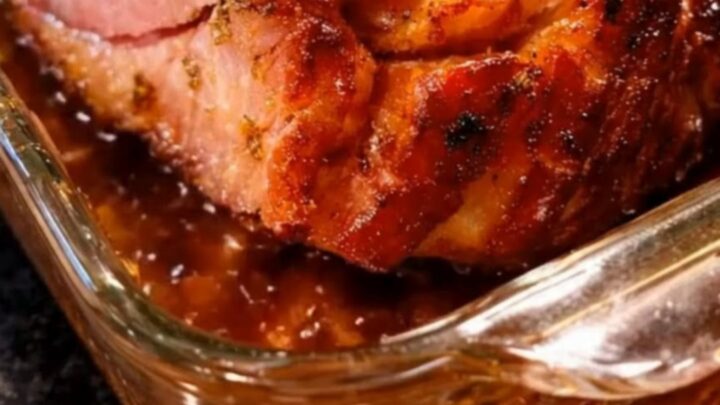
The ham is now uncovered and brushed with the honey. The surface should look wet and glossy. As it continues to bake, the glaze will bubble and thicken, creating a rich, dark amber color.
Check that the glaze is evenly distributed, and baste frequently to ensure a deep, flavorful coating that adheres well to the meat.
Final Resting
- Rest and ServeTransfer the ham to a carving board and allow it to rest for a full 20 minutes before slicing. This extended rest allows all internal juices to settle evenly throughout the meat, ensuring every carved piece remains thoroughly moist, tender, and succulent.Look for The juices have settled completely and the exterior glaze is tacky.Tip Use a sharp carving knife to make clean slices against the grain for the best texture.
The ham has reached 145°F (63°C) and is resting on the carving board. It should look plump and glistening. As it rests, the exterior glaze will firm up slightly into a tacky, delicious finish. The meat will be easy to slice, and the aroma will be rich and inviting, signaling that it is ready to be served.
Common mistakes
A common mistake is glazing too early, which causes the sugars to burn before the meat is fully heated through. Wait until the final hour of cooking to apply the glaze.
Another error is failing to let the ham rest; carving it immediately causes all the juices to run out, resulting in dry meat. Always provide the required resting time to allow the internal temperature to stabilize and the juices to be reabsorbed into the fibers of the roast.
How to tell it’s done
The ham is done when the internal temperature reaches 145°F (63°C) at the thickest part. The meat should be firm but yield slightly to pressure. The glaze will appear dark, glossy, and thick, clinging to the surface of the meat.
If the meat reaches the target temperature but the glaze is not yet caramelized to your liking, you can briefly increase the heat or use a broiler, but monitor it constantly to prevent the sugars from burning or turning bitter.
- Steaks, chops and roasts: 145°F (63°C) in the thickest part, then a 3-minute rest
Up next · Part 3 of 3
2 variations · storage & make-ahead · 3 answers · printable card
Tips, FAQ & printable recipe (Part 3)← Back to the ingredients (Part 1)