Dinner · Part 2 of 3: Instructions
Sticky Honey Garlic Shrimp in a Cast-Iron Skillet Step-by-step instructions
- Prep
- Cook
- Total
- Serves
- 4
Before you start
Before heating the skillet, gather all ingredients and complete all prep work. Pat the peeled and deveined shrimp completely dry with paper towels; excess moisture prevents proper searing and will steam the seafood instead.
Mince the garlic cloves finely and slice the green onions, keeping the white and green parts together. Whisk the honey and minced garlic together in a small bowl so the glaze is ready to pour the moment the skillet reaches the correct temperature.
Ingredients at a glance (4)
- 1 lb large shrimp, peeled and deveined
- 1/3 cup honey
- 4 cloves garlic, minced
- 2 green onions, thinly sliced
Instructions
Aromatic and Glaze Preparation
- Prep the AromaticsSlice the green onions thinly and mince the garlic cloves. Set them aside on a clean cutting board.Look for The garlic should be finely minced and the green onions evenly sliced.Tip Keep the white and green parts of the green onions together for easy tossing later.
- Mix the GlazeIn a small bowl, whisk together the honey and minced garlic until the mixture is fully combined and smooth.Look for The honey should be completely mixed with the garlic.Tip Spray the measuring cup with cooking spray before adding honey to help it slide out easily.
By the end of this initial phase, the honey and garlic mixture should be uniform, with the minced garlic fully suspended in the liquid.
The green onions should be sliced into clean, uniform rounds. This ensures that the cooking process flows smoothly without any pauses, which is vital when preparing quick-cooking seafood.
Searing the Shrimp
- Sear the First SideHeat a large cast-iron skillet over medium-high heat. Once hot, add the shrimp in a single layer and sear without moving them for two minutes.Look for The bottom of the shrimp should turn pink and develop a golden-brown crust.Tip Do not overcrowd the skillet; cook in batches if necessary to ensure a proper sear.
- Flip and SearUse tongs to flip each shrimp over. Sear on the second side for one additional minute.Look for The shrimp should begin to curl slightly and lose their translucent appearance.Tip Work quickly to ensure all shrimp cook evenly.
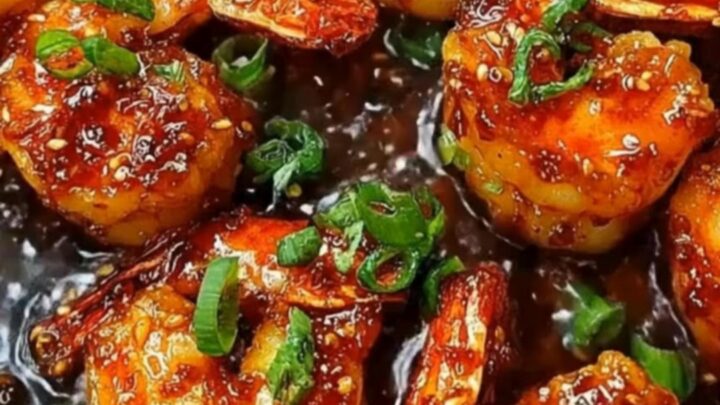
At the conclusion of this phase, the shrimp should display a distinct pink color on the exterior with localized golden-brown caramelized spots from contact with the hot cast iron. The skillet should sizzle loudly, and the shrimp should be mostly opaque but not completely cooked through before the sauce is introduced.
Glazing and Garnishing
- Glaze and Cook ThroughPour the honey garlic mixture over the seared shrimp in the skillet. Simmer for one to two minutes, tossing the shrimp constantly, until the sauce bubbles, thickens, and glazes the shrimp, and the internal temperature of the shellfish reaches 145°F (63°C).Look for The glaze should be sticky and coat the shrimp completely.Safe temperature 145°F (63°C) internal temperature (shellfish)Tip Reduce the heat slightly if the honey begins to scorch or darken too quickly.
- Garnish and ServeRemove the skillet from the heat. Sprinkle the sliced green onions over the glazed shrimp and serve immediately.Look for The green onions should look bright green against the dark, glossy glaze.Tip Serve straight from the cast-iron skillet to keep the dish hot at the table.
In this final phase, the sauce will bubble vigorously and reduce into a thick, syrupy glaze that clings tightly to the shrimp. The dish is complete when the shrimp are fully opaque, curled into a loose 'C' shape, and coated in a glossy, dark-amber coating, finished with a vibrant sprinkle of fresh green onions.
Common mistakes
The most frequent error when preparing this dish is overcrowding the skillet. Putting too many shrimp in the pan at once lowers the surface temperature of the cast iron, causing the seafood to release its natural juices and steam rather than sear.
This results in gray, rubbery shrimp lacking any caramelization. Cook in batches if your skillet is not large enough to hold all the shrimp in a single, uncrowded layer.
How to tell it’s done
Shrimp cook incredibly fast, transitioning from perfectly tender to tough and rubbery in a matter of seconds. They are fully cooked when they turn completely opaque, show a pearly pink exterior, and curl into a loose 'C' shape.
To ensure total food safety, verify that the thickest part of the shellfish reaches an internal temperature of 145°F (63°C) on an instant-read thermometer before removing the skillet from the heat source.
- Shellfish: 145°F (63°C) in the thickest part
Up next · Part 3 of 3
2 variations · storage & make-ahead · 4 answers · printable card
Tips, FAQ & printable recipe (Part 3)← Back to the ingredients (Part 1)