Dinner · Part 2 of 3: Instructions
Sticky Honey Garlic Pork Roast with Caramelized Apples Step-by-step instructions
- Prep
- Cook
- Total
- Serves
- 6
Before you start
Before beginning the cooking process, remove the pork roast from the refrigerator and let it sit at room temperature for no more than thirty minutes to take the chill off. This ensures even cooking. Line a large baking pan with heavy-duty aluminum foil, leaving some overhang for easy cleanup.
Core and slice the fresh apples into thick wedges, keeping them uniform so they cook at the same rate. Finely mince the fresh garlic cloves. Preheat the oven to 375°F (190°C) so it is fully hot when the roast is ready to go in.
Ingredients at a glance (4)
- 3 lb boneless pork loin roast
- 1/2 cup honey
- 4 cloves garlic, finely minced
- 3 apples, cored and cut into thick wedges
Instructions
Preparation and Glaze Assembly
- Prepare the Pork RoastPlace the boneless pork loin roast fat-side up in the center of a prepared foil-lined baking pan. Ensure the roast is positioned securely so it cooks evenly in the oven.Look for The pork roast should be centered in the pan.Tip Roasting fat-side up allows the melting fat to naturally baste the meat.
- Prepare the Honey Garlic GlazeIn a small bowl, whisk together the honey and finely minced garlic until completely combined. Set this sweet and aromatic glaze aside until the roast is ready for its first basting.Look for The glaze should be smooth and the garlic evenly distributed.Tip Using fresh garlic rather than jarred garlic provides a much better flavor.
The pork roast should be placed in the center of the foil-lined pan, and the honey garlic glaze should be thoroughly mixed in a separate bowl. The apples must be sliced into thick, uniform wedges. At this point, the kitchen will smell faintly of fresh apples and sweet garlic, and the roast is ready to be placed in the oven, primed for its first trip into the preheated heat.
Initial Roasting
- Begin Roasting the PorkPlace the pork roast into the preheated oven at 375°F (190°C). Roast uncovered for about 45 minutes, allowing the meat to cook through partially and the fat cap to begin rendering beautifully.Look for The surface of the pork should look slightly golden and glistening.Tip This initial roast helps render the fat before adding the sweet glaze.
Halfway through roasting, the pork roast will begin to turn a light golden-brown color, and the savory aroma of cooking meat will fill the room. The surface of the meat should look slightly glistening. The juices will start to pool slightly in the bottom of the pan, indicating that the fat is beginning to render down beautifully.
Glazing and Final Bake
- Add Apples and Honey Garlic GlazeArrange the sliced apple wedges around the pork roast in the baking pan. Pour the prepared honey garlic glaze generously over both the pork roast and the apples, ensuring everything is well coated. Return the pan to the oven and roast for an additional 20 to 25 minutes.Look for The apples should begin to soften and absorb the glaze.Tip Toss the apples in the pan juices to ensure they do not dry out.
- Final Bake and RestRoast until the glaze is bubbling and caramelized, the apples are tender, and the pork roast reaches an internal temperature of 145°F (63°C). Remove from the oven and let the whole cut meat rest for at least 3 minutes before carving.Look for The glaze should be sticky and caramelized, and the juices bubbling.Safe temperature 145°F (63°C) internal temperature (steaks, chops and roasts)Tip Do not skip the resting period, as it allows the juices to redistribute.
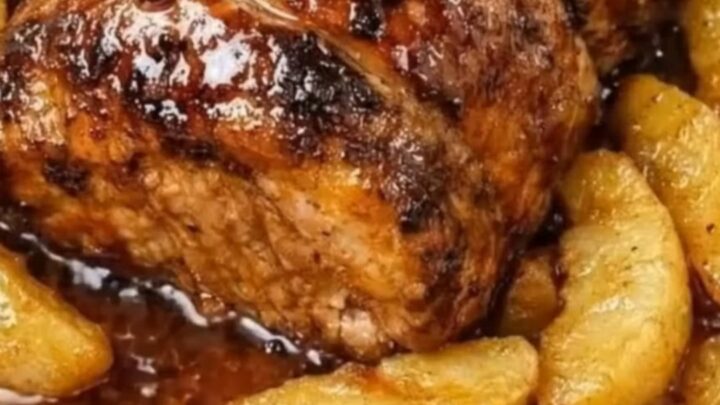
At the end of this phase, the pork roast will have a deep, glossy, golden-brown crust that is sticky to the touch. The honey garlic glaze will be bubbling vigorously in the pan, and the apple wedges will be tender, deeply caramelized, and steaming hot.
The internal temperature of the pork must register at least 145°F (63°C) on a meat thermometer, and the meat must rest for three minutes before carving.
Common mistakes
A common mistake is slicing the apples too thin, which causes them to turn into mush during the roasting process. Keep them in thick wedges so they retain their structure. Another error is neglecting to let the pork roast rest after cooking.
Carving the meat immediately will cause all the delicious, savory juices to run out onto the cutting board, leaving the roast dry and tough. Always allow a minimum of three minutes for the juices to redistribute throughout the meat. Lastly, burning the garlic can ruin the glaze; keep an eye on the pan and tent with foil if needed.
How to tell it’s done
To determine perfect doneness, always rely on an instant-read digital meat thermometer rather than visual cues alone. Insert the thermometer probe into the thickest part of the pork roast, avoiding any fat pockets. The pork is safe and perfectly cooked when it reaches an internal temperature of 145°F (63°C).
Once this temperature is achieved, remove the roast from the oven and let it rest for at least three minutes. During this rest period, the temperature will hold or rise slightly, and the muscle fibers will relax, ensuring a succulent, tender slice.
- Steaks, chops and roasts: 145°F (63°C) in the thickest part, then a 3-minute rest
Up next · Part 3 of 3
2 variations · storage & make-ahead · 3 answers · printable card
Tips, FAQ & printable recipe (Part 3)← Back to the ingredients (Part 1)