Dinner · Part 2 of 3: Instructions
Sticky Honey Garlic Pork Chops in One Skillet Step-by-step instructions
- Prep
- Cook
- Total
- Serves
- 4
Before you start
Before you begin, ensure all ingredients are measured and ready to go, as the cooking process moves quickly once the heat is applied. Take the pork chops out of the refrigerator about 20 minutes before cooking to allow them to lose their chill, which helps achieve a more even cook.
Pat the meat dry with paper towels and season with salt and pepper to taste. Prepare your garlic by mincing it finely and have your tongs and serving plate within reach to avoid scrambling during the cooking process.
Ingredients at a glance (4)
- 4 pieces pork chops, bone-in or boneless
- 1/3 cup honey
- 4 cloves garlic, minced
- 2 sprigs fresh thyme, for serving
Instructions
Searing for flavor
- Sear the pork chopsPlace the cast-iron skillet over medium-high heat. Once hot, add the pork chops. Sear the meat until a deep golden-brown crust forms on both sides. This initial browning is essential for building flavor and texture before the glaze is added.Look for The pork should be golden brown and develop a nice sear on the edges.Tip Ensure the skillet is sufficiently hot before adding the meat to prevent sticking.
At the end of this phase, the pork chops should have a deep, mahogany-colored crust on both sides. The skillet will be hot and fragrant, with the edges of the meat beginning to crisp. Check that the meat has released easily from the pan surface before flipping; if it sticks, give it another minute of cooking time. The goal is a uniform sear that provides texture and locks in the internal moisture of the chops.
Glazing the chops
- Glaze the meatReduce the heat to medium. Pour the honey and minced garlic into the skillet around the pork chops. Toss the chops in the glaze using tongs, ensuring every side is thoroughly coated. Allow the mixture to bubble and thicken into a sticky, glossy sauce that clings to the meat. Cook until the pork reaches an internal temperature of 145°F (63°C), then remove from the pan and let the meat rest for at least 3 minutes.Look for The sauce should bubble vigorously and reduce until it turns sticky and thick.Safe temperature 145°F (63°C) internal temperature (steaks, chops and roasts)Tip Watch the garlic closely so it does not burn and become bitter in the hot pan.
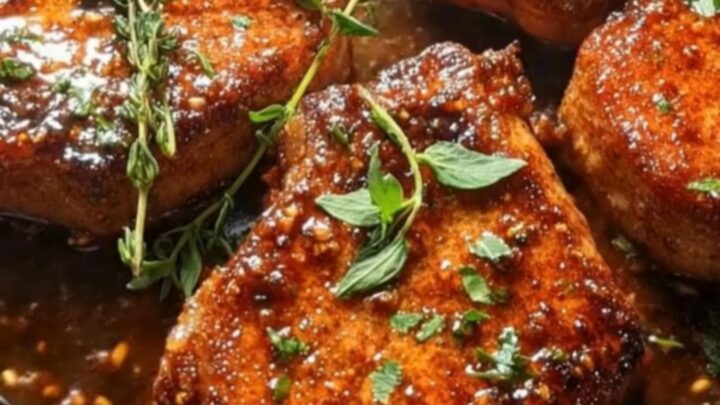
By the end of this phase, the honey and garlic should have transformed into a thick, bubbling, and glossy sauce. The liquid should coat the back of a spoon and cling firmly to the pork chops.
You will notice the aroma of caramelized honey and toasted garlic filling the kitchen. Ensure the glaze has reduced enough so that it is no longer watery, which indicates that the sugars have reached the desired sticky consistency.
Resting and serving
- Finish and serveOnce the pork has rested, sprinkle the fresh thyme over the glazed pork chops. Serve immediately while the glaze is warm and the meat is tender.Look for The pork should be tender and the glaze should be dark and caramelized.Tip Letting the meat rest is the key to achieving a juicy and succulent final result.
After resting, the pork chops should be glistening and tender. The sauce should have settled slightly, becoming a rich, syrupy coating that remains on the meat when sliced. Check that the internal temperature has held steady at 145°F (63°C). The fresh thyme on top should look vibrant and smell fragrant, signaling that the dish is ready to be plated and served immediately to your guests or family.
Common mistakes
A common mistake is overcrowding the skillet, which causes the temperature to drop and prevents the pork from forming a proper sear. Cook the chops in batches if your skillet is not large enough to hold them without touching.
Another error is adding the honey too early; if the glaze is added before the pork is properly seared, the sugars may burn before the meat is cooked through. Always maintain medium heat during the glazing phase to ensure the sauce thickens without turning bitter.
How to tell it’s done
The pork chops are done when they reach an internal temperature of 145°F (63°C) at the thickest part. The meat should be opaque throughout with a slight hint of pink in the center, which is perfectly safe and ensures the best texture.
Use a digital meat thermometer to verify the temperature, as visual cues can be deceptive. Once the target temperature is reached, remove the skillet from the heat immediately to prevent overcooking, and let the meat rest for at least 3 minutes before slicing.
- Steaks, chops and roasts: 145°F (63°C) in the thickest part, then a 3-minute rest
Up next · Part 3 of 3
2 variations · storage & make-ahead · 3 answers · printable card
Tips, FAQ & printable recipe (Part 3)← Back to the ingredients (Part 1)