Dinner · Part 2 of 3: Instructions
Sticky Honey Garlic Chicken Thighs for a Quick Dinner Step-by-step instructions
- Prep
- Cook
- Total
- Serves
- 4
Before you start
Before beginning, ensure all ingredients are measured and ready to use. Mince the garlic finely so it integrates smoothly into the glaze.
Pat the chicken thighs dry with paper towels to ensure a better texture; moisture on the surface of the meat can cause splattering and prevent the glaze from adhering properly.
Preheating the oven is also essential to ensure the chicken starts cooking immediately upon contact, which is the secret to achieving that deep, golden-brown crust without overcooking the meat.
Ingredients at a glance (3)
- 4 pieces chicken thighs, bone-in and skin-on
- 1/3 cup honey
- 3 cloves garlic, minced
Instructions
Glaze Preparation
- Prepare the GlazeIn a small bowl, whisk together the honey and minced garlic until the mixture is uniform and smooth. Set this glaze aside while preparing the chicken for the baking dish.Look for The mixture should be fully combined and the honey should be completely dissolved.Tip Whisking the ingredients thoroughly ensures the garlic flavor distributes evenly across the chicken during the baking process.
The glaze is ready when it is uniform, smooth, and the honey has fully emulsified with the garlic. It should have a balanced, aromatic scent and a pourable consistency that will easily coat the chicken pieces during the subsequent cooking steps.
Glazing the Chicken
- Glaze the ChickenPlace the chicken thighs in the glass baking dish. Pour the prepared honey garlic glaze over them, coating each piece thoroughly on all sides to ensure even caramelization.Look for The chicken should be evenly coated with the sticky honey and garlic mixture.Tip Use metal tongs to turn the chicken in the glaze to ensure every crevice is covered before it goes into the oven.
The chicken is correctly glazed when every piece is thoroughly coated in the honey and garlic mixture. The meat should look appetizing and be ready for the oven, with the glaze clinging to the skin and meat surfaces.
Baking and Reducing
- Bake and FinishBake the chicken at 375°F (190°C) until the sauce is thick, glossy, and sticky. Ensure the internal temperature reaches 165°F (74°C) for food safety. Remove from the oven and let the chicken rest for at least 3 minutes before serving to maintain its juiciness.Look for The glaze should be bubbling and reduced to a thick, sticky consistency that clings to the meat.Safe temperature 165°F (74°C) internal temperature (poultry)Tip Basting the chicken with the pan juices halfway through the baking time will intensify the caramelized flavor.
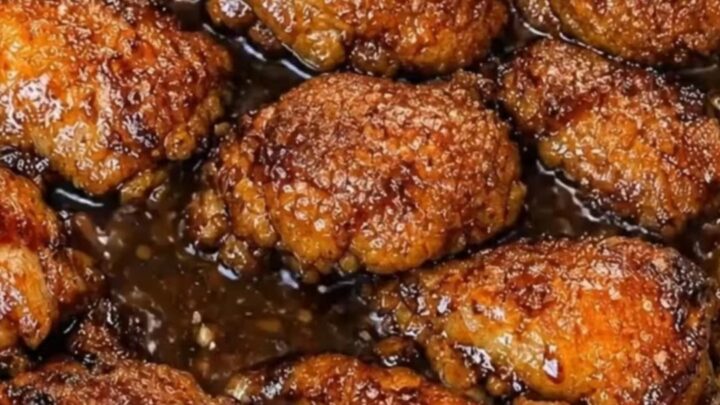
The final phase is complete when the glaze has reduced into a thick, sticky, and glossy coating that clings to the chicken. The meat should be tender, juicy, and reach an internal temperature of 165°F (74°C). The kitchen should smell fragrant and caramelized.
Common mistakes
A common mistake is overcrowding the baking dish, which lowers the temperature and causes the chicken to steam instead of caramelize. Ensure there is enough space between each thigh for air to circulate.
Another error is failing to monitor the glaze during the baking phase; honey has a high sugar content and can burn quickly. Keep a close watch in the final minutes to ensure the sauce thickens to a sticky consistency without charring or becoming bitter.
How to tell it’s done
The chicken is done when the internal temperature reaches 165°F (74°C) as measured by a meat thermometer inserted into the thickest part of the thigh, avoiding the bone. The glaze should be thick, dark, and glossy, clinging to the chicken pieces.
If the sauce appears too thin, it may require a few extra minutes in the oven. Always allow the chicken to rest for at least 3 minutes before cutting into it to ensure the juices redistribute throughout the meat.
- Poultry: 165°F (74°C) in the thickest part
Up next · Part 3 of 3
2 variations · storage & make-ahead · 3 answers · printable card
Tips, FAQ & printable recipe (Part 3)← Back to the ingredients (Part 1)