Dinner · Part 2 of 3: Instructions
Sticky Honey Garlic Carrots in One Pan Step-by-step instructions
- Prep
- Cook
- Total
- Serves
- 4
Before you start
Before starting, ensure all ingredients are measured and ready to go. Wash the carrots and pat them dry if they are damp. Prepare the garlic by mincing it finely with a sharp knife to ensure it blends seamlessly into the glaze.
Have your tongs and a clean serving plate ready nearby. Clearing your workspace will help you move through the steps smoothly, which is particularly important once the honey glaze begins to caramelize, as it can go from perfect to burnt quite quickly.
Ingredients at a glance (4)
- 1 lb whole baby carrots
- 3 tbsp honey
- 3 cloves garlic, minced
- fresh parsley, chopped, for serving
Instructions
Steaming the carrots
- Prepare the carrotsPlace the whole baby carrots into a black skillet with a small splash of water. Cover the pan and steam them over medium heat until they are tender and the water has evaporated completely.Look for The carrots should be fork-tender and the water should be fully evaporated before adding the glaze ingredients.Tip Adding just enough water to cover the bottom of the pan helps the carrots cook evenly through without browning too early.
At the end of the first phase, the carrots should be vibrant in color and tender enough to be pierced easily with a fork. The water should be completely evaporated from the skillet, leaving the pan dry and ready for the honey and garlic. If there is still liquid remaining, continue to cook for another minute or two until it is gone, as any excess moisture will prevent the glaze from sticking properly.
Glazing the carrots
- Glaze the carrotsAdd the honey and minced garlic directly into the skillet with the cooked carrots. Toss the carrots continuously using tongs to ensure every piece is thoroughly coated in the mixture.Look for Watch for the glaze to thicken and turn glossy, clinging tightly to the surface of the carrots as they caramelize.Tip Maintain a steady medium heat to prevent the honey from burning while it caramelizes the garlic and coats the carrots.
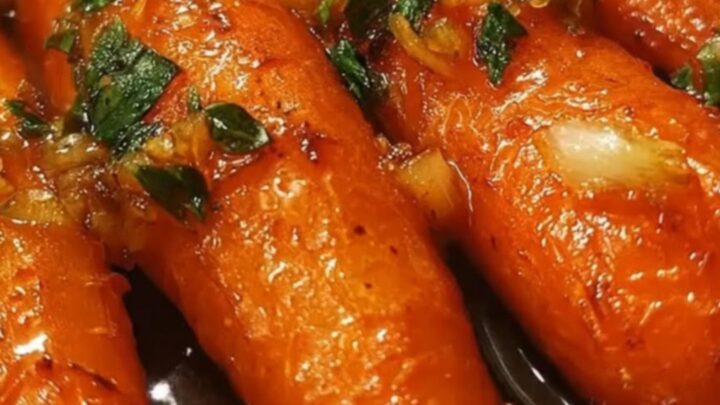
During the second phase, the glaze should transform into a beautiful, sticky, and glossy coating that clings to each carrot. The mixture should smell intensely fragrant, with the sweetness of the honey balanced by the savory notes of the garlic.
The carrots will appear glistening. If the glaze looks too thin, continue to toss over medium heat until it reduces further and reaches a syrupy, thick consistency.
Garnishing and serving
- Final finish and serveOnce the glaze is sticky and the carrots are glistening, remove the skillet from the heat. Sprinkle the chopped fresh parsley over the top and toss one final time before serving on a plate.Look for The dish is ready when the sauce reaches a syrupy consistency that coats the back of a spoon and smells fragrant.Tip Serve immediately while the glaze is warm and at its stickiest consistency for the best texture and flavor experience.
In the final phase, the carrots should be fully coated in the sticky glaze and ready for immediate service. The fresh parsley should be bright green and distributed evenly, adding a fresh herbal note that cuts through the sweetness of the honey. The carrots should be served warm, as the texture of the glaze is at its best immediately after being removed from the heat.
Common mistakes
A common mistake is rushing the steaming phase, which can lead to carrots that are caramelized on the outside but still raw or crunchy in the middle. Another error is adding the honey too early while there is still too much water in the pan, which prevents the glaze from thickening properly.
Finally, avoid using too high a heat once the honey is added; high temperatures can cause the sugars in the honey to burn, resulting in an unpleasant, acrid taste.
How to tell it’s done
The carrots are done when they are fork-tender, meaning a fork slides into the thickest part of the carrot with zero resistance. The glaze should be reduced to a thick, syrupy consistency that coats the carrots in a shiny, golden-brown layer.
The garlic should be fragrant and softened, not browned or crispy. Because there is no meat involved, there are no internal temperature requirements, so rely on the visual cues of the glaze and the physical tenderness of the carrots.
Up next · Part 3 of 3
2 variations · storage & make-ahead · 3 answers · printable card
Tips, FAQ & printable recipe (Part 3)← Back to the ingredients (Part 1)