Dinner · Part 2 of 3: Instructions
Sticky Bourbon Brown Sugar Glazed Ham Step-by-step instructions
- Prep
- Cook
- Total
- Serves
- 12
Before you start
Before beginning, ensure the ham is removed from the refrigerator at least 30 minutes prior to baking to promote even cooking. Preheat the oven to 325°F (165°C) and ensure the roasting pan is clean and ready.
Have your pastry brush and mixing bowl prepared, and make sure the bourbon and brown sugar are measured and ready for combining. Clear enough space in the refrigerator for leftovers, and have a carving board or serving platter ready for the finished ham.
Ingredients at a glance (3)
- 10 lb spiral-cut ham
- 1 cup brown sugar
- 1/2 cup bourbon
Instructions
Preparation and Glazing
- Prepare the HamPlace the spiral-cut ham into a large aluminum roasting pan. Ensure the ham is centered so the glaze can easily be applied to all sides, including between the pre-cut slices.Look for ham is securely placed in the panTip Bring the ham to room temperature for about 30 minutes before placing it in the oven to ensure even heating throughout the center.
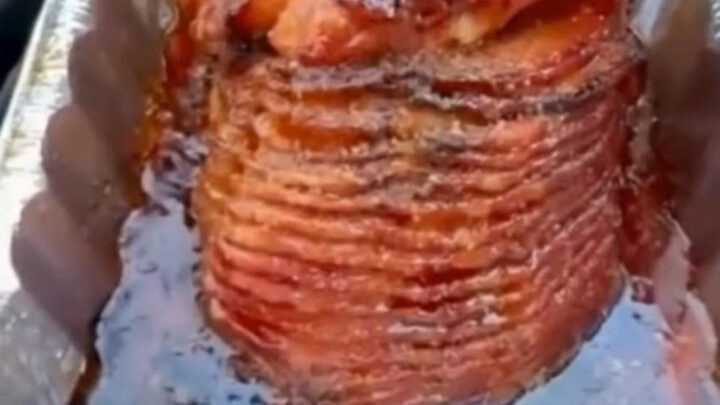
The ham is positioned in the roasting pan with the glaze applied evenly. The mixture of brown sugar and bourbon should smell aromatic and sweet, with the glaze beginning to pool slightly at the bottom of the pan as it starts to warm.
Baking to Perfection
- Glaze and BakeIn a small bowl, whisk together the brown sugar and bourbon until smooth. Generously brush the mixture over the entire surface of the ham, allowing some to drip between the slices. Bake at 325°F (165°C) until the ham reaches an internal temperature of 145°F (63°C). Once finished, remove from the oven and let the meat rest at least 3 minutes before serving.Look for glaze is bubbling and caramelizingSafe temperature 145°F (63°C) internal temperature (steaks, chops and roasts)Tip Baste the ham with the pan juices halfway through the cooking time to build extra flavor and a deeper, glossy color.
The ham has reached its target internal temperature of 145°F (63°C). The glaze has transformed from a liquid into a thick, tacky syrup that coats the meat, and the kitchen is filled with a rich, caramelized scent that signals the sugars have properly set.
Resting and Serving
- Rest and ServeRemove the ham from the oven and let it rest at least 15 minutes before carving. This allows the juices to redistribute throughout the meat, ensuring every slice remains moist and tender when pulled apart with tongs.Look for meat is resting and juices are stableTip Use clean tongs to gently pull the slices apart, ensuring the sticky glaze is distributed across each serving.
The ham has rested for 15 minutes, allowing it to firm up slightly for easier handling. When pulled with tongs, the slices should release easily, revealing a moist, steaming interior that is ready for serving as the centerpiece of a meal.
Common mistakes
The most common mistake is overcooking the ham, which leads to a dry texture that loses the benefits of the spiral-cut design.
Avoid high heat, which will burn the sugar in the glaze, leaving a bitter, charred taste rather than a sweet, caramelized finish.
Additionally, failing to let the ham rest after taking it out of the oven will cause the juices to run out immediately upon carving, resulting in a less succulent final dish.
How to tell it’s done
The ham is perfectly done when it reaches an internal temperature of 145°F (63°C) at the thickest part. The exterior should be glossy, dark, and sticky to the touch, with the glaze having reduced into a syrup.
The meat should pull apart easily with tongs, indicating it is tender and juicy throughout. Always let it rest for at least 15 minutes before carving to ensure the juices settle.
- Steaks, chops and roasts: 145°F (63°C) in the thickest part, then a 3-minute rest
Up next · Part 3 of 3
2 variations · storage & make-ahead · 3 answers · printable card
Tips, FAQ & printable recipe (Part 3)← Back to the ingredients (Part 1)