Dinner · Part 2 of 3: Instructions
Sticky BBQ Slow Cooker Ribs Step-by-step instructions
- Prep
- Cook
- Total
- Serves
- 4
Before you start
Before beginning the cooking process, take a few minutes to prepare your workspace and ingredients. Place the rack of pork ribs on a clean cutting board. If the papery membrane on the bone side of the ribs is still intact, use a butter knife to slide under the membrane, grip it with a paper towel, and peel it off completely.
This step is crucial for achieving that signature tender texture. Once the membrane is removed, use a sharp chef's knife to cut the rack into smaller portions of three to four ribs each so they fit neatly into the slow cooker bowl. Measure out your barbecue sauce and have a basting brush nearby.
Ingredients at a glance (2)
- 3 lb pork baby back ribs, membrane removed and cut into portions
- 2 cups barbecue sauce, divided
Instructions
Preparation and Arrangement
- Arrange the RibsPlace the prepared pork baby back ribs into the slow cooker bowl. Stand the rib portions upright against the walls of the slow cooker, with the meatier side facing outward and the bones facing inward. This arrangement ensures even heat distribution and allows the fat to render down efficiently during the cooking process. Do not add any liquid to the slow cooker, as the ribs will release their own natural juices as they heat.Look for The ribs should stand upright and fit snugly inside the slow cooker bowl.Tip Standing the ribs upright prevents them from boiling in their own rendered juices, preserving their texture.
At the end of this initial preparation phase, the ribs are cut into clean, uniform sections and arranged upright inside the slow cooker. The slow cooker bowl remains dry, with no added liquids, and the lid is securely in place. There should be no steam or heat escaping, and the uncooked ribs should look fresh and clean, ready for the long, gentle cooking process ahead.
Slow Cooking and Tenderizing
- Slow Cook the RibsCover the slow cooker with its lid and set the temperature to low. Cook the ribs on low for 6 to 8 hours. Avoid opening the lid during the cooking process, as this releases steam and significantly increases the cooking time. The ribs are ready for the next step when the meat is tender and has started to shrink back slightly from the ends of the bones.Look for The meat should look tender and the bones should be slightly exposed at the ends.Tip Always cook ribs on low heat; cooking them on high can make the meat tough and dry.
After several hours of slow cooking, the kitchen will fill with a rich, savory aroma of roasted pork. When you lift the lid, you will see that the meat has shrunk back from the bones by about half an inch, exposing them. The meat should look incredibly moist, tender, and delicate, with a pool of flavorful rendered juices collected at the bottom of the slow cooker bowl.
Saucing and Glazing
- Sauce and SimmerCarefully brush the pork baby back ribs with the barbecue sauce, coating all sides generously. Cover the slow cooker again and cook on low for an additional 30 minutes, allowing the sauce to simmer and glaze the meat. Ensure the pork reaches a safe internal temperature of 145°F (63°C) when measured with a meat thermometer in the thickest part of the meat, avoiding the bone. Let the meat rest for at least 3 minutes before serving.Look for The barbecue sauce should be hot, bubbling, and clinging to the tender ribs.Safe temperature 145°F (63°C) internal temperature (steaks, chops and roasts)Tip Use a gentle hand when brushing to avoid breaking the incredibly tender, fall-apart meat.
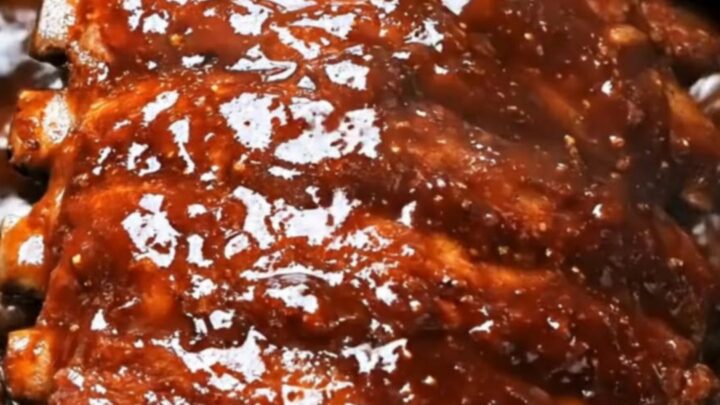
In this final phase, the ribs are beautifully coated in a thick, glossy layer of barbecue sauce. The sauce should be gently simmering, bubbling slightly around the edges of the meat.
The glaze will appear sticky, rich, and deeply caramelized, clinging perfectly to the tender pork. The meat should pull away effortlessly from the bone when gently tugged with tongs, indicating perfect doneness.
Common mistakes
One of the most common mistakes when making slow cooker ribs is adding water, broth, or other liquids to the slow cooker bowl. Ribs naturally contain a high percentage of water and fat, which release during the slow cooking process to create a flavorful basting liquid.
Adding extra liquid will essentially boil the ribs, resulting in soggy, bland meat rather than rich, concentrated pork flavor. Another frequent error is cooking the ribs on the high setting to save time. High heat cooks the meat too quickly, causing the proteins to tighten and dry out before the tough collagen has a chance to melt into tender gelatin.
How to tell it’s done
To determine if the ribs are perfectly done, look for the visual cue of the meat pulling back from the bone ends. Additionally, you can perform the bend test: lift the rack of ribs with tongs from one end; if the rack bends easily and the meat starts to crack slightly in the middle, they are perfectly cooked.
For food safety, always verify that the pork has reached a minimum internal temperature of 145°F (63°C) using a digital meat thermometer inserted into the thickest section of the meat, making sure the probe does not touch the bone. Let the ribs rest for 3 minutes before cutting and serving.
- Steaks, chops and roasts: 145°F (63°C) in the thickest part, then a 3-minute rest
Up next · Part 3 of 3
2 variations · storage & make-ahead · 3 answers · printable card
Tips, FAQ & printable recipe (Part 3)← Back to the ingredients (Part 1)