Dinner · Part 2 of 3: Instructions
Sticky BBQ Pork Ribs (Fall-Off-The-Bone Tender) Step-by-step instructions
- Prep
- Cook
- Total
- Serves
- 4
Before you start
Before you begin cooking, gather all your ingredients and equipment. Line a large, rimmed baking sheet with a double layer of heavy-duty aluminum foil to make cleanup easy and prevent any leaks. Preheat your oven to 300 degrees Fahrenheit. Pat the pork ribs completely dry with paper towels on both sides, and ensure the thin membrane on the bone side of the racks has been fully removed.
Ingredients at a glance (2)
- 2 racks pork baby back ribs, membrane removed
- 2 cups BBQ sauce
Instructions
Seasoning and Wrapping
- Prepare the RibsPat the pork ribs dry with paper towels. Place each rack on a large sheet of heavy-duty aluminum foil, then wrap them tightly, folding the edges to seal completely.Look for The ribs should be sealed tightly in foil packets.Tip Ensure the foil is wrapped tightly to trap all the steam and juices during baking.
At the end of this initial phase, the pork ribs should be prepared and wrapped extremely tightly in heavy-duty aluminum foil, creating a secure packet with folded seams that will prevent any steam or flavorful juices from escaping during the long bake.
The foil packet should feel solid and completely sealed, with no visible tears or openings, ensuring that all the natural moisture is trapped inside to tenderize the meat.
Slow Oven Baking
- Bake Low and SlowPlace the foil-wrapped ribs side-by-side on a large baking sheet. Transfer the baking sheet to the preheated oven at 300 degrees Fahrenheit (150 degrees Celsius) and bake for 3 hours, or until the meat is tender when pierced with a fork through the foil.Look for The meat should feel very tender and yield easily to gentle pressure.Tip Keep the oven door closed during baking to maintain a constant temperature and trap the steam inside the foil.
- Unwrap and Prepare to GlazeCarefully remove the baking sheet from the oven. Gently open the foil packets, taking care to avoid the hot steam that will escape. Fold the foil down around the edges of the ribs to expose the top side of the meat, creating a shallow boat to catch any juices.Look for The meat should have shrunk back slightly from the ends of the bones.Tip Be very careful when opening the foil to prevent the hot rendering juices from spilling onto your hands.
After baking slowly for three hours, the ribs will feel incredibly tender when pressed through the foil. When you carefully open the foil packet, you will see that the meat has shrunk back slightly from the ends of the bones, exposing them.
The ribs will be hot, juicy, and smelling intensely of savory pork. The meat should yield easily to gentle pressure, indicating that the collagen has fully broken down.
Glazing and Broiling
- Apply the GlazePreheat your oven broiler to high. Using a pastry brush, generously apply the BBQ sauce over the top and sides of the ribs, coating them in a thick, even layer. Ensure the meat is completely covered to get that signature sticky finish.Look for The ribs should be thoroughly coated in a thick, glossy layer of sauce.Tip Use a high-quality, thick barbecue sauce that will cling to the meat rather than running off.
- Broil and RestPlace the glazed ribs under the broiler for 3 to 5 minutes, watching closely, until the sauce is bubbling and caramelized with some charred edges. Ensure the pork reaches a safe internal temperature of 145°F (63°C). Remove from the oven and let the ribs rest for 3 minutes before slicing.Look for The sauce should be caramelized, sticky, and bubbling vigorously.Safe temperature 145°F (63°C) internal temperature (steaks, chops and roasts)Tip Do not leave the broiler unattended, as the sugars in the barbecue sauce can burn very quickly.
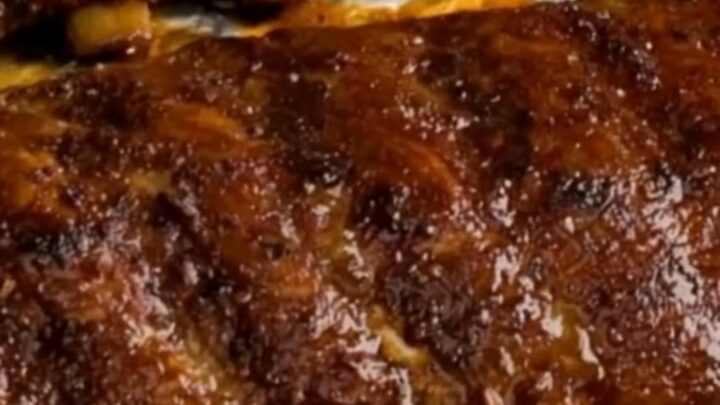
Following the broiling process, the ribs will have a gorgeous, glossy, deep mahogany glaze with scattered charred spots along the edges. The barbecue sauce should be bubbling vigorously and have thickened into a sticky, caramelized coating that clings perfectly to the tender meat when sliced. The surface will look beautifully caramelized, with a rich aroma of sweet and smoky barbecue filling the kitchen.
Common mistakes
One common mistake is failing to wrap the ribs tightly enough in the aluminum foil. If steam escapes during the baking process, the ribs will dry out and become tough instead of tender. Another frequent error is leaving the membrane on the bone side of the ribs; this tough barrier results in a chewy texture.
Lastly, keep a very close eye on the ribs during the broiling stage, as the high sugar content in barbecue sauce can transition from beautifully caramelized to burnt in a matter of seconds.
How to tell it’s done
To ensure the pork ribs are perfectly cooked and safe to eat, check that the meat is tender and has reached an internal temperature of at least 145 degrees Fahrenheit (63 degrees Celsius) when measured with a food thermometer in the thickest part of the meat, avoiding the bones.
Once this temperature is reached, let the ribs rest for at least 3 minutes to allow the juices to redistribute throughout the meat before slicing.
- Steaks, chops and roasts: 145°F (63°C) in the thickest part, then a 3-minute rest
Up next · Part 3 of 3
2 variations · storage & make-ahead · 3 answers · printable card
Tips, FAQ & printable recipe (Part 3)← Back to the ingredients (Part 1)