Dinner · Part 2 of 3: Instructions
Sticky Baked Huli Huli Chicken with Pineapple Step-by-step instructions
- Prep
- Cook
- Total
- Serves
- 4
Before you start
Before you begin cooking, gather all your ingredients and equipment to ensure a smooth process. Measure out the pineapple glaze and drain the canned pineapple slices thoroughly, patting them dry with paper towels.
Slice the green onions and set them aside for the final garnish. Pat the chicken thighs dry with paper towels instead of rinsing them to maintain a clean workspace. Preheat the oven to 400°F (200°C) so it is hot and ready when the chicken is prepared.
Ingredients at a glance (4)
- 2 lb boneless, skinless chicken thighs
- 1 cup pineapple glaze (store-bought or made ahead)
- 1 can pineapple slices, drained
- 1/4 cup green onions, sliced
Instructions
Chicken Preparation and Initial Coating
- Arrange and Coat the ChickenPreheat the oven to 400°F (200°C). Pat the chicken thighs dry with paper towels instead of rinsing them, as rinsing raw poultry can splash harmful bacteria around the sink and countertops. Arrange the chicken thighs in a single layer inside a 9x13-inch baking dish. Pour half of the pineapple glaze over the chicken, brushing it to coat all sides thoroughly.Look for The chicken thighs should be evenly coated and arranged in a single layer.Tip Patting the chicken completely dry helps the glaze adhere much better to the surface.
At the end of this initial phase, the chicken thighs should be arranged in a single, even layer in the baking dish and thoroughly coated in the rich pineapple glaze.
The oven should be fully preheated to 400°F (200°C), and the remaining glaze should be set aside and ready for the upcoming basting steps. The chicken should look glossy and wet, with no dry spots, ensuring that the caramelization process begins immediately once the dish is placed in the hot oven.
Baking, Basting, and Pineapple Roasting
- Bake and Baste the ChickenPlace the baking dish in the preheated oven and bake for twenty minutes. Every ten minutes, carefully slide the baking dish out and use a basting brush to apply a generous layer of the remaining pineapple glaze over the chicken thighs. This frequent basting builds up a thick, sticky, and caramelized exterior that locks in the juices of the meat.Look for The glaze will begin to bubble and caramelize on the edges of the chicken.Tip Keep the glaze warm so it flows easily when brushing it onto the chicken.
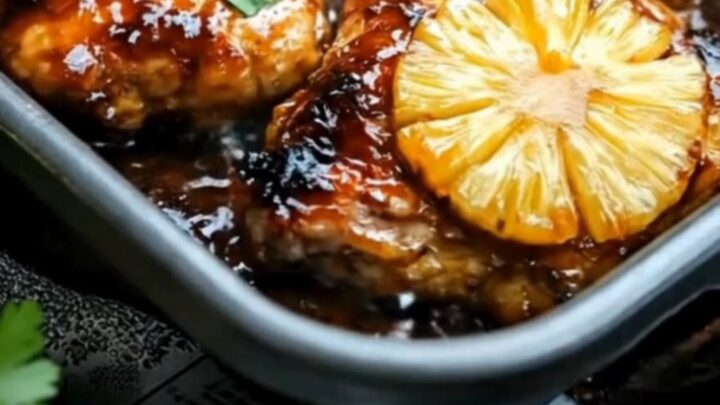
- Add Pineapple and Finish BakingAfter twenty minutes of baking, remove the dish from the oven and top each chicken thigh with a drained pineapple slice. Brush the pineapple slices and the chicken once more with the remaining glaze. Return the dish to the oven and bake for an additional fifteen to twenty minutes, or until the chicken reaches a safe internal temperature of 165°F (74°C) on a meat thermometer and the pineapple is beautifully caramelized.Look for The pineapple rings should be slightly roasted and the chicken caramelized.Safe temperature 165°F (74°C) internal temperature (poultry)Tip Insert the thermometer into the thickest part of the thigh without touching bone.
By the end of this baking phase, the chicken thighs will be fully cooked to a safe internal temperature of 165°F (74°C). The glaze on the chicken should look deeply caramelized, sticky, and bubbling, while the pineapple rings on top should be slightly roasted, warm, and glazed around the edges.
The kitchen will be filled with a sweet, savory aroma, and the juices from the chicken should run completely clear when pierced with a knife.
Resting and Garnishing
- Garnish and RestRemove the baking dish from the oven and let the chicken rest in its bubbling juices for five minutes. This resting period allows the meat fibers to relax and reabsorb the flavorful juices. Just before serving, sprinkle the sliced green onions generously over the caramelized chicken and roasted pineapple slices to add a fresh, vibrant pop of color and flavor.Look for The green onions should look bright and fresh against the dark glaze.Tip Slice the green onions thinly on a diagonal for an elegant presentation.
At the final checkpoint, the chicken has rested for five minutes to allow the juices to redistribute throughout the meat. The entire dish is crowned with bright green, freshly sliced green onions, which contrast beautifully with the dark, caramelized glaze and golden pineapple slices. The glaze should have settled into a thick, sticky sauce at the bottom of the dish, ready to be spooned over the chicken and pineapple before serving.
Common mistakes
One common mistake is overcrowding the baking dish, which can cause the chicken to steam in its own juices rather than caramelize. Ensure there is a little space between each thigh.
Another error is neglecting to baste the chicken frequently; without regular basting, the glaze will not build up that signature sticky, thick coating. Lastly, rinsing the raw poultry is a major food safety mistake that splashes bacteria around the sink; always pat the meat dry instead.
How to tell it’s done
To ensure the chicken thighs are cooked perfectly and safely, always use a digital meat thermometer. Insert the probe into the thickest part of the thigh, making sure not to touch any bone. The chicken is fully done and safe to eat when the thermometer registers 165°F (74°C). At this temperature, the meat will be tender and juicy, the juices will run clear, and the exterior glaze will be thick, bubbling, and beautifully caramelized.
- Poultry: 165°F (74°C) in the thickest part
Up next · Part 3 of 3
2 variations · storage & make-ahead · 3 answers · printable card
Tips, FAQ & printable recipe (Part 3)← Back to the ingredients (Part 1)