Dinner · Part 2 of 3: Instructions
Steakhouse Slow-Cooker Lobster and Crab Truffle Mac and Cheese Step-by-step instructions
- Prep
- Cook
- Total
- Serves
- 6
Before you start
Before beginning, ensure that your slow cooker basin is clean and dry. Have all your ingredients measured and ready, as the assembly process is very quick. If your lobster and crab meat are pre-cooked, keep them chilled in the refrigerator until the final step to maintain food safety.
Ensure the cheeses are shredded fresh, as pre-shredded cheese often contains anti-caking agents that can interfere with the smooth melting of the sauce. Have your serving dishes warmed, if possible, to keep the decadent mac and cheese at the ideal temperature for as long as possible once it reaches the table.
Ingredients at a glance (11)
- 16 oz medium shell pasta
- 2 cups heavy cream
- 12 oz evaporated milk
- 2 cups shredded gruyere cheese
- 2 cups white cheddar cheese
- 4 oz cream cheese
- 2 tbsp black truffle oil
- 8 oz butter-poached lobster tail meat
- 8 oz jumbo lump crab meat
- 1/2 cup Ritz cracker crumbs
- 1 tbsp snipped chives
Instructions
Assembly Phase
- Combine Base IngredientsPlace the medium shell pasta, heavy cream, evaporated milk, shredded gruyere cheese, white cheddar cheese, cream cheese, and black truffle oil into the slow cooker basin. Stir the ingredients gently to ensure the cream cheese is evenly distributed among the pasta and liquids.Look for The mixture should look well-combined before starting the cook.Tip Ensure the pasta is fully submerged in the liquids for even cooking.
The ingredients are layered in the slow cooker, with the pasta being fully submerged in the liquid dairy and cheese mixture. The truffle oil is distributed throughout the basin to ensure even flavor infusion. The slow cooker is then covered and set to the low heat setting, beginning the slow transformation process that will meld the flavors into a cohesive, aromatic base.
Slow Cooking Phase
- Slow Cook the PastaCover the slow cooker with the lid and set it to cook on LOW for 90 minutes. The pasta will absorb the liquids and the cheeses will melt into a rich, velvety sauce as it cooks.Look for The pasta shells should be tender and the sauce should have a thick, velvety consistency.Tip Avoid lifting the lid unnecessarily to maintain the internal temperature.
During this 90-minute simmer, the pasta absorbs the cream and melted cheese, creating a thick, luxurious sauce. The house will fill with the intoxicating aroma of truffle and melted gruyere.
The mixture should remain undisturbed to maintain consistent temperature, resulting in perfectly cooked pasta that is neither underdone nor mushy, providing the ideal foundation for the premium seafood additions.
Seafood Integration Phase
- Fold in SeafoodGently fold the butter-poached lobster tail meat and jumbo lump crab meat into the cooked pasta mixture. Continue cooking for an additional 15 minutes to ensure the seafood is heated through to a safe internal temperature of 145°F (63°C).Look for The seafood should be warmed through and the sauce should cling perfectly to the shells.Safe temperature 145°F (63°C) internal temperature (shellfish)Tip Fold carefully to keep the crab lumps intact.
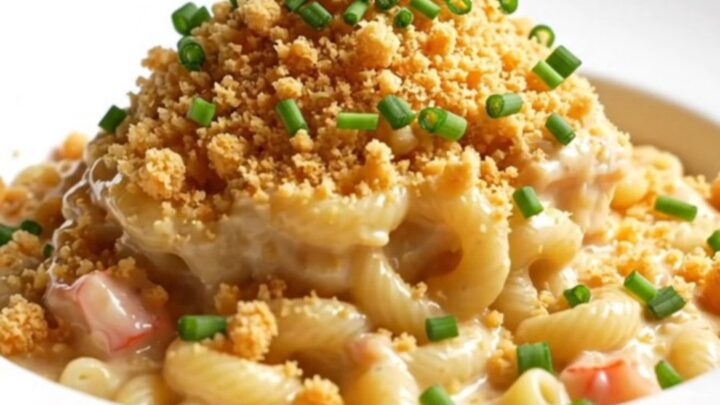
- Final PlatingScoop the finished mac and cheese onto serving plates. Immediately top with the Ritz cracker crumbs and freshly snipped chives to add texture and brightness to the dish before serving.Look for The dish should be piping hot and aromatic with the scent of truffle.Tip Serve immediately while the sauce is at its creamiest texture.
In this final stage, the butter-poached lobster and jumbo lump crab are folded into the pasta. The mixture is heated for an additional 15 minutes, allowing the seafood to warm through while remaining tender. The finished dish is then plated and topped with crispy Ritz cracker crumbs and fresh chives, offering a beautiful contrast in both color and texture for a professional-grade presentation.
Common mistakes
A common mistake is using low-quality cheese that does not melt well, which can result in a grainy or oily sauce. Always use block cheese and shred it yourself for the best results.
Another error is overcooking the pasta; start checking for doneness around the 80-minute mark to ensure the shells retain a slight bite. Finally, avoid adding the delicate seafood too early, as prolonged exposure to heat will cause the lobster and crab to become tough and rubbery rather than tender and succulent.
How to tell it’s done
The dish is considered done when the pasta shells are tender to the bite and the sauce has reduced to a thick, velvety consistency that coats a spoon. The seafood must reach an internal temperature of 145°F (63°C) to ensure it is thoroughly heated.
The cheese sauce should be glossy and smooth, with no signs of separation or graininess. If the sauce appears too thick, you may stir in a splash of warm milk or cream to adjust the consistency to your personal preference before serving.
- Shellfish: 145°F (63°C) in the thickest part
Up next · Part 3 of 3
2 variations · storage & make-ahead · 3 answers · printable card
Tips, FAQ & printable recipe (Part 3)← Back to the ingredients (Part 1)