Dinner · Part 2 of 3: Instructions
Spicy Cajun Salmon and Shrimp Bake for an Easy Dinner Step-by-step instructions
- Prep
- Cook
- Total
- Serves
- 4
Before you start
Before beginning, ensure that all ingredients are measured and ready. If using frozen shrimp, make sure they are completely thawed and thoroughly patted dry to prevent excess moisture in the pan.
Preheat the oven well in advance to ensure it reaches the target temperature of 400°F (200°C) before the seafood is placed inside. Have the baking sheet, spatula, and serving plates ready to streamline the assembly and plating process.
Ingredients at a glance (5)
- 4 fillets salmon fillets
- 1 lb shrimp, peeled and deveined
- 2 tbsp Cajun seasoning
- 1 lemon, sliced
- 1 tbsp fresh parsley, chopped
Instructions
Preparation and Arrangement
- Prepare the SeafoodPreheat the oven to 400°F (200°C). Arrange the salmon fillets and the shrimp evenly on a large baking sheet. Ensure the seafood is spaced out to allow for even heat circulation during the baking process, which helps achieve the desired texture.Look for The seafood is laid out in a single layer on the pan.Tip Pat the salmon and shrimp dry with paper towels before seasoning to ensure the spices adhere properly and the seafood browns nicely.
At the end of this phase, the salmon and shrimp should be arranged in a single, even layer on the baking sheet. The ingredients should be dry and ready for seasoning. Check that the oven has reached the correct temperature and that the workspace is clean and organized before proceeding to the seasoning step.
Seasoning and Roasting
- Season and BakeGenerously coat the salmon and shrimp with the Cajun seasoning. Place the lemon slices on top of the salmon and shrimp. Bake in the preheated oven for 12 to 15 minutes, or until the shrimp are opaque and the salmon flakes easily with a fork.Look for The shrimp are pink and opaque, and the salmon is cooked through.Safe temperature 145°F (63°C) internal temperature (fish)Tip Do not overcook the shrimp, as they can become rubbery very quickly. Watch them closely as they approach the 12-minute mark.
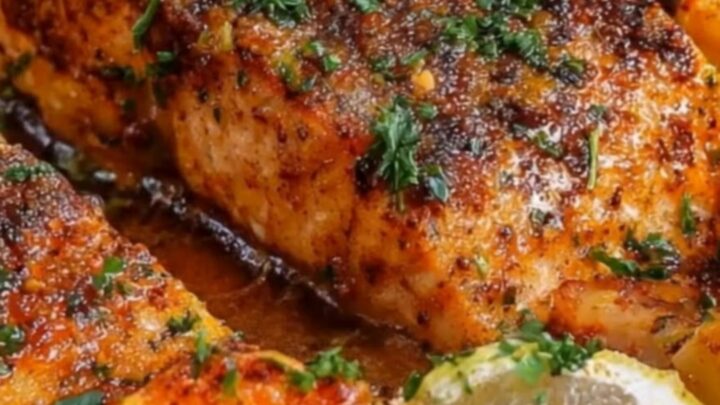
The seafood should be well-coated with the Cajun spice blend. During the roasting process, the salmon and shrimp will release aromatic juices.
By the end of this phase, the salmon should be tender and flaky, and the shrimp should be perfectly pink. Check the internal temperature of the thickest fillet to ensure it is fully cooked.
Garnishing and Plating
- Garnish and ServeRemove the baking sheet from the oven. Sprinkle the fresh chopped parsley over the hot seafood. Let the salmon rest for at least 3 minutes before serving to ensure the juices redistribute throughout the fillets. Serve immediately while hot.Look for The dish is fragrant, steaming, and the parsley is distributed evenly.Safe temperature 145°F (63°C) internal temperature (shellfish)Tip Use a wide metal spatula to transfer the delicate salmon fillets to plates to prevent them from breaking apart.
The final phase involves adding the fresh parsley and allowing the dish to rest. The seafood should look vibrant and smell fragrant. Ensure the salmon has rested for at least 3 minutes to allow the juices to settle. The final dish should be ready to transfer carefully to plates for immediate serving.
Common mistakes
A common mistake is overcooking the seafood, which leads to a dry, tough texture, especially with the shrimp. Another frequent error is overcrowding the baking sheet, which causes the seafood to steam rather than roast, preventing the spices from developing a nice crust.
Additionally, failing to pat the seafood dry before seasoning can lead to a watery result that dilutes the bold flavors of the Cajun spices.
How to tell it’s done
The salmon is done when it is opaque throughout and flakes easily when gently pressed with a fork. It should reach an internal temperature of 145°F (63°C).
The shrimp should be firm, bright pink, and completely opaque, also reaching 145°F (63°C). Checking the thickest part of the salmon with a food thermometer is the most reliable way to ensure it is cooked perfectly without becoming dry.
- Fish: 145°F (63°C) in the thickest part
- Shellfish: 145°F (63°C) in the thickest part
Up next · Part 3 of 3
2 variations · storage & make-ahead · 3 answers · printable card
Tips, FAQ & printable recipe (Part 3)← Back to the ingredients (Part 1)