Desserts · Part 2 of 3: Instructions
Spiced Turkish Carrot Walnut Bundt Cake Step-by-step instructions
- Prep
- Cook
- Total
- Serves
- 12
Before you start
Before starting, set out the eggs and milk so they come to room temperature. This helps the batter emulsify and rise evenly. Preheat the oven to 350°F (175°C) and generously butter a 10-inch fluted bundt pan, making sure to coat all the ridges.
Grate the carrots and chop the walnuts, then toast the walnuts in a dry skillet over medium heat for 2-3 minutes until fragrant. Measure all ingredients and have them ready to go. This recipe comes together quickly, so having everything prepared makes the process smooth.
Ingredients at a glance (12)
- 4 large eggs
- 1 cup granulated sugar
- 1/2 cup whole milk
- 1/2 cup vegetable oil
- 2 cups all-purpose flour
- 2 tsp baking powder
- 1/2 tsp baking soda
- 1/2 tsp salt
- 2 tsp ground cinnamon
- 2 cups freshly grated carrots (about 3 medium)
- 1 cup chopped walnuts, toasted
- Confectioners' sugar, for dusting, to taste
Instructions
Phase 1: Build the Batter
- Prepare the BatterHeat the oven to 350°F (175°C). Generously butter a 10-inch fluted bundt pan, making sure to coat every crevice. In a large bowl, beat the eggs and granulated sugar with an electric mixer on medium-high speed for 3 minutes until thick, pale, and foamy. The mixture should fall in a thick ribbon when the beaters are lifted.Look for The egg-sugar mixture turns pale yellow and triples in volume, forming a dense foam.Safe temperature 160°F (71°C) internal temperature (egg dishes)Tip Use room-temperature eggs for maximum volume; cold eggs take longer to aerate.
- Add Wet IngredientsWith the mixer on low speed, pour in the milk and vegetable oil. Mix until just combined, scraping down the sides of the bowl as needed. The batter will thin slightly but should stay emulsified.Look for The batter becomes smooth and glossy, with no streaks of oil or milk.Tip Add the liquids gradually to keep the foam from deflating.
- Whisk Dry IngredientsIn a separate bowl, whisk together the all-purpose flour, baking powder, baking soda, salt, and ground cinnamon. Sift the dry mixture over the wet batter in three additions, folding gently with a rubber spatula after each addition until no streaks of flour remain.Look for The batter is thick, smooth, and free of lumps, with a warm cinnamon aroma.Tip Sifting aerates the flour and ensures even distribution of leaveners and spice.
The egg-sugar mixture should be thick, pale, and foamy, falling in a ribbon when the beaters are lifted. After adding the liquids, the batter is smooth and glossy.
The dry ingredients are folded in gently, resulting in a thick, lump-free batter with a warm cinnamon scent. The carrots and walnuts are evenly distributed, creating a vibrant, speckled batter ready for the pan.
Phase 2: Bake to Golden
- Fold in Carrots and WalnutsAdd the freshly grated carrots and chopped walnuts to the batter. Fold with a spatula until evenly distributed. The carrot shreds should be visible throughout, and the walnuts should be well coated with batter.Look for The batter is studded with orange carrot shreds and golden walnut pieces.Tip Fold gently to avoid overworking the gluten; the batter should remain airy.
- Fill the PanPour the batter into the prepared bundt pan, spreading it evenly with a spatula. Tap the pan firmly on the counter a few times to release any large air bubbles.Look for The batter fills the pan about three-quarters full, leaving room to rise.Tip Do not overfill; the cake will rise and needs space to dome.
- Bake the CakeBake in the preheated oven for 45 minutes, or until a wooden skewer inserted into the center comes out clean. The top should be golden brown and spring back lightly when touched. The internal temperature should read 200°F (93°C) in the center.Look for The cake is domed, deeply golden, and a skewer comes out with only moist crumbs.Safe temperature 160°F (71°C) internal temperature (egg dishes)Tip Rotate the pan halfway through baking for even browning.
The batter fills the bundt pan about three-quarters full. As it bakes, the cake rises and turns deep golden brown. The kitchen fills with the aroma of cinnamon and toasted nuts. A skewer inserted into the center comes out clean, and the top springs back when touched. The cake is domed and beautifully ridged, ready to cool.
Phase 3: Cool and Finish
- Cool in the PanPlace the bundt pan on a wire rack and let the cake cool in the pan for 15 minutes. This allows the structure to set and makes unmolding easier.Look for The cake pulls away slightly from the pan sides and feels firm to the touch.Tip Do not skip this rest; unmolding too soon can cause the cake to break.
- Unmold and DustInvert the cake onto a wooden board or serving plate. If it sticks, gently tap the pan. Let the cake cool completely, then dust generously with confectioners' sugar just before serving.Look for The cake releases cleanly with defined ridges and a tender crumb.Tip Use a fine-mesh sieve for an even, snowy dusting.
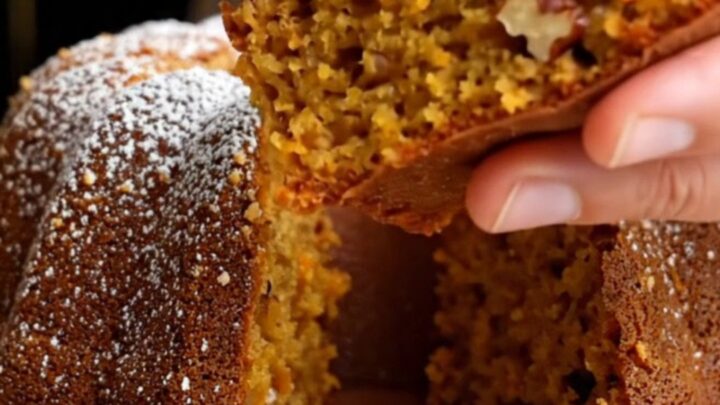
After cooling in the pan for 15 minutes, the cake releases cleanly onto a board or plate. The ridges are well-defined, and the crumb looks tender and moist. Once completely cool, a dusting of confectioners' sugar creates a snowy finish. The cake is ready to slice, revealing a golden interior laced with carrots and walnuts.
Common mistakes
One common mistake is overmixing the batter after adding the flour, which can make the cake tough and dense. Fold just until no streaks remain. Another is opening the oven door too early during baking, which can cause the cake to sink.
Wait until at least 30 minutes have passed. Under-greasing the bundt pan is a frequent issue; use a generous amount of butter and make sure to coat every crevice. Finally, do not skip the cooling time in the pan—unmolding too soon can break the cake.
How to tell it’s done
The cake is done when it is deep golden brown on top and springs back when lightly pressed. A wooden skewer inserted into the center should come out clean or with only a few moist crumbs attached. The internal temperature in the center of the cake should read 200°F (93°C) on an instant-read thermometer.
Because the eggs are fully baked, the cake is safe for everyone. Let the cake cool in the pan for 15 minutes, then invert onto a rack to cool completely before dusting with confectioners' sugar.
- Egg dishes: 160°F (71°C) in the thickest part
Up next · Part 3 of 3
4 variations · storage & make-ahead · 5 answers · printable card
Tips, FAQ & printable recipe (Part 3)← Back to the ingredients (Part 1)