Desserts · Part 2 of 3: Instructions
Spiced Turkish Carrot Walnut Bundt Cake Step-by-step instructions
- Prep
- Cook
- Total
- Serves
- 12
Before you start
Preheat the oven to 350°F (175°C). Generously butter a 10-inch fluted bundt pan and dust with flour, tapping out the excess. Shred the carrots and chop the walnuts, if not already prepared.
Measure all ingredients and have them ready at room temperature for best results. Place a wire rack near the oven for cooling.
Ingredients at a glance (12)
- 3 large eggs
- 1 1/2 cups granulated sugar
- 1 cup whole milk
- 1/2 cup vegetable oil
- 2 1/2 cups all-purpose flour
- 2 tsp baking powder
- 1/2 tsp baking soda
- 1/2 tsp salt
- 2 tsp ground cinnamon
- 1/2 tsp ground nutmeg
- 2 cups shredded carrots (about 3 medium)
- 1 cup chopped walnuts
Instructions
Whisk the Batter
- Whisk the wet ingredientsIn a large bowl, whisk the eggs and granulated sugar together until pale and frothy, about 2 minutes. The mixture should be light and airy, with a slight ribbon when the whisk is lifted. Whisk in the whole milk and vegetable oil until fully combined and smooth.Look for The mixture turns pale and frothy, with small bubbles on the surface.Safe temperature 160°F (71°C) internal temperature (egg dishes)Tip Whisk vigorously to incorporate air; this helps the cake rise.
- Add the dry ingredientsIn a separate bowl, whisk together the all-purpose flour, baking powder, baking soda, salt, ground cinnamon, and ground nutmeg. Gradually add the dry ingredients to the wet mixture, whisking until just combined. Do not overmix; a few small lumps are fine.Look for The batter becomes smooth and thick, with no dry streaks.Tip Sift the dry ingredients if they are lumpy for a smoother batter.
- Fold in carrots and walnutsUsing a rubber spatula, gently fold the shredded carrots and chopped walnuts into the batter until evenly distributed. The batter will be thick and chunky with carrot and nut pieces.Look for The batter is studded with orange carrot shreds and nut pieces.Tip Fold gently to avoid deflating the batter.
The eggs and sugar become pale and frothy, with a ribbon-like consistency. After adding the milk and oil, the mixture is smooth and shiny.
When the dry ingredients are incorporated, the batter is thick and lump-free, with a pleasant spice aroma. Folded carrots and walnuts are evenly distributed, creating a chunky, appetizing batter.
Bake the Cake
- Prepare the bundt panGenerously butter a 10-inch fluted bundt pan, making sure to get into all the crevices. Dust with flour, tapping out any excess. This ensures the cake releases cleanly after baking.Look for The pan is evenly coated with butter and flour.Tip Use a pastry brush to reach every ridge and groove.
- Pour the batter into the panPour the batter into the prepared bundt pan, spreading it evenly with a spatula. Tap the pan gently on the counter a few times to release any air bubbles.Look for The batter fills the pan about three-quarters full.Tip Do not overfill; leave room for the cake to rise.
- Bake the cakeBake in a preheated 350°F (175°C) oven for 50 to 60 minutes, or until a toothpick inserted in the center comes out clean. The top should be deep golden brown and the cake should pull away from the sides slightly.Look for A toothpick inserted in the center comes out clean or with a few moist crumbs.Safe temperature 160°F (71°C) internal temperature (egg dishes)Tip Rotate the pan halfway through baking for even browning.
The batter fills the prepared pan evenly. As it bakes, the kitchen fills with the scent of cinnamon and nutmeg. The cake rises tall, forming sculpted ridges. After 50 minutes, the top is deep golden brown, and a toothpick inserted in the center comes out clean. The cake has pulled away from the sides slightly.
Cool and Invert
- Cool the cake in the panLet the cake cool in the pan on a wire rack for 10 minutes. This allows the cake to set and makes it easier to remove without breaking.Look for The pan is warm but not hot to the touch.Tip Do not skip this rest; it prevents the cake from sticking.
- Invert the cake onto a boardPlace a wooden board or serving plate upside down over the pan. Carefully flip the pan and board together, then lift the pan off. The cake should release cleanly, showing the fluted ridges.Look for The cake slides out with its sculpted ridges intact.Tip If the cake sticks, gently tap the bottom of the pan.
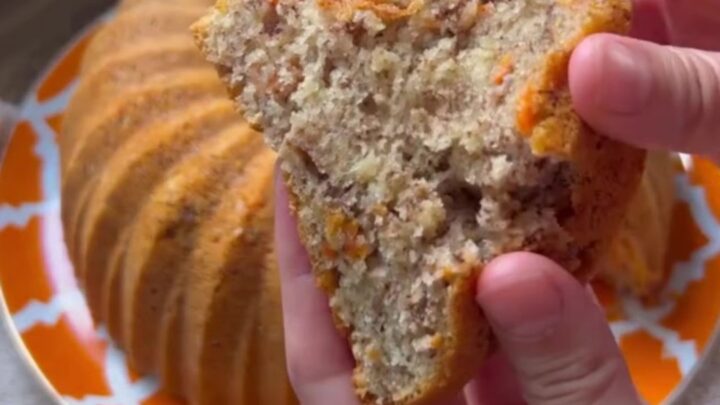
After a 10-minute rest in the pan, the cake is warm and set. Placing the board over the pan and flipping quickly releases the cake with a gentle thud. The fluted ridges are intact, and the crumb is tender and amber. The cake is ready to slice and serve, with a beautiful pattern on every piece.
Common mistakes
Overmixing the batter after adding the flour can develop gluten and make the cake tough. Mix until just combined. Not greasing the bundt pan thoroughly can cause the cake to stick; use a pastry brush to coat every crevice.
Skipping the rest time before inverting may cause the cake to break apart. Also, opening the oven door too early can cause the cake to sink.
How to tell it’s done
The cake is done when a toothpick inserted into the deepest part of the center comes out clean or with just a few moist crumbs attached. The top will be deep golden brown, and the cake will start to pull away from the sides of the pan.
The internal temperature should reach 200°F (93°C) for a fully baked cake. Let it cool in the pan for exactly 10 minutes before inverting.
- Egg dishes: 160°F (71°C) in the thickest part
Up next · Part 3 of 3
4 variations · storage & make-ahead · 5 answers · printable card
Tips, FAQ & printable recipe (Part 3)← Back to the ingredients (Part 1)