Appetizers · Part 2 of 3: Instructions
Sparkling Water Börek with Feta and Parsley Step-by-step instructions
- Prep
- Cook
- Total
- Serves
- 10
Before you start
Before starting, gather all your ingredients and equipment. If using frozen yufka or phyllo, thaw it overnight in the refrigerator according to the package instructions. Have your baking dish ready, and preheat the oven to 380°F (193°C) just before baking.
Prepare the egg wash by whisking the eggs, milk, and oil together. Crumble the feta and chop the parsley so they're ready to go. The entire assembly takes about 20 minutes, so it's a quick process once everything is prepped.
Ingredients at a glance (7)
- 1 package yufka phyllo pastry sheets (about 12 sheets)
- 300 g white feta cheese, crumbled
- 1/2 cup fresh parsley, chopped
- 2 large eggs
- 1 cup milk
- 1/2 cup vegetable oil
- 1 bottle (750 ml) sparkling mineral water
Instructions
Layer and Fill
- Prepare the Egg WashIn a bowl, whisk together the eggs, milk, and vegetable oil until fully combined and slightly frothy. This wash will be brushed between the phyllo layers to help them crisp and puff during baking.Look for The mixture should be smooth and pale yellow, with no streaks of egg white.Tip Use a fork or whisk to ensure the oil is well incorporated; it will separate if left standing.
- Layer the PhylloPlace one sheet of yufka in the baking dish, letting the edges hang over. Brush the sheet lightly with the egg wash. Repeat with about half of the phyllo sheets, brushing each layer, until you have a stack of about 6 sheets.Look for The sheets should be evenly coated but not soaking wet; the pastry will absorb the wash as you layer.Tip Keep the unused sheets covered with a damp towel to prevent them from drying out.
- Add the FillingScatter the crumbled feta cheese and chopped parsley evenly over the layered phyllo, leaving a small border around the edges. Press the filling gently so it stays in place.Look for The feta should be distributed evenly so every square gets a good bite.Tip If the feta is very salty, give it a quick rinse and pat dry before crumbling.
At the end of this phase, you'll have a baking dish filled with alternating layers of phyllo and a generous scattering of feta and parsley. The top layer should be smooth and well-brushed with the egg wash.
The edges should be tucked in neatly to keep the filling enclosed. The dish looks like a rustic, golden-topped pastry ready for the oven. Take a moment to ensure the feta is evenly distributed and the layers are all brushed, as this will affect the final texture.
Cut and Pour
- Top with Remaining PhylloLayer the remaining phyllo sheets over the filling, brushing each sheet with the egg wash as before. Tuck the overhanging edges into the dish neatly, then brush the top layer with any remaining wash.Look for The top should be smooth and well sealed; the edges should be tucked in to prevent drying.Tip Use a sharp knife to trim excess phyllo if needed, but tucking works best for a rustic look.
- Cut into SquaresUsing a sharp chef's knife, cut the assembled börek into twenty even square portions, cutting all the way through the layers. This allows the sparkling water to penetrate and helps the pastry puff evenly.Look for The cuts should be clean and straight, creating uniform squares.Tip Wipe the knife between cuts to keep the edges neat.
- Pour Sparkling WaterPour the entire bottle of sparkling mineral water evenly over the cut squares, making sure every surface gets wet. The water will bubble and sizzle as it seeps into the layers.Look for You'll see bubbles forming and the pastry absorbing the water; the surface should look moist but not flooded.Tip Pour slowly and evenly to avoid washing away the filling.
The börek is now cut into twenty neat squares, and the sparkling water has been poured over the top. You'll see bubbles forming and the liquid being absorbed into the pastry. The surface should look moist but not swimming in water. The cut lines are visible, and the feta filling is peeking through in places. This is the moment before the oven, where the magic begins. The water will create steam, causing the layers to separate and puff.
Bake and Serve
- Bake the BörekBake in a preheated 380°F (193°C) oven for 35 minutes, or until the top is deep golden brown and the layers have puffed dramatically. The börek should feel crisp to the touch.Look for The pastry will rise and turn a rich golden color; the edges may be slightly darker.Safe temperature 160°F (71°C) internal temperature (egg dishes)Tip Rotate the pan halfway through for even browning.
- Cool and ServeRemove from the oven and let rest for 5 minutes. The internal temperature of the egg mixture should reach 160°F (71°C). Tap the top with a knife to hear the crisp crunch, then lift out the squares and serve warm.Look for The börek should sound hollow when tapped and the layers should separate easily.Safe temperature 160°F (71°C) internal temperature (egg dishes)Tip Serve with Turkish tea for an authentic experience.
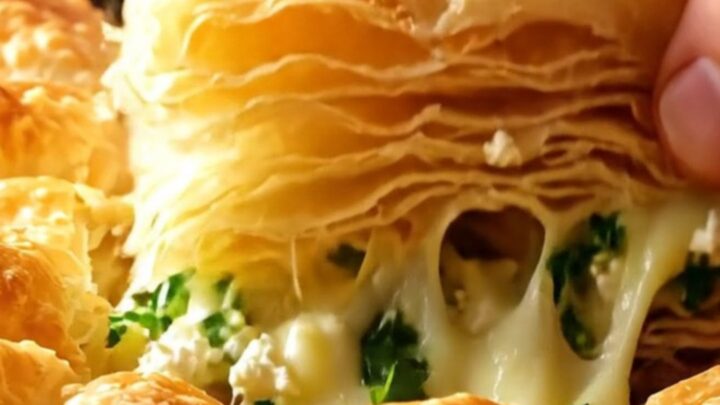
After 35 minutes in the oven, the börek emerges tall and golden, with a crackly top that shatters when tapped. The kitchen smells of buttery pastry and baked feta. The squares have puffed up, and the layers are visibly separate and airy. Let it rest briefly, then lift out a square to reveal the crisp, flaky interior. The feta is melted and fragrant, and the parsley adds a fresh green contrast. Serve warm with tea for the full experience.
Common mistakes
One common mistake is over-brushing the phyllo with the egg wash, making the layers too wet and resulting in a dense, soggy pastry. Use a light hand and brush each sheet just enough to moisten it.
Another pitfall is not cutting the squares before baking—this step is crucial because it allows the sparkling water to penetrate and helps the börek puff evenly. If you skip it, the pastry may not rise as much. Also, be sure to pour the sparkling water evenly; if you pour it all in one spot, the center may become too wet and the edges dry.
How to tell it’s done
The börek is done when the top is deep golden brown and the pastry has puffed dramatically, with visible layers that look airy and crisp. Tap the top with a knife or your finger; it should sound hollow and shatter slightly.
The internal temperature of the egg mixture should reach 160°F (71°C) to ensure the eggs are fully cooked. Let it rest for 5 minutes before cutting, as this helps the layers set and makes it easier to lift out cleanly. The edges may be slightly darker, which is fine.
- Egg dishes: 160°F (71°C) in the thickest part
Up next · Part 3 of 3
4 variations · storage & make-ahead · 5 answers · printable card
Tips, FAQ & printable recipe (Part 3)← Back to the ingredients (Part 1)