Dinner · Part 2 of 3: Instructions
Spanish Smoked Paprika and Chorizo Crockpot Roast Step-by-step instructions
- Prep
- Cook
- Total
- Serves
- 6
Before you start
Before you start, gather all your ingredients and have them ready. The chuck roast can go in whole, but if it's very thick, you can cut it into a few large pieces to help it cook more evenly.
Slice the chorizo into thin rounds, mince the garlic, and drain the piquillo peppers. Prepare the saffron broth by steeping a pinch of saffron in warm beef broth. Measure out the smoked paprika. Have your slow cooker ready and the lid nearby.
Ingredients at a glance (8)
- 3 lb beef chuck roast
- 150 g dry-cured Spanish chorizo, sliced
- 2 tbsp sweet smoked paprika
- 200 g roasted piquillo peppers, drained
- 6 cloves garlic, minced
- 250 ml saffron beef broth
- chopped fresh parsley, for serving
- cooked saffron yellow rice, for serving
Instructions
Layering and Slow Cooking
- Layer the IngredientsPlace the beef chuck roast in the bottom of a 6-quart slow cooker. Scatter the sliced chorizo over and around the roast. Sprinkle the smoked paprika evenly over the meat and chorizo. Add the roasted piquillo peppers and minced garlic, tucking them into the spaces around the roast. Pour the saffron broth over everything, making sure the liquid reaches the bottom of the cooker.Look for The roast is nestled among the chorizo, peppers, and garlic, with the paprika coating the surface.Tip No need to sear the beef first; the slow cooker builds deep flavor as it cooks.
- Cover and Cook on LowCover the slow cooker with its lid. Set the heat to LOW and cook for 8 hours, undisturbed. The long, gentle heat will break down the collagen in the chuck roast, making it fork-tender. The chorizo will release its smoky oils, infusing the broth and meat with rich Spanish flavor.Look for After 8 hours, the meat should be very tender and easily pull apart with a fork.Tip Avoid lifting the lid during cooking; each peek releases heat and adds cooking time.
At the end of this phase, the slow cooker is filled with the roast, chorizo, peppers, garlic, and broth, all covered and cooking on low.
The kitchen begins to smell of smoked paprika and garlic. After 8 hours, the meat should be very tender, and the liquid will have a deep red color from the paprika and chorizo oil.
Shredding and Temperature Check
- Shred the BeefUsing two forks, shred the beef directly in the slow cooker, mixing it with the chorizo and peppers. The meat should fall apart easily. Stir to coat all the shreds with the smoky, saffron-scented broth. If the meat is not yet shreddable, cover and cook for another 30 minutes, then check again. Let it rest for 3 minutes before slicing.Look for The beef shreds into long, moist strands, and the broth is deep red from the paprika.Safe temperature 145°F (63°C) internal temperature (steaks, chops and roasts)Tip Use two forks in a claw-like motion to shred quickly and evenly.
- Check the TemperatureAfter shredding, check that the beef has reached an internal temperature of at least 145°F (63°C). Use an instant-read thermometer inserted into the thickest part of the meat. If it hasn't reached that temperature, return the lid and cook for another 15 to 20 minutes before checking again. Let it rest for 3 minutes before slicing.Look for The thermometer reads 145°F (63°C) or higher.Safe temperature 145°F (63°C) internal temperature (steaks, chops and roasts)Tip The meat will be well above this temperature after 8 hours, but it's good to verify.
The beef is now shredded into long, moist strands, mixed with the chorizo and peppers. The broth is rich and flavorful, coating everything. Use an instant-read thermometer to confirm the beef is at least 145°F (63°C) before serving.
Serving
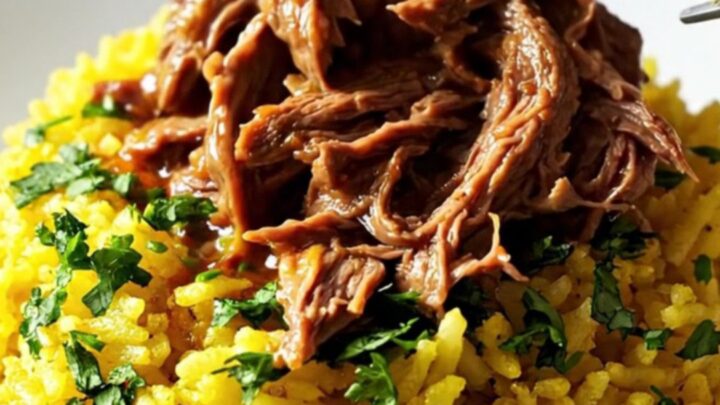
- Serve Over RiceSpoon the shredded beef and chorizo mixture over a bed of cooked saffron yellow rice. Garnish with a generous sprinkle of chopped fresh parsley. The rice soaks up the smoky, savory broth, making each bite rich and satisfying.Look for The beef is piled over yellow rice, with parsley adding a fresh green contrast.Tip Warm the rice before serving so the dish stays hot.
Spoon the shredded beef and chorizo over saffron rice, and finish with a sprinkle of fresh parsley. The dish is vibrant, with the yellow rice contrasting with the deep red meat. The aroma is irresistible, and each bite is savory, smoky, and satisfying.
Common mistakes
One common mistake is lifting the lid too often during cooking, which lets heat escape and extends the cooking time. Another is using a lean cut of beef, like sirloin, which will dry out instead of becoming tender.
Also, don't skip the chorizo; it's a key flavor component. Finally, make sure the broth doesn't completely evaporate; if it looks too dry, add a little water or beef broth, but the slow cooker should retain enough liquid.
How to tell it’s done
The beef is done when it is fork-tender and easily shreds apart. You can check by inserting a fork into the thickest part of the roast; it should twist and pull apart with little resistance.
The internal temperature should be at least 145°F (63°C) for food safety, though it will likely be higher after 8 hours. The broth will be deep red and slightly thickened from the rendered chorizo fat and paprika. The aroma will be intensely smoky and savory.
- Steaks, chops and roasts: 145°F (63°C) in the thickest part, then a 3-minute rest
Up next · Part 3 of 3
4 variations · storage & make-ahead · 5 answers · printable card
Tips, FAQ & printable recipe (Part 3)← Back to the ingredients (Part 1)