Dinner · Part 2 of 3: Instructions
Spanish Chorizo and Butter Bean Crispy Chicken Skillet Step-by-step instructions
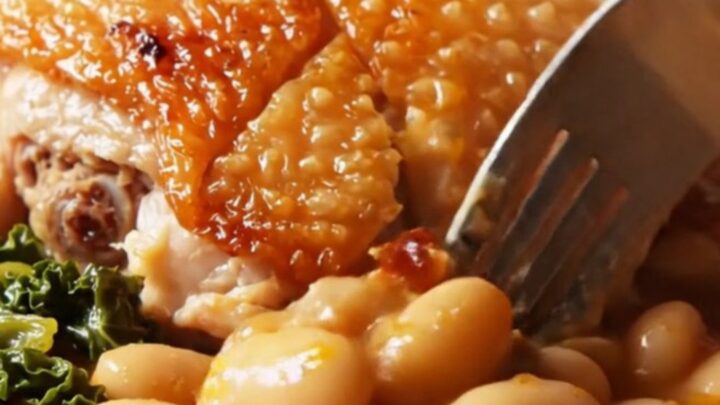
- Prep
- Cook
- Total
- Serves
- 4
Before you start
Set everything up before the pan goes on the heat, because the cooking moves quickly once the chicken starts to sizzle. Blot the chicken thighs until they are bone-dry, score the skin, and season them with smoked paprika on both sides; leave them uncovered on a plate while you prep the rest, which helps the skin dry further.
Dice the chorizo into small, even cubes, slice the garlic thinly, rinse and drain the butter beans, and strip and chop the kale. Measure the chicken stock and set it near the stove. Position a plate for the seared chicken, have the wooden spoon and tongs ready, and preheat the empty skillet for a minute or two so the thighs sear the moment they land. With everything staged, the whole dish flows in one continuous motion.
Ingredients at a glance (8)
- 4 bone-in, skin-on chicken thighs, patted dry
- 2 tsp smoked Spanish paprika (pimentón), plus more to taste
- 4 oz cured Spanish chorizo, diced
- 4 cloves garlic, thinly sliced
- 2 cans (about 15 oz each) giant butter beans, rinsed and drained
- 1/2 cup chicken stock
- 4 oz kale, stemmed and roughly chopped
- 1 tbsp olive oil, if the pan looks dry
Instructions
Season and stage
- Season and score the chickenPat the chicken thighs completely dry with paper towels, then score the skin in two or three shallow cuts, about 1/4 inch deep, without cutting into the meat. Season both sides generously with the smoked paprika, rubbing the spice into the scored skin so every crevice is coated and the surface looks evenly rust-red.Look for The skin looks evenly rust-red and dry, with no wet or clumpy patches of spice left on the surface.Tip Dry skin is what crisps; blot again right before the pan goes on the heat.
- Prep the chorizo, garlic, and beansDice the chorizo into 1/4-inch cubes so it renders quickly and evenly. Slice the garlic cloves thin. Rinse and drain the butter beans in a colander and let them sit a moment, then stem the kale and tear the leaves into bite-size pieces. Line everything up beside the stove before the pan goes on.Look for The chorizo cubes hold their shape, the garlic slices are even, and the beans glisten but no longer drip.Tip Small, even chorizo dice melts into the oil instead of staying chewy in the finished stew.
By the end of the first phase, every component is prepped and the chicken is ready for the pan. The thighs are blot-dry, scored through the skin in shallow cuts, and coated in smoked paprika, with the spice rubbed into every scored crevice. The chorizo is diced small and even, the garlic is sliced thin, the beans are rinsed and draining in the colander, and the kale is stemmed and torn. Nothing should still be on the cutting board except the plate you will use for the seared chicken. Check that the skillet is within easy reach and that the stock is measured, because the next phase will not give you time to pause.
Sear and simmer
- Crisp the chicken skinSet a large oven-safe skillet over medium-high heat and lay the thighs in skin-side down, without crowding. Cook undisturbed for 12 minutes, tilting the pan and spooning off excess fat as it collects, until the skin is deeply browned and shatteringly crisp. If the pan looks dry at any point, add the olive oil around the edges.Look for The skin releases easily when nudged with tongs and sounds like crackling when tapped.Tip Resist moving the thighs early; the crust tears before it sets.
- Render the chorizo and garlicTransfer the chicken to a plate, skin-side up, leaving the rendered fat behind. Add the chorizo to the skillet over medium heat and cook for 3 to 4 minutes, stirring, until the cubes curl and the fat turns brick red. Add the sliced garlic and cook 1 minute more, just until fragrant and pale gold.Look for The oil glows orange-red and the kitchen smells of smoked paprika and frying garlic.Tip Pull the garlic the second it turns gold; burnt garlic turns the whole stew bitter.
- Simmer the beans, stock, and kaleAdd the butter beans, chicken stock, and kale to the chorizo oil, stirring and scraping up the browned bits from the bottom of the pan. Nestle the chicken thighs back in skin-side up, crust above the liquid, and let everything simmer gently for 8 to 10 minutes, until the kale wilts and the beans turn creamy.Look for The stew bubbles lazily, the kale slumps into the beans, and the liquid thickens slightly.Tip Keep the skin above the liquid so the crust stays crisp instead of steaming.
The second phase ends with the pan transformed. The chicken skin should be deep mahogany and crisp enough that it releases cleanly from the pan when lifted with tongs. The chorizo cubes will have curled at the edges and stained the whole pan brick red, and the garlic will smell sweet and toasty, not acrid. After the beans, stock, and kale go in, the stew should be bubbling lazily, the kale slumped and dark green, the liquid slightly thickened and glossy with chorizo oil. The chicken sits skin-side up above the liquid, crust intact. Before moving on, confirm the pan is at a gentle simmer, never a rolling boil, so the bean skins hold.
Finish and serve
- Check the chicken for donenessInsert an instant-read thermometer into the thickest part of a thigh, away from the bone. The chicken is done at 165°F (74°C); if it reads below, keep the pan at a gentle simmer for a few minutes more and check again. The meat should feel firm and the juices run clear.Look for The thermometer reads 165°F (74°C) in the thickest part of every thigh.Safe temperature 165°F (74°C) internal temperature (poultry)Tip Thighs vary in size, so check each one rather than trusting the largest.
- Rest, then break through the crustPull the skillet off the heat and let the chicken rest in the beans for 5 minutes, skin-side up so the crust stays dry. Taste the stew and adjust the smoked paprika. Then press a spoon through the crackling skin into the creamy beans below and serve straight from the pan.Look for The skin still snaps when pressed, and the beans below look glossy and thick.Tip A short rest in the pan lets the thigh meat relax while the crust holds its crunch.
In the final phase, verify doneness and texture. Every thigh should read 165°F (74°C) at its thickest point away from the bone, with clear juices and no pink near the bone. After the 5-minute rest in the pan, the skin should still snap when pressed, dry and crackling on top.
The stew should look creamy and unified, with the beans glossy and the kale fully incorporated, and the spoon should leave a trail through the liquid. Taste and adjust the smoked paprika now, since the chorizo has already contributed plenty of seasoning. Then break through the crust at the table and serve straight from the skillet, with bread alongside for the red oil.
Common mistakes
The most common failure is wet chicken skin: any surface moisture steams instead of crisps, so blot the thighs again right before they hit the pan. Crowding the skillet drops the temperature and traps steam, leaving gray, rubbery skin; use a wide pan and leave space between thighs, or crisp in two batches.
Moving the chicken too early tears the crust before it sets, so leave it undisturbed for the full sear. Garlic burnt in the chorizo oil turns the entire stew bitter, and it cannot be rescued, so watch it closely during that single minute. Finally, letting the bean stew boil hard breaks down the bean skins and turns the liquid starchy; a lazy simmer keeps the beans whole and creamy.
How to tell it’s done
The chicken is safely done when an instant-read thermometer inserted into the thickest part of each thigh, without touching the bone, reads 165°F (74°C); check every thigh, since sizes vary and smaller ones finish first. Visually, the meat near the bone should show no pink and the juices should run clear.
The skin should be deep mahogany, audibly crisp when tapped with tongs, and still dry on top after resting. The stew underneath is done when the kale has fully wilted, the beans look glossy and slightly thickened, and the liquid coats the back of a spoon. If the stew reduces too far before the chicken reaches temperature, add a splash of stock and keep the simmer gentle.
- Poultry: 165°F (74°C) in the thickest part
Up next · Part 3 of 3
4 variations · storage & make-ahead · 5 answers · printable card
Tips, FAQ & printable recipe (Part 3)← Back to the ingredients (Part 1)