Desserts · Part 2 of 3: Instructions
Soft Chocolate Cake Roll with Creamy Filling Step-by-step instructions
- Prep
- Cook
- Total
- Serves
- 8
Before you start
Ensure the chocolate sponge cake is completely cool to room temperature before attempting to fill it. If the cake is even slightly warm, the whipped cream will soften and bleed into the sponge, ruining the integrity of the swirl.
Prepare your workspace by laying out a large sheet of parchment paper, which will serve as your working surface and aid in the rolling process.
Have an offset spatula ready for spreading the cream, and ensure your refrigerator has enough clear space to accommodate the platter for the final chilling stage.
Ingredients at a glance (4)
- 1 prepared chocolate sponge cake, cooled
- 1 cup heavy whipping cream, chilled
- 1 tbsp cocoa powder, for dusting
- 2 tbsp melted chocolate, for drizzling
Instructions
Whipping the cream
- Prepare the fillingIn a chilled mixing bowl, whip the heavy whipping cream using an electric mixer on medium-high speed until stiff peaks form, ensuring the cream is firm enough to hold the roll shape.Look for The cream holds its shape when the beaters are lifted.Safe temperature 160°F (71°C) internal temperature (egg dishes)Tip Keep the bowl and beaters chilled in the freezer for ten minutes before starting to ensure the cream whips up quickly and stays stable.
The whipped cream should be thick, smooth, and hold stiff peaks when the mixer is lifted. It should look glossy and feel very light, yet substantial enough to maintain its form when spread across the surface of the sponge cake.
Assembling the roll
- Assemble the rollLay the prepared chocolate sponge cake flat on a sheet of parchment paper. Spread the whipped cream evenly over the surface of the cake, leaving a small border at the edges. Carefully roll the cake tightly into a log shape, using the parchment paper to assist with the tension.Look for The layer of cream is smooth and even across the sponge.Tip If the cake cracks, gently press the edges together while rolling to seal the seam.
The cake should be rolled into a tight, uniform log. Check that the filling is distributed evenly up to the edges and that the parchment paper has helped guide the cake into a secure, compact shape without any large air gaps.
Garnishing and setting
- Garnish and chillPlace the rolled cake on a serving platter. Dust the top generously with cocoa powder and finish with a drizzle of melted chocolate. Refrigerate the cake roll for at least one hour to allow the structure to set before slicing with a sharp knife.Look for The chocolate drizzle has hardened slightly and the cake feels firm.Tip Wipe the knife blade with a warm, damp cloth between each slice to ensure clean, beautiful swirls in every serving.
The cocoa powder should be dusted evenly, and the chocolate drizzle should be set. The entire roll must feel firm to the touch, indicating that it has chilled sufficiently to be sliced into clean, beautiful portions for serving.
Common mistakes
A common mistake is attempting to roll the cake while it is still warm, which leads to breakage and a melted filling. Another frequent error is over-whipping the cream, which can turn it into a grainy, butter-like consistency that is difficult to spread evenly.
Avoid pressing too hard when rolling, as this can squeeze the filling out of the ends of the log. Finally, failing to chill the cake long enough will make it difficult to get clean, sharp slices, often resulting in a messy presentation on the plate.
How to tell it’s done
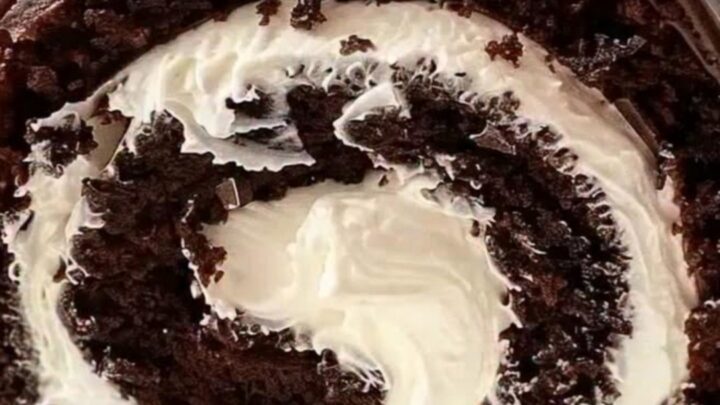
The cake roll is ready when the filling is firm and the sponge holds its shape without springing back or collapsing under its own weight. When slicing, the knife should pass through the cake easily, revealing a distinct, clean spiral of whipped cream against the dark chocolate sponge.
The internal temperature of any egg-based components within the sponge should reach 160°F (71°C) during the initial baking phase, though the assembly phase focuses primarily on the texture of the cream and the firmness of the roll.
- Egg dishes: 160°F (71°C) in the thickest part
Up next · Part 3 of 3
2 variations · storage & make-ahead · 3 answers · printable card
Tips, FAQ & printable recipe (Part 3)← Back to the ingredients (Part 1)