Dinner · Part 2 of 3: Instructions
Smothered Pork Tenderloin with Caramelized Onion Gravy Step-by-step instructions
- Prep
- Cook
- Total
- Serves
- 4
Before you start
Before beginning, ensure the pork tenderloin is removed from the refrigerator about 20 minutes prior to cooking to allow it to come closer to room temperature. This promotes even cooking throughout the meat.
Prepare the onions by peeling and slicing them into uniform strips, which ensures they cook at the same rate. Have all your measured ingredients within easy reach near the stove to maintain a smooth workflow during the cooking process.
Ingredients at a glance (2)
- 1 1/2 lb pork tenderloin, trimmed of silver skin
- 3 large yellow onions, thinly sliced
Instructions
Searing the Pork
- Sear the porkSeason the pork tenderloin with salt and pepper. Heat a large skillet over medium-high heat with a splash of oil. Sear the pork on all sides until golden brown, then transfer to a baking dish.Look for The pork should develop a deep brown crust on the exterior surfaces.Tip Do not crowd the skillet to ensure the pork browns rather than steams.
At this stage, the pork should have a deep, golden-brown crust on all sides. The meat will remain raw in the center, which is expected as it will finish cooking in the oven later.
Ensure the skillet is hot enough before adding the pork to prevent sticking and to achieve a proper sear. The meat should release easily from the pan when it is ready to be turned; if it feels stuck, allow it to cook for another minute.
Developing the Onion Base
- Caramelize the onionsIn the same skillet, cook the sliced onions over medium heat, stirring occasionally, until they turn soft, jammy, and deep golden brown. This process relies on the natural sugars of the onions to create a rich, flavorful base for the gravy.Look for Onions are ready when they are limp, jammy, and deep golden brown in color.Tip Adding a pinch of salt helps draw out moisture, speeding up the caramelization process.
The onions should now be soft, jammy, and a rich, deep golden-brown color. They should smell sweet and aromatic, filling the kitchen with a savory scent. If the onions appear to be drying out too quickly, add a small splash of water to keep them moist. Once they are fully caramelized, they should be ready to be combined with the pork for the final roasting phase, ensuring a cohesive and flavorful result.
Roasting and Finishing
- Roast and finishPour the caramelized onions over the seared pork in the baking dish. Bake at 375°F until the pork reaches an internal temperature of 145°F (63°C). Let the meat rest for at least 5 minutes before slicing to ensure the juices redistribute.Look for The pork is done when the internal temperature reaches 145°F (63°C) and the onions are soft and glossy.Safe temperature 145°F (63°C) internal temperature (steaks, chops and roasts)Tip Check for doneness using a meat thermometer inserted into the thickest part of the loin.
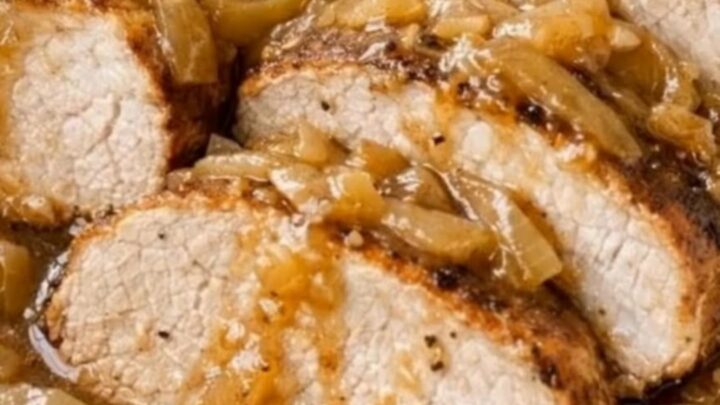
The gravy should now have a glossy, thickened consistency that coats the pork evenly. The pork is fully cooked when it reaches 145°F (63°C) and has rested for at least 5 minutes. The sauce should be rich and savory, with the onions having melted to create a cohesive, flavorful coating. Before serving, verify the internal temperature of the pork one last time to ensure it is safe to consume and perfectly tender.
Common mistakes
A common mistake is rushing the caramelization of the onions, which requires time and moderate heat to develop their signature sweetness and deep color. Using high heat will burn the exterior of the onions while leaving the centers raw and bitter.
Another error is failing to deglaze the pan or incorporate the ingredients properly, which can result in a thin or uneven gravy. Finally, failing to let the pork rest after roasting will cause the juices to run out immediately upon slicing, resulting in drier meat.
How to tell it’s done
The pork is perfectly cooked when a meat thermometer registers 145°F (63°C) in the thickest part of the tenderloin. Because tenderloin is a lean cut, it is important to avoid overcooking, which can lead to a dry texture.
The meat should be firm to the touch but still spring back slightly when pressed. Always allow the pork to rest for at least 5 minutes on a cutting board before slicing, which lets the juices redistribute throughout the meat, ensuring each slice remains succulent and tender.
- Steaks, chops and roasts: 145°F (63°C) in the thickest part, then a 3-minute rest
Up next · Part 3 of 3
2 variations · storage & make-ahead · 3 answers · printable card
Tips, FAQ & printable recipe (Part 3)← Back to the ingredients (Part 1)