Desserts · Part 2 of 3: Instructions
S’mores Quesadilla: Gooey Campfire Treat in 15 Minutes Step-by-step instructions
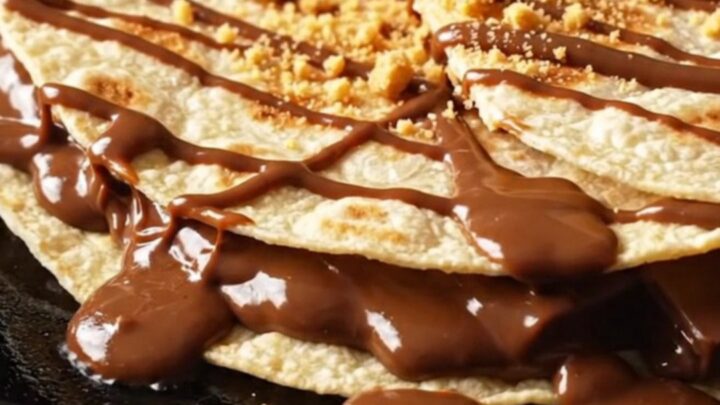
- Prep
- Cook
- Total
- Serves
- 2
Before you start
Before any heat goes on, set out all five components: the tortilla, softened butter, mini marshmallows, milk chocolate and graham crackers. Soften the butter so it spreads without tearing the tortilla, and chop the chocolate from a bar into rough, chip-sized chunks; even pieces melt at the same rate and prevent dry pockets. Crush the crackers into a mixture of fine dust and small pebbles, reserving a spoonful for the final dusting. Position the oven rack about six inches from the broiler element and preheat the broiler to 450°F (230°C).
Ingredients at a glance (7)
- 2 tbsp unsalted butter, softened, for the tortilla
- 1 large flour tortilla, 10 inches across
- 1 cup mini marshmallows
- 1 cup milk chocolate chunks, chopped from a bar
- 1/2 cup crushed honey graham crackers, plus more for dusting
- 1/4 cup warm fudge sauce, for drizzling
- Crushed graham cracker dust, for serving
Instructions
Prep the filling and tortilla
- Crush crackers and chop chocolatePut the graham crackers in a zip-top bag and crush them with a rolling pin until you have a mix of fine crumbs and small pebbles. Chop the milk chocolate bar into rough chunks about the size of chocolate chips, aiming for even pieces so every wedge gets some.Look for The crumbs should feel sandy with a few crunchy bits left; the chocolate should be in chunks, not powder.Tip Freeze the chocolate for ten minutes first so it chops cleanly instead of smearing under the knife.
- Butter the tortillaSpread the softened butter in a thin, even layer over the entire top surface of the flour tortilla, edge to edge. This buttered face becomes the crispy, golden exterior, so make sure the rim is coated too, since it browns first under the broiler and in the skillet.Look for The surface should look evenly glossy with no dry, chalky patches of tortilla showing through.Tip Softened butter spreads without tearing the tortilla; if it is cold, microwave it for a few seconds.
At the end of this phase the workspace is set: graham crackers crushed into a mix of sand and pebbles, the milk chocolate chopped into even chip-sized chunks, and the tortilla coated in a thin, glossy layer of softened butter on its top face. Nothing is cooked yet, so the checks are simple.
The crumbs should still have some texture, not be reduced entirely to dust, because the larger pebbles are what stay crunchy inside the finished wedges. The chocolate chunks should look uniform, with no large slabs that would lag behind in melting. And the buttered tortilla should show no dry, matte patches; any uncoated spot will stay pale and soft instead of crisping in the skillet.
Broil the open-faced tortilla
- Pile on the s'mores fillingSet the tortilla buttered side down on a small baking sheet. Scatter the mini marshmallows over one half, then add the chocolate chunks and the crushed graham crackers on top of the marshmallows, keeping everything about an inch from the edge so the filling stays inside when folded.Look for The half should be generously mounded but not overflowing; the bare border stays visible all around.Tip Reserve a small handful of marshmallows to press into the seam later if any gaps appear.
- Broil until the marshmallows toastPosition the oven rack about six inches from the element and turn the broiler to 450°F (230°C). Broil the open-faced tortilla for about 60 seconds, watching constantly, until the marshmallows puff and turn deep golden brown with a few toasty charred spots.Look for Look for puffed, bronzed marshmallow tops with darker freckles; the chocolate underneath should look glossy and just melted.Tip Do not walk away: marshmallows go from golden to burnt in seconds under a broiler.
Sixty seconds under a 450°F (230°C) broiler should transform the marshmallow half: the minis puff and fuse into one continuous layer, bronzed deep gold with darker freckles where the heat has caramelized the sugar, and the chocolate chunks beneath look wet and glossy, just beginning to slump.
Smell is the second cue: a warm, toasty, almost caramel aroma like marshmallows over a fire. Before moving on, confirm there is no blackening, only browning; a charred spot or two adds campfire flavor, but a black surface means the rack was too close. The tortilla underneath should still be pale and flexible, ready to fold without cracking.
Fold, sear and finish
- Fold the tortilla overWorking quickly while the filling is molten, lift the bare half of the tortilla and fold it over the mounded filling, pressing gently along the curve to seal. The broiled marshmallow surface now sits inside, insulated by the tortilla, ready to be seared crisp on both faces.Look for The seam should hold closed on its own; a little melted marshmallow oozing at the edge is fine and seals as it cools.Tip Use the flat spatula to help lift the hot half without burning a fingertip.
- Sear both sides in a skilletHeat a dry skillet over medium heat, about 350°F (175°C). Slide the folded quesadilla in and sear for about 90 seconds per side, pressing lightly with the spatula, until each buttered face is deep golden brown and crisp. Keep the heat at medium so the crust browns before the filling scorches.Look for Listen for a steady gentle sizzle; lift an edge to check for a mahogany, blistered crust before flipping.Tip Wipe the pan between sides if stray chocolate has caramelized onto it, or it will turn bitter.
- Rest briefly and cut wedgesTransfer the quesadilla to a cutting board and let it stand about a minute, just long enough for the molten filling to stop flowing freely. Cut it into wedges with a sharp knife or a pizza cutter, using one firm downward stroke so the filling stays neatly inside each piece.Look for A clean cut through the crisp shell; the filling should hold in glossy layers rather than flooding the board.Tip A pizza cutter glides through the crisp tortilla without dragging the marshmallow layer sideways.
- Drizzle fudge and dust with grahamsWarm the fudge sauce until it flows easily, then drizzle it in thin ribbons over the wedges. Finish with a scattering of fine graham cracker dust so it clings to the warm fudge. Serve immediately, while the shell shatters and the filling pulls into long, stretchy strings.Look for The drizzle should ribbon and slowly settle; a pull on a wedge should stretch the marshmallow and chocolate in long strings.Tip Drizzle from a spoon held high for thin threads, or low for dramatic puddles of fudge.
After the fold and the two 90-second sears, the quesadilla should be firm to the touch, holding a crisp half-moon shape with a deep golden, blistered crust on both buttered faces. A gentle press with the spatula should meet resistance, not squish.
Cut through and the filling should be fully molten: marshmallow stretching in long strings, chocolate glossy and flowing, graham pebbles suspended in the middle. Rest the wedges one minute, then drizzle warm fudge in thin ribbons and scatter the reserved graham dust so it clings. The final check is the pull: lift a wedge and the filling should stretch dramatically before breaking, never slide out loose.
Common mistakes
The three common failures are all easy to avoid. First, burnt marshmallows: a broiler at full strength can blacken marshmallows in twenty seconds, so keep the rack about six inches away and watch every second of the sixty. Second, a soggy shell: it happens when the butter is skipped or spread too thin, or when the skillet is too cool, so coat the tortilla edge to edge and keep the pan at a steady medium heat with an audible sizzle. Third, filling that escapes: pile the ingredients an inch inside the tortilla's edge and press the fold gently to seal.
How to tell it’s done
The quesadilla is done when the outside is deep golden brown and crisp on both faces, with a few darker blisters where the butter caramelized, and the inside is fully molten: the marshmallows glossy and stretchy, the chocolate completely melted into the marshmallow layer. After cutting, a wedge lifted from the board should pull strings of filling several inches long before they break.
There is no raw ingredient in this recipe, so no internal temperature applies; the visual cues are the standard. If the shell browns before the filling melts, the skillet is too hot; lower the heat, finish the second side more gently, and give the finished wedges an extra minute of standing time so the residual warmth completes the melt.
Up next · Part 3 of 3
4 variations · storage & make-ahead · 5 answers · printable card
Tips, FAQ & printable recipe (Part 3)← Back to the ingredients (Part 1)