Appetizers · Part 1 of 3: Ingredients
Smoky Turkish Babaganoush with Pomegranate and Tahini
- Prep
- Cook
- Total
- Serves
- 6
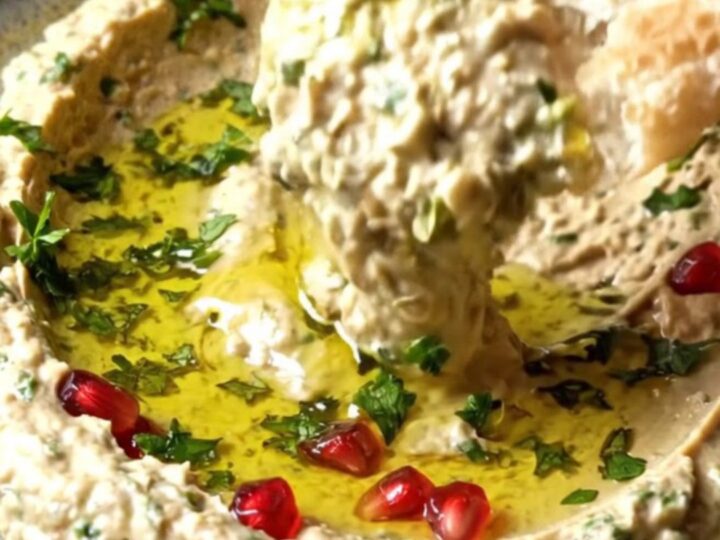
This Turkish babaganoush is the dip that turns any meze spread into a feast. Eggplants are charred over an open flame until their skins blacken and blister, then the smoky flesh is mashed and whipped with creamy tahini, garlic, lemon, and a hint of cumin.
The result is a silky, deeply savory dip with a whisper of fire. Finished with a generous pour of olive oil and a scattering of tart pomegranate seeds, it's a study in contrasts: creamy and crunchy, smoky and bright.
Babaganoush is a beloved Middle Eastern eggplant dip, and this Turkish version takes it to another level. The key is charring the eggplants directly over an open flame, which imparts an irresistible smokiness that you simply can't get from roasting alone.
The charred flesh is then mashed and blended with tahini, garlic, lemon juice, and cumin, creating a dip that's both creamy and light.
The final flourish of pomegranate seeds adds a pop of sweetness and color, making this dish as beautiful as it is delicious. Whether you're hosting a party or just craving a satisfying snack, this babaganoush is a must-try.
Ingredients
- 3 large eggplants
- 1/3 cup sesame tahini
- 2 cloves garlic, minced
- 3 tbsp extra virgin olive oil
- 2 tbsp fresh lemon juice
- 1 tsp salt
- 1/2 tsp ground cumin
For garnish
- Fresh pomegranate seeds, for garnish, to taste
- Chopped fresh parsley, for garnish, to taste
For serving
- Warm pita bread, for serving
Why this recipe works
Charring the eggplants over an open flame is the secret to this dip's deep, smoky flavor. The direct heat caramelizes the sugars in the flesh and adds a subtle bitterness that balances the richness of the tahini. This method also helps to dry out the eggplant, concentrating its flavor and preventing the dip from becoming watery.
Whipping the mashed eggplant with tahini and lemon juice creates an emulsion that gives the babaganoush its luxurious, creamy texture.
The tahini adds nuttiness and body, while the lemon juice brightens the flavors and helps to cut through the smokiness. The result is a dip that is both satisfying and refreshing, with a perfect balance of savory, tangy, and smoky notes.
Notes and substitutions
For the best flavor, use large, firm eggplants with shiny skin. The charring process works best over a gas flame, but you can also use a grill or broiler. If you don't have a gas stove, char the eggplants under a broiler, turning them occasionally until the skins are blackened all over.
Tahini is a key ingredient, so choose a good-quality brand that is smooth and pourable. If your tahini is thick and separated, stir it well before measuring. The lemon juice should be freshly squeezed for the best flavor. Adjust the amount of garlic and salt to your taste, and feel free to add a pinch of cayenne or smoked paprika for extra heat.
- sesame tahini: Sunflower seed butter or well-stirred natural peanut butter (for a nuttier flavor)
- fresh lemon juice: White wine vinegar or apple cider vinegar (use slightly less, about 1 1/2 tbsp)
- ground cumin: Smoked paprika or ground coriander
- pomegranate seeds: Dried cranberries or finely chopped roasted red pepper (for a sweet-tart pop)
Equipment
- Open flame gas burner or grill
- Tongs
- Mixing bowl
- Wooden spoon or fork
- Cutting board
- Chef's knife
- Serving plate
Up next · Part 2 of 3
5 steps · 20 min of cooking · what to look for at each stage
Step-by-step instructions (Part 2)