Dinner · Part 3 of 3: Tips & recipe card
Smoky Chipotle Maple Bourbon Baby Back Ribs Tips, FAQ & printable recipe
- Prep
- Cook
- Total
- Serves
- 4
Tips for success
For the best flavor, use a barbecue sauce that you enjoy eating straight from the jar, as it is the dominant flavor in the dish. If the sauce is very thick, you may want to add a splash of apple cider vinegar or water to loosen it slightly before pouring.
The chipotle peppers can be minced finely or left in larger pieces for a spicier bite. Adjust the amount to suit your heat preference.
To get a caramelized crust on the ribs, transfer the cooked ribs to a baking sheet and broil for 2 to 3 minutes after slow cooking. This step is optional but adds a nice smoky char.
If you do broil, watch them closely to prevent burning. The sauce can also be strained and reduced on the stovetop for a thicker glaze.
Variations
- Spicy Honey Garlic Ribs: Replace the maple bourbon barbecue sauce with a honey garlic sauce, and add 1 tablespoon of soy sauce and 1 teaspoon of minced garlic. Omit the chipotle peppers for a milder, sweeter flavor.
- Smoky Chipotle Beef Ribs: Use beef short ribs or beef back ribs instead of pork. Increase the cooking time to 8 to 10 hours on low, as beef ribs are larger and tougher. The chipotle and honey glaze works equally well with beef.
- Pineapple Chipotle Ribs: Swap the honey for pineapple juice and add 1/2 cup of crushed pineapple to the sauce. This adds a tropical sweetness that pairs well with the smoky chipotle. Reduce the barbecue sauce to 1 cup to keep the consistency thick.
- Chipotle Lime Ribs: Add the zest and juice of 1 lime along with the chipotle peppers. Replace the honey with agave syrup or maple syrup. This brightens the flavor and adds a fresh citrus note that cuts through the richness.
Storage and make-ahead
- Fridge
- Store leftover ribs in an airtight container in the refrigerator for up to 4 days. Keep them submerged in the sauce to maintain moisture.
- Freezer
- Freeze ribs in a freezer-safe container with sauce for up to 3 months. Thaw overnight in the refrigerator before reheating.
- Reheat
- Reheat ribs gently in a covered pot on the stovetop over low heat, or in the microwave in 30-second bursts.
Leftover ribs can be stored in an airtight container in the refrigerator for up to 4 days. Keep them in the sauce to prevent drying out. Reheat gently in the microwave or in a covered skillet over low heat, adding a splash of water or extra barbecue sauce if needed. The ribs also freeze well for up to 3 months.
This dish can be assembled up to 24 hours in advance. Place the ribs in the slow cooker, add the chipotle, honey, and barbecue sauce, then cover and refrigerate.
When ready to cook, place the slow cooker insert directly on the base and cook as directed, adding about 30 minutes to the cooking time to account for the cold start.
Serving ideas
Serve the ribs whole or cut into individual pieces. They pair beautifully with classic barbecue sides like coleslaw, baked beans, or cornbread. The extra sauce can be spooned over the top or served on the side for dipping.
For a lighter meal, serve over a bed of greens or alongside roasted vegetables. The ribs are rich and satisfying, so a simple side dish is all you need.
For a family-style presentation, place the ribs on a large platter and let everyone help themselves. Offer plenty of napkins, as the sauce is sticky and finger-licking good. If you have leftovers, they make excellent sandwiches the next day—just shred the meat and pile it onto buns with extra sauce.
Frequently asked questions
Can this recipe be made with boneless ribs?
What if the sauce is too thin after cooking?
Can this recipe be cooked on high instead of low?
How can the ribs be made less spicy?
Can this recipe be doubled?
Smoky Chipotle Maple Bourbon Baby Back Ribs
Ingredients
- 2 racks baby back pork ribs (about 2 lb total)
- 3 tbsp chipotle peppers in adobo sauce, chopped
- 1/4 cup raw honey
- 1 1/2 cups maple bourbon barbecue sauce
Instructions
- Place the two racks of baby back ribs side by side in the bottom of a 6-quart slow cooker. If needed, cut each rack in half to fit in a single layer. The ribs should sit flat against the bottom of the cooker so they cook evenly.
- Spoon the chopped chipotle peppers in adobo evenly over the ribs, spreading them across the surface. Drizzle the raw honey over the top, letting it pool in the crevices between the racks. Use a spoon to smear the mixture slightly so the ribs are lightly coated.
- Pour the maple bourbon barbecue sauce generously over the ribs, covering them completely. Use a spoon or spatula to spread the sauce evenly, making sure the top of each rack is coated. The sauce will pool around the ribs and create a braising liquid as it cooks.
- Cover the slow cooker and cook on LOW for 6 to 8 hours, or on HIGH for 3 to 4 hours, until the meat is fork-tender and nearly falling off the bone. The sauce will bubble gently around the edges. Avoid lifting the lid during cooking to keep the heat and moisture consistent. Let it rest for 3 minutes before slicing.
- Insert an instant-read thermometer into the thickest part of a rib, avoiding the bone. The meat should read at least 145°F (63°C). For fall-off-the-bone tenderness, cook until the thermometer reads 190°F to 200°F (88°C to 93°C), which allows the collagen to break down fully. Let it rest for 3 minutes before slicing.
- Turn off the slow cooker and let the ribs rest in the sauce for at least 3 minutes. This allows the juices to redistribute and the meat to firm slightly, making it easier to handle and serve without falling apart completely.
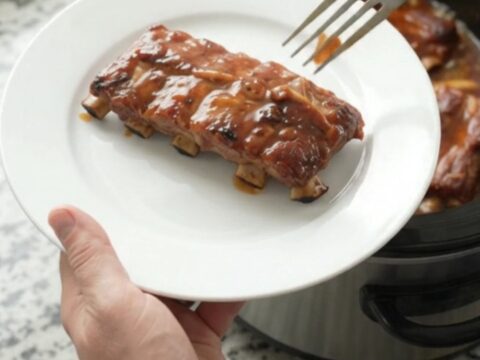
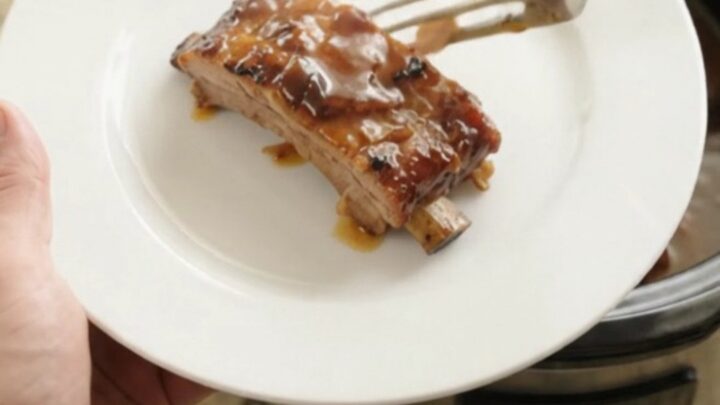
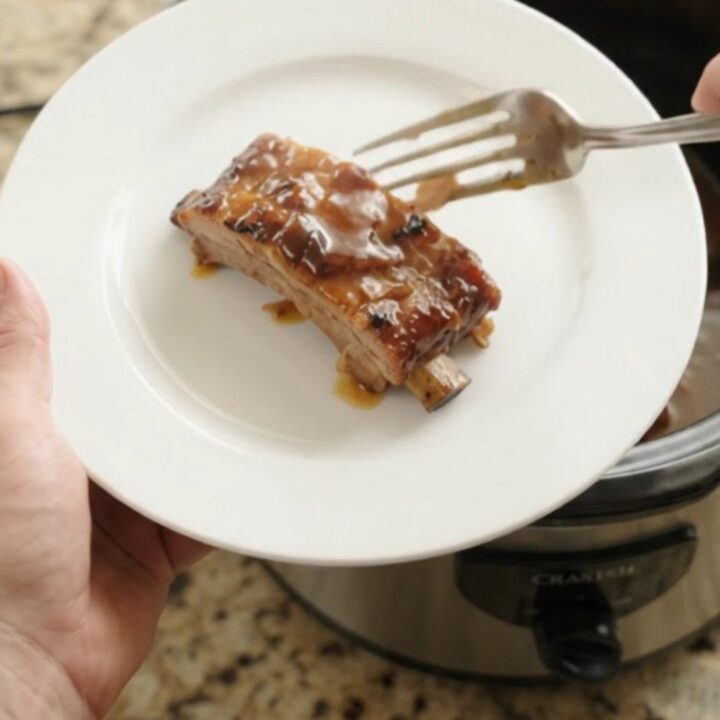
- Using a carving fork or tongs, carefully lift each rack of ribs from the slow cooker and transfer to a serving platter or individual plates. Spoon some of the thickened sauce from the slow cooker over the top. Serve hot, with extra sauce on the side if desired.
Estimated nutrition per serving
- Calories
- 640
- Protein
- 38 g
- Carbohydrates
- 45 g
- Fat
- 35 g
Next recipe
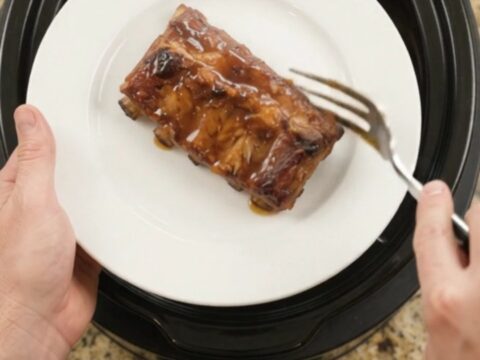
Cherry Cola BBQ Ribs: Slow Cooker Dump Dinner
See the recipe → →This recipe is based on a short cooking video and is published under the pen name Clara Weller. It was checked before publication, but errors can slip through. Nutrition, when shown, is an estimate. Read more in our editorial policy and on our food safety page.
More recipes to try
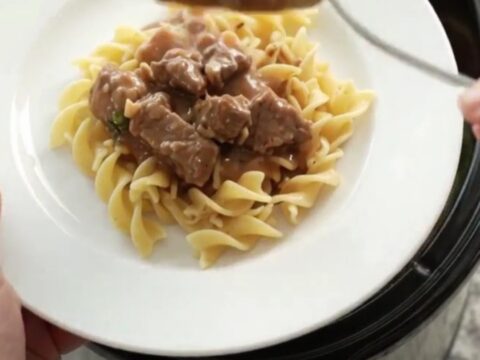
Smoky Chipotle Molasses Baby Back Ribs
Total time: 4 h 10 min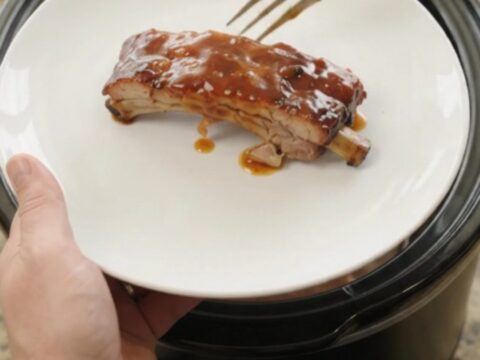
Smoky Chipotle BBQ Baby Back Ribs: Dump-and-Forget Crockpot
Total time: 6 h 10 min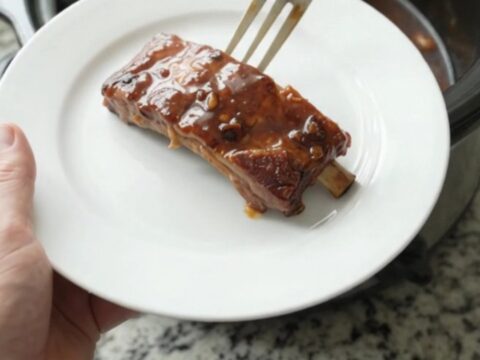
Cherry Cola Molasses Ribs: 10-Minute Crockpot Dinner
Total time: 4 h 10 min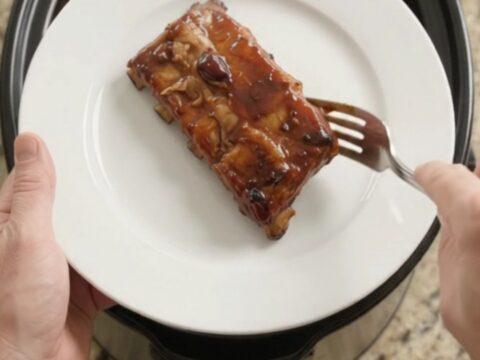
Cherry Cola BBQ Baby Back Ribs: Slow-Cooker Dump Dinner
Total time: 6 h 20 min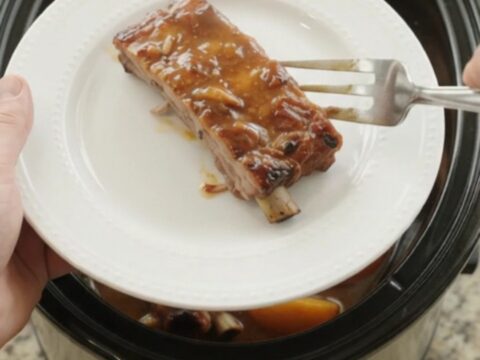
Peach Bourbon BBQ Ribs: Slow Cooker Fall-Off-the-Bone
Total time: 6 h 20 min