Dinner · Part 2 of 3: Instructions
Smoked Salmon Fettuccine with Lemon Crème Fraîche Step-by-step instructions
- Prep
- Cook
- Total
- Serves
- 4
Before you start
Before starting, bring a large pot of salted water to a boil. Set out all the ingredients: the butter, shallots, capers, crème fraîche, lemon, pasta, smoked salmon, dill, and salmon roe. Have a colander ready for draining the pasta and a large skillet for the sauce.
Measure the crème fraîche and lemon juice ahead of time so the sauce comes together quickly. If the salmon is in one large piece, slice it into thin ribbons and set it aside. Keep the salmon in the refrigerator until you're ready to fold it in, so it stays cold and silky.
Ingredients at a glance (11)
- 12 oz fresh spinach-egg fettuccine
- 2 tbsp unsalted butter
- 2 shallots, minced
- 1 tbsp capers, drained
- 3/4 cup crème fraîche
- 1 lemon, juiced
- 1/4 cup pasta cooking water
- 7 oz cold-smoked salmon, sliced into ribbons
- 1/4 cup fresh dill sprigs
- 2 tbsp salmon roe
- cracked black pepper, for serving
Instructions
Pasta & Aromatics
- Cook the PastaBring a large pot of salted water to a rolling boil. Add the fresh spinach-egg fettuccine and cook until just al dente, about 2 to 3 minutes. Reserve 1/4 cup of the pasta cooking water before draining. Drain the pasta in a colander, but do not rinse it; the starch on the surface will help the sauce cling.Look for The pasta should be tender but still have a slight bite at the center.Tip Fresh pasta cooks quickly; set a timer so it doesn't overcook.
- Melt the Butter BaseWhile the pasta cooks, place a large skillet over medium heat and add the unsalted butter. Let it melt until it foams gently, then add the minced shallots and drained capers. Cook, stirring frequently, for about 1 minute until the shallots turn translucent and fragrant.Look for The shallots soften and the butter smells nutty but not browned.Tip Keep the heat medium so the butter doesn't burn before the shallots soften.
The pasta is cooked al dente and drained, with a quarter cup of its starchy water reserved. In the skillet, the butter is melted and foaming, and the shallots and capers are fragrant and translucent. The kitchen smells warm and buttery, with a hint of lemon and brine. The shallots should be soft but not browned, and the capers should be plumped and starting to release their flavor. Have the crème fraîche and lemon juice measured and ready to go, because the sauce comes together quickly.
Silky Sauce & Toss
- Build the Crème Fraîche SauceReduce the heat to low and add the crème fraîche and the lemon juice to the skillet. Stir gently until the crème fraîche melts into a smooth, velvety sauce. Do not let it boil; keep it warm and gently bubbling, just below a simmer.Look for The sauce turns pale yellow and coats the back of a spoon.Tip If the sauce looks thick, loosen it with a splash of the reserved pasta water.
- Combine Pasta and SauceAdd the drained fettuccine to the skillet with the sauce. Pour in the reserved pasta water. Toss gently with tongs or a wooden spoon, coating every ribbon of pasta with the lemon-dill sauce. Keep the heat low, around 75°C (167°F), so the sauce stays silky and doesn't separate.Look for The sauce clings to the pasta and looks glossy, not curdled.Safe temperature 160°F (71°C) internal temperature (egg dishes)Tip Use a folding motion to toss without breaking the delicate fresh pasta.
The crème fraîche has melted into a smooth, pale yellow sauce, gently bubbling around the edges but not boiling. The lemon juice brightens it, and the sauce coats the back of a spoon. The fettuccine is added and tossed with the pasta water, each ribbon glistening with sauce. The texture is glossy and velvety, not thick or clumpy. The pasta is fully coated but still moves freely in the pan. The heat is low, and the sauce is silky, not separated. This is the moment to taste and adjust salt and pepper.
Salmon & Final Crown
- Fold in the Smoked SalmonRemove the skillet from the heat. Add the ribboned cold-smoked salmon and gently fold it into the pasta. The residual heat will warm the salmon through without cooking it, keeping it silky and tender. Be gentle so the salmon ribbons stay intact.Look for The salmon turns slightly translucent and warms, but still looks glossy.Tip Fold just a few times; overmixing will shred the salmon.
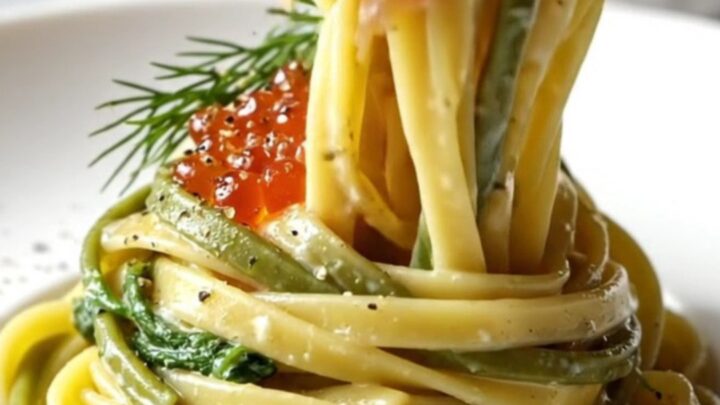
- Crown and ServeTransfer the pasta to a warm serving bowl or individual plates. Top with fresh dill sprigs, a generous spoonful of salmon roe, and a few cracks of black pepper. Serve immediately while the pasta is warm and the sauce is silky.Look for The roe glistens and the dill adds a bright green contrast.Tip Add the roe at the last moment so it stays plump and pops in the mouth.
The skillet is off the heat, and the smoked salmon ribbons are folded through the pasta, turning slightly translucent as they warm. The salmon is still tender and intact, not shredded. The pasta is mounded in bowls, topped with fresh dill sprigs, a spoonful of glistening salmon roe, and a crack of black pepper.
The dish looks vibrant — green ribbons, pale pink salmon, orange roe, and bright dill. The roe should be plump and pop when bitten. Serve immediately, while everything is warm and the sauce is silky.
Common mistakes
The most common mistake is overheating the crème fraîche, which causes it to curdle. Keep the heat low and stir gently. Another is overcooking the fresh pasta — it goes from perfect to mushy in seconds, so set a timer and taste often. Skipping the pasta water is also a miss; it's the key to a sauce that clings instead of pooling.
Finally, adding the smoked salmon too early and letting it cook in the pan will make it tough and dry. Always fold it in off the heat. And don't skip the salmon roe — it adds a briny, luxurious finish that makes the dish feel truly special.
How to tell it’s done
The pasta is done when it's al dente — tender but with a slight resistance at the center. Fresh pasta cooks in 2 to 3 minutes, so taste a ribbon to check. The sauce is ready when it coats the back of a spoon and is smooth and glossy. The smoked salmon is already cooked; it just needs to warm through, so fold it in and serve immediately.
The dish is finished when the pasta is thoroughly coated, the salmon is warm but still silky, and the roe is bright and plump. No internal temperature is needed for this dish, but if you want to be precise, the sauce should stay below a simmer, around 167°F (75°C).
- Egg dishes: 160°F (71°C) in the thickest part
- Fish: 145°F (63°C) in the thickest part
Up next · Part 3 of 3
4 variations · storage & make-ahead · 5 answers · printable card
Tips, FAQ & printable recipe (Part 3)← Back to the ingredients (Part 1)