Dinner · Part 2 of 3: Instructions
Slow-Simmered Roasted Tomato Beef Ragu with Tagliatelle Step-by-step instructions
- Prep
- Cook
- Total
- Serves
- 6
Before you start
Before starting, set out all your ingredients and equipment. Finely dice the carrot, celery, and onion, and mince the garlic. Grate the parmesan and cube the mozzarella. Tear the basil leaves.
Fill a large pot with water and bring it to a boil for the pasta, but do not cook the pasta until the sauce is simmering.
Have a measuring cup ready to reserve pasta water. The entire dish comes together in about one hour and twenty minutes, with most of that time hands-off simmering.
Ingredients at a glance (14)
- 3 tbsp extra-virgin olive oil
- 1 lb ground beef (85% lean)
- 1 medium carrot, finely diced
- 1 stalk celery, finely diced
- 1 medium yellow onion, finely diced
- 4 cloves garlic, minced
- 2 cups roasted tomato sauce
- 1/2 cup reserved pasta water
- 12 oz fresh tagliatelle pasta
- 1/2 cup freshly grated parmesan cheese, plus more for serving
- 4 oz fresh mozzarella, cubed
- 1/4 cup fresh basil leaves, torn, plus more for serving
- kosher salt to taste
- black pepper to taste
Instructions
Sear and Simmer
- Sear the Beef and VegetablesHeat the olive oil in a large heavy-bottomed pot or Dutch oven over medium-high heat until shimmering. Add the ground beef and cook, breaking it up with a wooden spoon, until deeply browned and caramelized, about 8 minutes. Add the diced carrot, celery, onion, and minced garlic. Cook, stirring occasionally, until the vegetables are softened and caramelized, about 6 minutes. Season with salt and pepper.Look for The beef is deeply browned and the vegetables are tender and fragrant.Safe temperature 160°F (71°C) internal temperature (ground meat)Tip Do not rush the browning — it builds the flavor base.
- Add Tomato Sauce and SimmerPour in the roasted tomato sauce and stir to combine, scraping up any browned bits from the bottom of the pot. Bring the sauce to a simmer, then reduce the heat to low. Let it simmer gently, uncovered, for 30 minutes, stirring occasionally, until thickened and rich.Look for The sauce has thickened and the flavors have melded.Safe temperature 160°F (71°C) internal temperature (ground meat)Tip Simmering slowly deepens the flavor without reducing too much liquid.
The ground beef is deeply browned and caramelized, and the vegetables are softened and fragrant. The sauce is simmering gently, and the kitchen smells of tomatoes and garlic. The sauce should be thick enough to coat a spoon but still loose enough to toss with pasta.
Cook and Combine
- Cook the TagliatelleBring a large pot of salted water to a boil. Add the fresh tagliatelle and cook until just al dente, about 2 to 3 minutes. Reserve 1/2 cup of the pasta water before draining.Look for The pasta is tender but still has a slight bite.Tip Fresh pasta cooks quickly — watch it closely.
- Combine Pasta and SauceAdd the drained tagliatelle directly to the pot with the ragu. Pour in the reserved pasta water and toss with tongs to coat the pasta evenly. Add the grated parmesan and cubed mozzarella, and continue tossing until the cheese melts and the sauce clings to the noodles.Look for The cheese has melted into a glossy sauce that coats each strand.Tip Toss gently to avoid breaking the pasta ribbons.
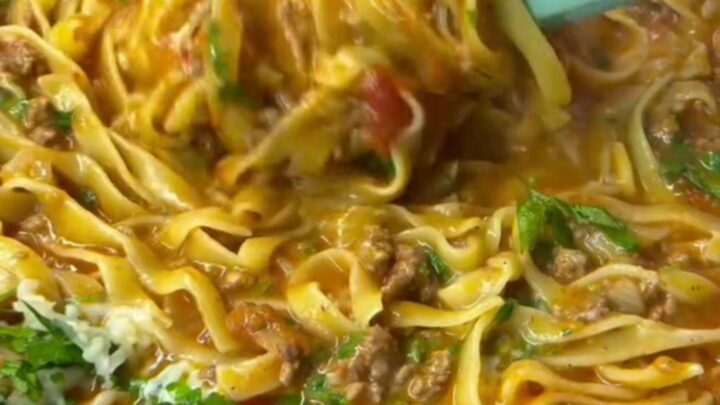
The tagliatelle is al dente, and the reserved pasta water is ready. As you toss the pasta with the sauce and cheese, you will see the sauce turn glossy and cling to the noodles. The mozzarella melts into creamy pockets, and the parmesan adds a nutty, salty depth.
Finish and Serve
- Finish and ServeRemove the pot from the heat. Tear the basil leaves and scatter them over the pasta, reserving a few for garnish. Serve immediately in wide ceramic bowls, showering each portion with additional grated parmesan and a few torn basil leaves.Look for The ragu is glossy, the basil is fragrant, and the cheese is melted.Tip Serve right away for the best texture and aroma.
The ragu is glossy, the basil is fragrant, and the cheese is fully melted. Each bowl is a beautiful tangle of pasta coated in rich sauce, topped with fresh basil and a shower of parmesan. The dish is ready to serve immediately.
Common mistakes
One common mistake is rushing the browning of the beef. If the pot is too hot or the beef is stirred too frequently, it will steam instead of brown, resulting in a less flavorful sauce.
Another mistake is adding the pasta to the sauce without reserved pasta water — the starch is essential for a silky coating. Finally, do not overcook the fresh tagliatelle; it can go from perfectly al dente to mushy in under a minute.
How to tell it’s done
The ragu is done when the sauce has thickened and the flavors have melded, typically after 30 minutes of simmering. The ground beef must reach an internal temperature of 160°F (71°C) to ensure it is safely cooked.
The pasta is done when it is tender but still has a slight bite — al dente. The final dish should be glossy, with the sauce clinging to the noodles and the cheese melted into a creamy coating.
- Ground meat: 160°F (71°C) in the thickest part
Up next · Part 3 of 3
4 variations · storage & make-ahead · 5 answers · printable card
Tips, FAQ & printable recipe (Part 3)← Back to the ingredients (Part 1)