Dinner · Part 2 of 3: Instructions
Slow-Roasted Crispy Beef Knuckle with Garlic and Rosemary Step-by-step instructions
- Prep
- Cook
- Total
- Serves
- 8
Before you start
Before cooking, retrieve the beef knuckle from the refrigerator and let it sit at room temperature for no more than thirty minutes to take the chill off. This ensures even cooking throughout the thick roast.
Pat the entire surface of the meat completely dry with paper towels; any excess moisture on the fat cap will prevent it from crisping up. Peel the outer layers of the garlic head and separate the cloves. Wash and thoroughly dry the fresh rosemary sprigs, and preheat the oven to the correct starting temperature.
Ingredients at a glance (3)
- 4 lb beef knuckle roast, with fat cap intact
- 1 head garlic cloves, peeled
- 5 fresh rosemary sprigs
Instructions
Preparing the Roast and Aromatics
- Score the Beef KnucklePrep the beef knuckle by scoring the fat cap in a diamond pattern. Ensure the cuts are shallow and do not penetrate into the meat itself, which helps the fat render evenly during the long roasting process.Look for The fat cap should have a neat diamond pattern.Tip Use a very sharp knife for clean cuts.
- Arrange the AromaticsPlace a sheet of parchment paper in a heavy roasting pan and set the scored beef knuckle on top. Scatter the peeled garlic cloves and fresh rosemary sprigs around the base of the roast, nestling them close to the meat.Look for The garlic and rosemary should be distributed evenly around the beef.Tip Keeping the aromatics close to the meat helps infuse the pan juices.
At the end of this phase, the beef knuckle should be securely positioned in the roasting pan lined with parchment paper. The fat cap must be scored in a diamond pattern, showing shallow cuts without slicing into the meat itself. The fragrant garlic cloves and fresh rosemary sprigs should be scattered closely around the base of the meat, ready to release their aromatic oils.
Slow Roasting for Tenderness
- Slow Roast the BeefPlace the roasting pan in a preheated oven at 325°F (163°C). Roast the beef knuckle slowly for about two and a half hours, allowing the meat to become tender and the rich pan juices to accumulate in the bottom of the pan.Look for The kitchen will smell rich and roasted as juices pool in the pan.Tip Keep the oven door closed to maintain a steady temperature.
At the end of the slow-roasting phase, the beef knuckle will have shrunk slightly, and the kitchen will be filled with a rich, savory roasted meat aroma. The meat should feel tender when pressed, and a pool of golden, flavorful pan juices will have accumulated at the bottom of the roasting pan. The garlic cloves will be soft and caramelized, and the rosemary sprigs will be darkened, having infused their essence into the rendered beef fat.
Crisping and Basting the Crust
- Crisp and BasteIncrease the oven temperature to 450°F (230°C). Carefully spoon the hot pan juices over the sizzling crust, letting the garlic and rosemary crackle on top. Roast until the skin is golden-brown and crispy, and the internal temperature reaches 145°F (63°C). Remove from the oven and let the meat rest for at least 3 minutes before carving.Look for The skin should sound hollow and crunchy when tapped with a knife.Safe temperature 145°F (63°C) internal temperature (steaks, chops and roasts)Tip Resting the meat is essential to keep the juices locked inside.
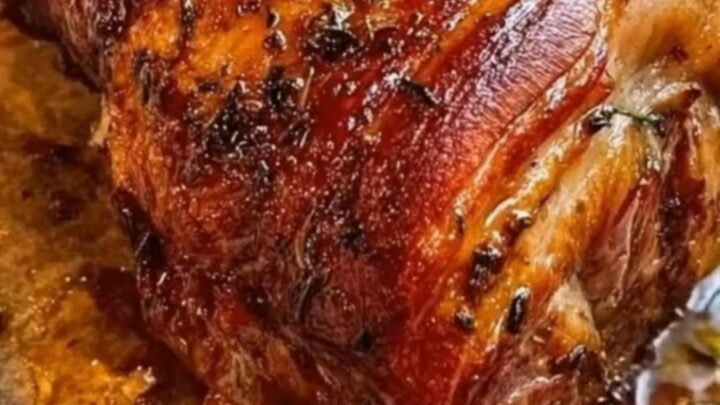
At the final checkpoint, the fat cap of the beef knuckle will have transformed into a deeply golden-brown, blistered, and ultra-crispy crackling skin. When tapped gently with a knife, it should sound hollow and incredibly crunchy.
The interior meat must register an internal temperature of 145°F (63°C) on a meat thermometer. The pan juices should be bubbling vigorously, and the garlic and rosemary on top will be beautifully toasted and crisp.
Common mistakes
A common mistake is skipping the drying step before roasting the beef. If the fat cap is wet, the moisture will steam instead of fry, resulting in a rubbery, chewy texture instead of a crispy crackling.
Another error is slicing the roast immediately after removing it from the oven. Resting the meat for at least fifteen minutes is essential; otherwise, all the precious juices will run out onto the cutting board, leaving the interior beef dry and tough.
How to tell it’s done
To determine doneness, insert an instant-read meat thermometer into the thickest part of the beef knuckle, avoiding any bone or heavy fat pockets. For safe consumption, the thermometer must read at least 145°F (63°C).
Once this temperature is reached, remove the roast from the oven and let it rest for at least 3 minutes, though fifteen minutes is ideal for a roast of this size. This resting period allows the muscle fibers to relax and reabsorb the hot juices.
- Steaks, chops and roasts: 145°F (63°C) in the thickest part, then a 3-minute rest
Up next · Part 3 of 3
2 variations · storage & make-ahead · 3 answers · printable card
Tips, FAQ & printable recipe (Part 3)← Back to the ingredients (Part 1)