Dinner · Part 2 of 3: Instructions
Slow-Roasted Beef Tenderloin with Crispy Herb Potatoes Step-by-step instructions
- Prep
- Cook
- Total
- Serves
- 6
Before you start
Before beginning, gather all ingredients and equipment to ensure a smooth cooking process. Wash and dry the baby potatoes. Chop the fresh herbs, and measure out the rosemary oil.
Remove the beef tenderloin from the refrigerator about thirty minutes before cooking to take the chill off, which helps it cook more evenly. Preheat the oven to the specified temperature and ensure the cast-iron skillet is clean and ready.
Ingredients at a glance (4)
- 2 lb beef tenderloin
- 1 1/2 lb baby potatoes
- 3 tbsp rosemary oil, divided
- 2 tbsp chopped herbs
Instructions
Potato Seasoning and Initial Roasting
- Seasoning the PotatoesToss the baby potatoes with two tablespoons of rosemary oil in a bowl until they are evenly coated.Look for Ensure the potatoes are fully glistening and coated in the aromatic oil.Tip Cut the potatoes to a uniform size so they roast evenly.
- Initial Potato RoastingArrange the seasoned baby potatoes in a single layer in a large cast-iron skillet and roast in a preheated oven at 400°F (204°C) for twenty minutes until they start to soften and turn golden brown.Look for Look for the edges of the potatoes to start turning golden brown.Tip Place the potatoes cut-side down in the skillet for a better sear.
At the end of this initial phase, the baby potatoes should be lightly sizzling in the skillet and starting to release a fragrant, woodsy rosemary aroma. They will begin to soften slightly, and the edges should show the very first signs of turning a light golden brown. This head start ensures the potatoes will finish cooking at the exact same time as the beef tenderloin.
Searing the Herb-Crusted Beef
- Applying the Herb CrustPat the beef tenderloin completely dry with paper towels. Rub the beef with one tablespoon of rosemary oil, then press the chopped herbs firmly into the surface of the meat to form an even herb crust.Look for The herb crust should adhere tightly to the surface of the meat.Tip Drying the meat thoroughly is the key to getting a thick, flavorful crust.
- Searing the Beef TenderloinHeat a hot skillet over medium-high heat. Sear the herb-crusted beef tenderloin on all sides for about two minutes per side until a rich, brown crust forms and steam rises from the pan.Look for The meat will release easily from the pan once a proper crust forms.Tip Do not crowd the pan or move the meat too much while searing.
The skillet will be hot and steam will rise as the beef sears. By the end of this phase, the beef tenderloin should have a deeply browned, caramelized herb crust covering all sides. The aroma of toasted herbs and seared meat will be highly intense. The center of the meat remains completely raw at this stage, as the goal is purely to build color and flavor on the exterior.
Slow Roasting, Resting, and Slicing
- Slow Roasting and BastingAdd the seared beef tenderloin to the cast-iron skillet alongside the baby potatoes. Roast at 325°F (163°C) until the internal temperature of the beef tenderloin reaches 145°F (63°C) for safety, then let the meat rest for at least 3 minutes.Look for The pan juices will bubble actively and become highly fragrant.Safe temperature 145°F (63°C) internal temperature (steaks, chops and roasts)Tip Basting with the pan juices adds a beautiful glossy sheen and deep flavor to the crust.
- Slicing and ServingSlice the rested beef tenderloin into thick rounds and arrange them in the skillet with the golden roasted potatoes. Spoon the warm pan juices directly over the sliced meat before serving.Look for The sliced meat should look incredibly moist and hold its shape perfectly.Tip Use a very sharp carving knife to slice the beef cleanly without tearing.
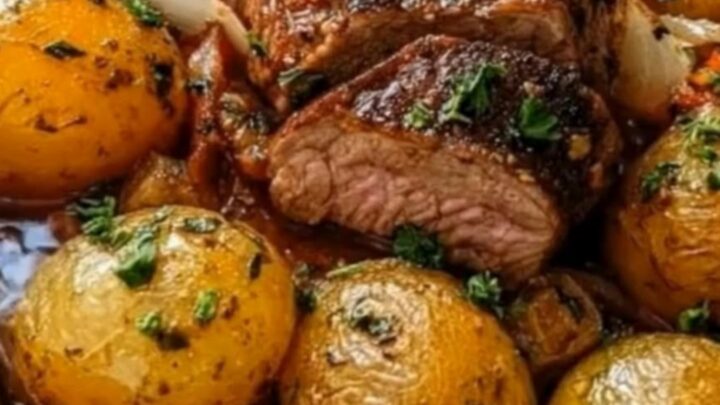
The beef tenderloin and potatoes should emerge from the oven beautifully browned, with the pan juices bubbling actively in the skillet. The potatoes will be fully tender with crispy, golden-brown skin.
After resting for at least three minutes, the beef will be incredibly juicy and ready to slice cleanly without losing its savory moisture, yielding tender, perfectly cooked rounds.
Common mistakes
One common mistake is skipping the resting period after the beef tenderloin finishes roasting. Slicing the meat immediately causes all the delicious, savory juices to run out onto the cutting board, leaving the beef dry and tough.
Another frequent error is overcrowding the skillet with too many potatoes, which traps steam and prevents them from getting crispy. Finally, ensure the skillet is sufficiently hot before adding the beef to guarantee a quick, deep sear without overcooking the interior.
How to tell it’s done
To ensure the beef tenderloin is perfectly cooked and safe to consume, always use a digital meat thermometer inserted into the thickest part of the roast. For safety, the beef must reach an internal temperature of at least 145°F (63°C), followed by a rest of at least three minutes.
The meat should feel firm yet yielding to the touch, and the sliced rounds should reveal a juicy, tender interior surrounded by a crisp, fragrant herb crust.
- Steaks, chops and roasts: 145°F (63°C) in the thickest part, then a 3-minute rest
Up next · Part 3 of 3
2 variations · storage & make-ahead · 3 answers · printable card
Tips, FAQ & printable recipe (Part 3)← Back to the ingredients (Part 1)