Dinner · Part 2 of 3: Instructions
Slow Cooker Zucchini and Goat Cheese Soup You Can Set and Forget Step-by-step instructions
- Prep
- Cook
- Total
- Serves
- 4
Before you start
Set out everything before you start, because the build takes ten minutes start to finish. Slice two pounds of zucchini into half-inch rounds; a mandoline makes this fast, but a sharp knife does the job well. Thinly slice one yellow onion, keeping the slices even so they soften at the same rate as the zucchini. Keep the goat cheese in the refrigerator until blending time; it emulsifies perfectly well straight from the cold. Have the bouillon cube and a glass measuring cup with four cups of water within reach of the slow cooker. Check that the insert sits level in the base and the cooker is plugged in where the cord will not snag. Nothing else needs preparing: no saute pan, no stock, no thickener.
Ingredients at a glance (5)
- 2 lb zucchini, sliced into 1/2-inch rounds
- 1 yellow onion, thinly sliced
- 1 vegetable bouillon cube, crumbled
- 4 cups water
- 5 oz goat cheese, softened
Instructions
Build the pot
- Layer the zucchini and onionArrange the zucchini slices in an even layer in the bottom of the slow cooker insert. Scatter the sliced onion over the top, spreading it out so every slice of zucchini gets some contact with the seasoning as it cooks.Look for The insert should look full but not crowded; the vegetables sit in a loose, even bed.Tip Slices about half an inch thick soften evenly and blend without leaving stringy bits behind.
- Add the bouillon and waterCrumble the bouillon cube evenly over the vegetables, then pour in the water, aiming it around the sides so it does not blast the crumbles off the top. Give everything one gentle stir to distribute the bouillon.Look for The liquid should come most of the way up the zucchini without fully submerging it.Tip Crumbling the cube by hand over the pot spreads the seasoning far better than dropping it in whole.
At the end of this phase, the insert holds a tidy, layered bed: zucchini rounds on the bottom, a scatter of sliced onion over them, the crumbled bouillon distributed across the top, and four cups of water poured around the sides. After one gentle stir, the cube should be dissolving and the liquid should come most of the way up the vegetables without drowning them.
Nothing needs to look dramatic; this is a plain-looking pot, and that is correct. What to verify before closing the lid: the zucchini lies in a fairly even layer so it softens uniformly, the bouillon has not clumped into one corner, and there is at least an inch of headspace below the rim. If the liquid looks short, add a splash more water now rather than mid-cook.
Cook low and slow
- Cook low and slowCover the slow cooker and cook on low for 4 hours, or on high for about 2 hours, until the zucchini is completely tender and translucent at the edges. Resist lifting the lid; each peek releases heat and stretches the cooking time.Look for A zucchini slice slides off a knife tip with no resistance at all.Tip Low heat gives the sweetest, most mellow flavor; use high only when you are short on time.
After four hours on low, lift the lid and look for a pot of very tender, collapsing vegetables in a pale, lightly golden-green broth. The zucchini slices should be translucent at the edges and slide off a knife with zero resistance; the onion will have nearly melted away. The smell is the real signal: sweet, mellow, vegetal, with no raw green edge and no scorched note.
If a slice still shows an opaque white core, give it another 30 to 45 minutes on low before blending, because undercooked zucchini never purees fully smooth. The liquid level will have risen as the vegetables released their water; that is exactly what should happen. Check the seasoning only later, after blending, since the goat cheese will change the balance.
Blend and finish
- Blend with the goat cheeseAdd the goat cheese straight from the refrigerator to the pot. Blend directly in the insert with an immersion blender, working in slow circles, until the soup is completely smooth, streak-free, and heated through to 145°F (74°C), about 1 to 2 minutes. If using a countertop blender, work in batches and vent the lid. Let the soup rest for at least 3 minutes before serving.Look for The puree turns a uniform pale green with no visible flecks of zucchini skin.Safe temperature 145°F (63°C) internal temperature (steaks, chops and roasts)Tip Cheese straight from the refrigerator still emulsifies quickly; blend a few extra seconds to be sure it is fully incorporated.
- Taste and serveTaste the soup and adjust with a splash of water if it has thickened more than you like, or a little more goat cheese for extra tang and body. Ladle it hot into warmed bowls and serve right away while it is glossy and steaming.Look for The soup coats the back of the ladle and pours in a slow, velvety ribbon.Tip Warmed bowls keep this soup at serving temperature much longer than cold ones.
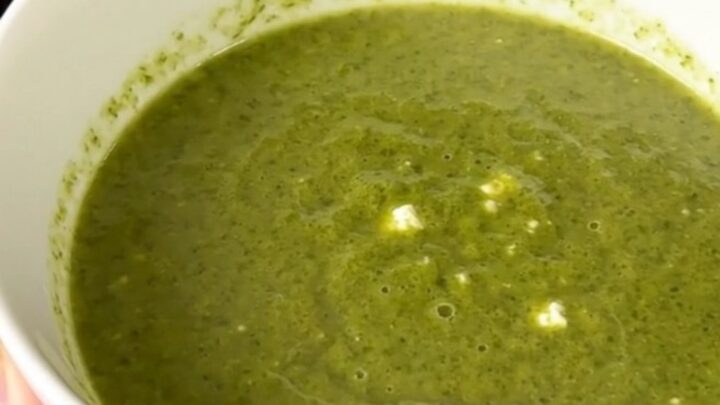
The finished soup is a completely smooth, glossy, pale-green veloute with no visible flecks of skin or onion, pouring in a slow ribbon and coating the back of a spoon. The goat cheese should have vanished entirely into the liquid, leaving body and a gentle tang rather than any graininess. Taste it now: the tang should balance the zucchini's sweetness, and the salt level should come through clearly but not sharply.
If the texture is thicker than you like, loosen with a splash of hot water; if it tastes flat, blend in a bit more softened goat cheese. The soup should be served immediately, steaming hot, when it is at its silkiest. If it sits, stir once before ladling so the puree stays uniform in the bowls.
Common mistakes
The most common error is overfilling the insert. Zucchini releases a surprising amount of liquid as it cooks, and an insert packed to the brim can bubble up under the lid; leave at least an inch of headspace. The second mistake is undercooking. If the zucchini still holds a faint white core, the puree will be slightly fibrous no matter how long you blend, so let it go the full four hours on low. Lifting the lid repeatedly is the third trap: every peek costs twenty minutes of cooking time and lets steam escape. Finally, never blend piping-hot soup in a sealed countertop blender, which can pop its lid and spray; fill it half full, vent the lid, and cover it with a towel.
How to tell it’s done
The soup is done cooking when the zucchini offers no resistance at all to a knife tip; the slices should look translucent at the edges and have lost their raw white core. The onion will have all but dissolved into the broth. After blending, doneness is a texture check: the puree should be completely smooth, a uniform pale green, and thick enough to coat the ladle without being heavy.
It should steam and flow in a slow ribbon, glossy rather than watery. If it seems thin, blend another 30 seconds; the emulsified goat cheese usually tightens it. If it is thicker than you like, loosen with a splash of hot water. Taste for salt at the very end, since bouillon cubes vary widely in strength. Serve the soup piping hot, when the texture is at its silkiest.
- Steaks, chops and roasts: 145°F (63°C) in the thickest part, then a 3-minute rest
Up next · Part 3 of 3
4 variations · storage & make-ahead · 5 answers · printable card
Tips, FAQ & printable recipe (Part 3)← Back to the ingredients (Part 1)