Dinner · Part 1 of 3: Ingredients
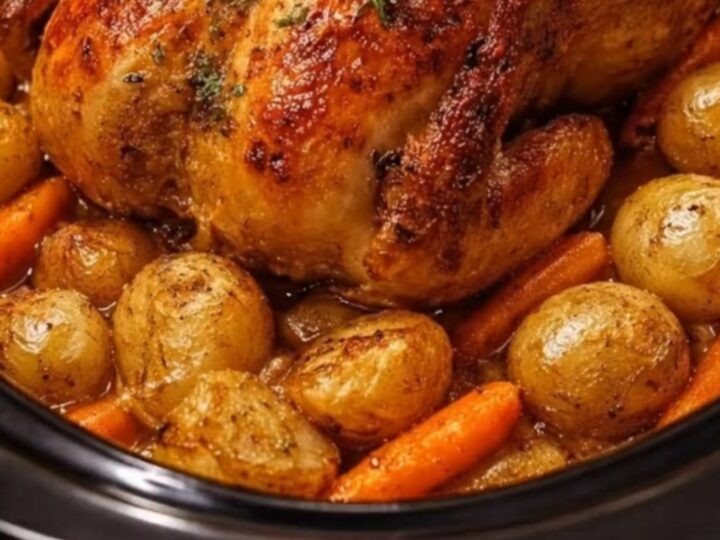
Slow Cooker Whole Chicken with Crispy Golden Skin
- Prep
- Cook
- Total
- Serves
- 6
Prepare for the juiciest chicken dinner imaginable. This slow cooker recipe delivers incredibly tender, melt-in-your-mouth poultry alongside perfectly glazed baby potatoes and carrots. By slow-cooking the chicken directly over the vegetables, every single ingredient absorbs the rich, savory drippings, resulting in an effortless meal that rivals any gourmet rotisserie chicken.
Cooking a whole chicken in a slow cooker is a game-changing method that guarantees succulent meat every single time. Unlike oven roasting, which can easily dry out the breast meat, the enclosed, humid environment of the slow cooker locks in all the natural juices.
The chicken gently simmers above a bed of colorful root vegetables, which act as a natural roasting rack while absorbing the savory broth and chicken drippings. This simple technique yields a complete, comforting, one-pot dinner with minimal cleanup and almost zero active prep time.
Ingredients
- 1 lb baby potatoes, washed
- 1 lb baby carrots
- 1/2 cup chicken broth
- 1 whole chicken (4-5 lbs), giblets removed
herb butter glaze
- 4 tbsp unsalted butter, melted
- 1 tbsp mixed dried herbs (rosemary, thyme, oregano)
Why this recipe works
The science behind this slow cooker method lies in the gentle, low-temperature cooking environment. As the whole chicken cooks slowly, the tough connective tissues break down gradually, rendering the meat exceptionally tender and juicy.
Because the chicken sits directly on top of the baby potatoes and carrots, it does not sit submerged in liquid, which prevents the meat from becoming soggy. Instead, it steams perfectly while releasing its flavorful drippings directly onto the vegetables below, creating a built-in sauce.
Additionally, using a rich herb butter baste near the end of the cooking process adds an indispensable layer of depth and moisture. The butter combines with the natural chicken juices to glaze the vegetables, giving them a velvety texture and a savory, aromatic coating.
Searing or broiling the chicken breast skin briefly after slow cooking melts the herb butter into the skin, yielding a beautiful, golden-brown finish that looks as spectacular as it tastes.
Notes and substitutions
For the best results, select a whole chicken that fits comfortably inside a six-quart or larger oval slow cooker. Baby potatoes, such as red-skinned or Yukon Gold varieties, are ideal because they hold their shape perfectly during long cooking cycles without turning mushy.
Baby carrots are highly recommended for convenience, but regular carrots cut into thick chunks work equally well. Ensure the chicken is patted completely dry with paper towels before cooking to help the herb butter adhere.
If unsalted butter is unavailable, salted butter can be used to baste the chicken and vegetables. Dried herbs like rosemary, thyme, and oregano provide a classic, robust flavor profile that complements the poultry beautifully, but fresh herbs can be substituted if preferred. For an optional touch of acidity, a splash of fresh lemon juice can be stirred into the broth at the very end of cooking to brighten the overall flavor of the dish.
- baby potatoes: fingerling potatoes or red potatoes cut into two-inch chunks
- chicken broth: vegetable broth or water with a pinch of salt
Equipment
- 6-quart oval slow cooker
- small mixing bowl
- basting brush
- meat thermometer
- carving knife
- cutting board
Up next · Part 2 of 3
4 steps · 4 h of cooking · what to look for at each stage
Step-by-step instructions (Part 2)