Dinner · Part 2 of 3: Instructions
Slow Cooker Vegetarian Autumn Tagine with Prunes Step-by-step instructions
- Prep
- Cook
- Total
- Serves
- 4
Before you start
Start by gathering all ingredients and measuring the broth. Wash the carrots and squash thoroughly, peeling the squash if the skin is tough. Slice the onions and cut the carrots into sticks, ensuring they are roughly the same size to promote even cooking.
Have the spices measured out and ready to go. Before beginning, ensure the slow cooker is clean and placed on a stable surface away from the edge of the counter, with enough room for steam to escape during the cooking process.
Ingredients at a glance (7)
- 3 medium carrots, cut into sticks
- 1 large onion, sliced
- 2 cups potimarron squash, diced
- 1/2 cup whole prunes
- 1 tsp ground cinnamon
- 1 tsp ground ginger
- 1 1/2 cups vegetable broth
Instructions
Layering the vegetables
- Prepare the basePlace the carrot sticks and sliced onions at the bottom of the slow cooker to create a sturdy foundation for the other ingredients.Look for Ensure the carrots are spread evenly to allow for consistent cooking.Tip Cutting vegetables into uniform sizes helps ensure they soften at the same rate.
The base of the slow cooker should be neatly covered with the carrot sticks and sliced onions. This layer provides a stable foundation and prevents the more delicate squash from scorching on the bottom of the pot. Ensure the onions are separated into individual slices to allow them to cook down evenly and infuse the broth with their aromatic essence.
Adding aromatics and liquid
- Add squash and fruitArrange the diced potimarron squash and the whole prunes on top of the bed of carrots and onions.Look for The squash should be nestled comfortably atop the vegetable base.Tip Remove any pits from the prunes if they are not already pitted to ensure easier eating.
- Season and pourSprinkle the ground cinnamon and ground ginger evenly over the vegetables and fruit, then pour the vegetable broth over the entire mixture.Look for The spices should be distributed across the surface before the liquid is added.Tip Pouring the broth slowly helps keep the spices from washing away to the bottom of the pot.
The squash and prunes are layered on top, followed by a generous dusting of cinnamon and ginger. The final addition of vegetable broth should reach just enough to partially submerge the ingredients. The pot will look full but not overflowing, and the scent of the dry spices will be immediately noticeable as they start to settle into the liquid.
Slow cooking to tenderness
- Slow cookCover the slow cooker and cook on low for 4 hours, or until the squash is tender and the flavors have melded into a glossy sauce.Look for The dish is ready when the squash is easily pierced with a fork.Tip Avoid lifting the lid too often during the cooking process to maintain the internal temperature.
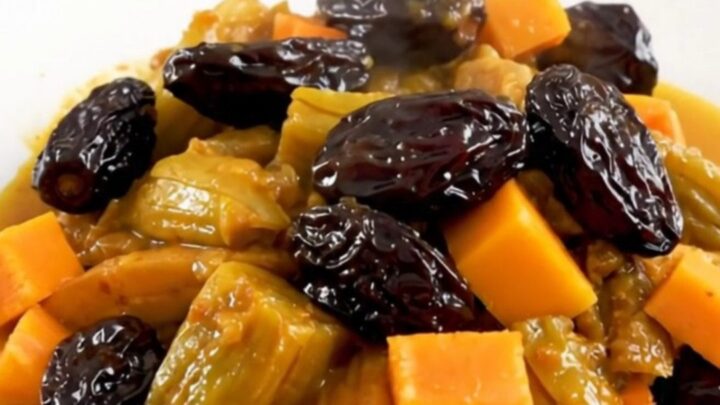
After four hours of low heat, the vegetables will have transformed into a soft, cohesive dish. The liquid will have developed a rich, amber color from the spices and the prunes.
The overall smell should be warm, earthy, and sweet, indicating that the ingredients have successfully melded together. Check that the squash is perfectly tender before serving.
Common mistakes
A common mistake is cutting the vegetables into uneven pieces, which leads to some being overcooked and mushy while others remain raw. Ensure consistency during the prep phase.
Another error is opening the lid too frequently, which releases the trapped heat and steam, significantly increasing the total cooking time and potentially resulting in unevenly cooked vegetables. Finally, avoid overfilling the slow cooker, which can prevent proper heat circulation and lead to overflow or undercooked ingredients in the center.
How to tell it’s done
The tagine is finished when the potimarron squash is tender enough to be easily pierced with a fork or knife without resistance. The carrots should be softened but still retain their shape.
The sauce will have reduced slightly, appearing glossy and slightly thickened from the starch of the squash and the sugars released by the prunes. Taste the sauce to ensure the spices are well-integrated and the liquid has developed a deep, savory, and slightly sweet flavor profile.
Up next · Part 3 of 3
2 variations · storage & make-ahead · 3 answers · printable card
Tips, FAQ & printable recipe (Part 3)← Back to the ingredients (Part 1)