Dinner · Part 2 of 3: Instructions
Slow Cooker Veal Tendrons with Tomato and Oregano Step-by-step instructions
- Prep
- Cook
- Total
- Serves
- 4
Before you start
Before beginning, ensure the slow cooker is clean and placed on a stable, heat-resistant surface. Have all ingredients measured and ready. If the veal tendrons are large, trim any excess fat or silver skin, although a small amount of fat can add flavor during the long cooking process.
Ensure the onions are sliced into thin, even strips to allow them to soften and melt into the sauce during the cooking time. Having everything prepped in advance makes the assembly phase incredibly quick and efficient, allowing you to get the meal started in just a few minutes.
Ingredients at a glance (4)
- 2 lb veal tendrons
- 1 large onion, sliced
- 1 tbsp dried oregano
- 2 cups smooth tomato coulis
Instructions
Preparation and Layering
- Assemble the ingredientsPlace the raw veal tendrons in the bottom of the slow cooker insert. Distribute the sliced onions evenly over the meat, then sprinkle the dried oregano over the top.Look for Ensure the onions are spread across the surface of the veal for even flavor distribution.Tip Pat the meat dry with paper towels before placing it in the slow cooker to help develop better flavor during the initial stage of cooking.
At this stage, the veal should be arranged in a single layer at the bottom of the cooker, covered with a uniform bed of onions and a light dusting of oregano. Check that the ingredients are distributed evenly to ensure consistent flavor distribution throughout the cooking process. The onions should be spread across the entire surface of the veal, providing a fragrant base that will slowly break down and infuse the meat with sweetness as it cooks in the tomato coulis.
Slow Cooking
- Add the sauce and cookPour the smooth tomato coulis over the veal, onions, and oregano. Cover the slow cooker with its lid and cook on the low setting for approximately 8 hours until the meat is fork-tender and reaches 145°F (63°C). Once cooked, let the meat rest for at least 3 minutes before serving.Look for The sauce should be bubbling gently around the edges of the insert.Safe temperature 145°F (63°C) internal temperature (steaks, chops and roasts)Tip Avoid lifting the lid during the first 6 hours of cooking to ensure the internal temperature stays consistent.
During this phase, the aroma of oregano and tomatoes will begin to fill the kitchen. The sauce should appear to be simmering gently. Check that the slow cooker is set to the correct low setting and that the lid is securely in place to maintain the necessary moisture.
The meat will gradually become more tender, and the tomato coulis will reduce slightly, creating a rich, flavorful environment that keeps the veal moist and succulent throughout the entire duration of the cooking cycle.
Resting and Serving
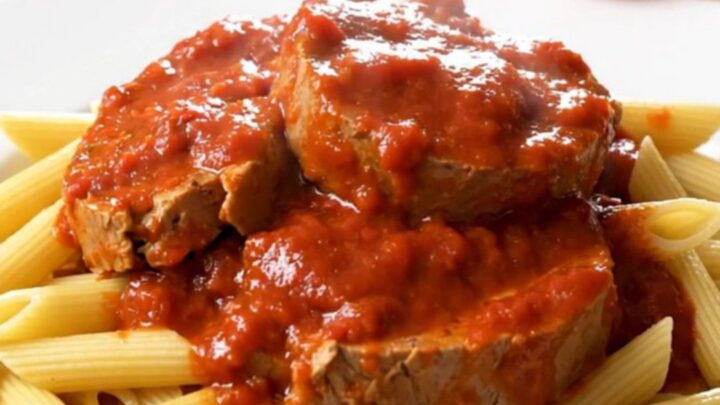
- Rest and serveOnce the meat has rested, serve the tender veal coated in the glossy tomato sauce over cooked penne pasta. The meat should pull apart easily with a fork, and the sauce should have thickened slightly.Look for The meat should be tender enough to shred with a fork.Tip Serving over pasta allows the noodles to soak up the rich, reduced tomato sauce perfectly.
Once the cooking time is complete, the meat should be extremely tender and coated in a glossy, thick sauce. Before serving, verify the internal temperature has reached 145°F (63°C) and allow the meat to rest for 5 minutes to stabilize the juices. This resting period is critical for ensuring the meat is as juicy as possible. Once rested, the veal is ready to be served over your favorite pasta, ensuring that every piece is well-coated in the delicious, aromatic tomato sauce.
Common mistakes
A common mistake is overcrowding the slow cooker, which can prevent the meat from cooking evenly. Another error is checking the progress too frequently; lifting the lid releases heat and extends the cooking time significantly.
Finally, failing to let the meat rest after cooking can lead to a loss of natural juices, making the veal feel slightly drier than intended. Avoid adding too much extra liquid, as the meat and vegetables will release plenty of moisture, which is essential for creating the perfect, concentrated sauce consistency.
How to tell it’s done
The veal is done when it is fork-tender, meaning it should shred or pull apart with minimal pressure from a fork. The internal temperature must reach 145°F (63°C) to ensure it is safe and cooked through.
The sauce should be glossy and have a deep red color, indicating that the flavors of the onion and oregano have fully integrated with the tomato base. Always use a digital thermometer to verify the temperature, as this is the most accurate way to ensure the meat has reached the proper stage of tenderness and safety.
- Steaks, chops and roasts: 145°F (63°C) in the thickest part, then a 3-minute rest
Up next · Part 3 of 3
2 variations · storage & make-ahead · 3 answers · printable card
Tips, FAQ & printable recipe (Part 3)← Back to the ingredients (Part 1)