Dinner · Part 2 of 3: Instructions
Slow Cooker Veal Tagine with Preserved Lemons and Olives Step-by-step instructions
- Prep
- Cook
- Total
- Serves
- 4
Before you start
Before beginning, ensure your slow cooker is clean and positioned on a stable, heat-resistant surface. Pat the veal chunks dry with paper towels to improve searing, although not strictly necessary for this set-it-and-forget-it method.
Measure out all your ingredients so they are ready for quick assembly. Clear your workspace to allow for efficient layering of the meat, olives, and citrus.
Ingredients at a glance (5)
- 1.5 lb veal shoulder, cut into chunks
- 1/2 cup green olives, pitted
- 2 wedges preserved lemon
- 1 packet tagine spice blend
- 1 cup chicken broth
Instructions
Layering the Ingredients
- Assemble the IngredientsPlace the veal chunks into the bottom of the slow cooker. Scatter the pitted green olives and preserved lemon wedges over the meat. Sprinkle the packet of tagine spices evenly across the surface of the ingredients.Look for Ingredients are layered evenly in the cooker.Tip Ensure the veal is distributed in an even layer to promote consistent cooking throughout the process.
The ingredients should be neatly arranged in the slow cooker, with the veal at the base to ensure it cooks directly in the flavorful liquids. The spices should be evenly distributed to ensure every piece of meat receives adequate seasoning, creating a uniform foundation for the slow cooking process.
Slow Cooking the Tagine
- Add Liquid and CookPour the chicken broth over the ingredients in the slow cooker. Cover with the lid and set the slow cooker to low heat. Cook for 5 hours until the meat is tender and the sauce has thickened slightly.Look for Liquid covers the base of the ingredients.Tip Avoid lifting the lid during the cooking time to maintain a stable internal temperature for the slow cooker.
During the long cooking phase, the kitchen will fill with the warm, exotic aroma of the tagine spices. The meat should slowly soften, and the liquid will begin to transform into a fragrant, savory broth.
Check periodically that the slow cooker is functioning correctly and maintaining a steady, low temperature.
Final Resting and Serving
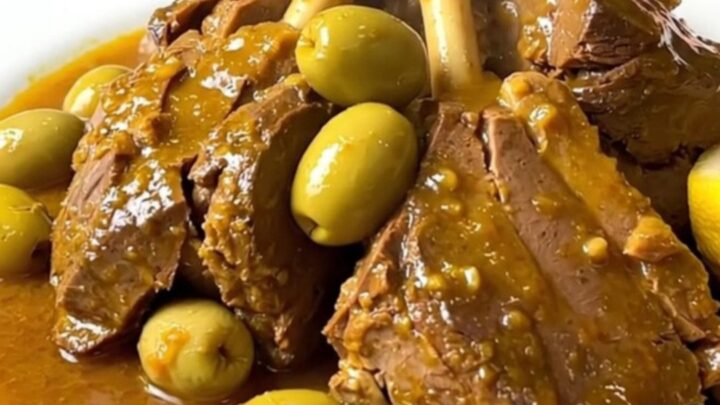
- Finish and ServeCheck that the meat has reached an internal temperature of 145°F (63°C). Turn off the slow cooker and allow the meat to rest for 5 minutes before serving. Serve warm on plates, ensuring each portion includes plenty of the glossy sauce.Look for Veal is fork-tender and the sauce is glossy.Safe temperature 145°F (63°C) internal temperature (steaks, chops and roasts)Tip The residual heat will continue to tenderize the meat, so ensure it rests properly to lock in the moisture.
Once the cooking time concludes, the meat should be exceptionally tender and easy to portion. The final check involves confirming the internal temperature and allowing the dish a brief rest. The sauce should be rich, glossy, and perfectly balanced, ready to be served over couscous or with warm flatbread.
Common mistakes
Avoid adding too much liquid, as the veal and lemons will release their own moisture during the long cooking cycle, potentially diluting the flavor.
Do not skip the resting period, as this allows the juices to redistribute throughout the meat, ensuring every bite is succulent. Ensure the lid is properly sealed to prevent evaporation and maintain consistent internal heat throughout the process.
How to tell it’s done
The veal is properly cooked when it is fork-tender, meaning it easily pulls apart with minimal pressure. Use a digital meat thermometer to confirm the thickest parts of the meat have reached at least 145°F (63°C).
The sauce should appear glossy and have reduced slightly, coating the back of a spoon with a rich, aromatic glaze.
- Steaks, chops and roasts: 145°F (63°C) in the thickest part, then a 3-minute rest
Up next · Part 3 of 3
2 variations · storage & make-ahead · 3 answers · printable card
Tips, FAQ & printable recipe (Part 3)← Back to the ingredients (Part 1)