Dinner · Part 2 of 3: Instructions
Slow Cooker Turkey Colombo with Potatoes for an Easy Weeknight Dinner Step-by-step instructions
- Prep
- Cook
- Total
- Serves
- 4
Before you start
Before you begin, ensure all your vegetables are washed thoroughly and diced into uniform, bite-sized pieces. This consistency is important so that everything finishes cooking at the same time.
Have your poultry broth measured out and ready to go, and ensure your spice blend is easily accessible. Clear a space on your countertop near the slow cooker to keep your ingredients organized as you assemble the meal.
Ingredients at a glance (5)
- 1 1/2 lb turkey breast, cut into chunks
- 3 cups potatoes, diced
- 2 cups zucchini, sliced
- 2 tbsp colombo spice blend
- 1 cup poultry broth
Instructions
Preparation and Layering
- Assemble the IngredientsPlace the raw turkey chunks into the bottom of the slow cooker basin. Arrange the diced potatoes and sliced zucchini on top of the turkey pieces in an even layer.Look for Ingredients should be layered neatly to ensure even cooking throughout the process.Tip Ensure the turkey is in a single layer at the bottom to allow better heat contact.
At this stage, your slow cooker should be neatly filled with the turkey at the bottom and vegetables layered on top. Ensure the turkey is not overlapping excessively, which helps it cook uniformly. The ingredients should look vibrant and fresh, ready to be seasoned with the aromatic colombo spices that will define the flavor profile of the final dish.
Seasoning and Liquid Addition
- Season and Add LiquidSprinkle the colombo spice blend evenly over the vegetables. Pour the poultry broth carefully over the mixture to provide the necessary moisture for the slow cooking process.Look for The broth should partially submerge the ingredients without overflowing the slow cooker insert.Tip Avoid stirring the ingredients at this stage to keep the spice distribution consistent.
Once you have sprinkled the spices and poured the broth, the slow cooker should look ready for the heat. The spices should be distributed relatively evenly over the top of the vegetables.
The broth level should be visible but not covering the vegetables entirely, as the zucchini will release its own moisture during the cooking process to round out the sauce.
Cooking and Finishing
- Cook and ServeCover the slow cooker and cook on high for 4 hours until the turkey is fully cooked and tender. Verify that the turkey reaches a safe internal temperature of 165°F (74°C) before serving. Let the dish rest for 5 minutes before plating.Look for The dish is ready when the turkey is opaque, tender, and the potatoes are fork-tender.Safe temperature 165°F (74°C) internal temperature (poultry)Tip Check the internal temperature in the thickest part of the largest turkey chunk.
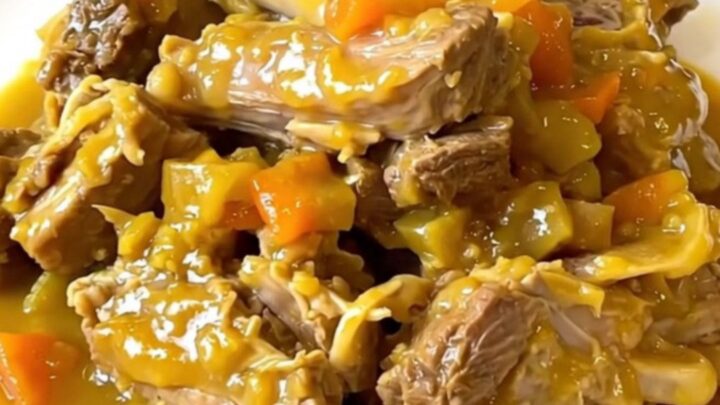
As the cooking concludes, the kitchen will be filled with the warm, savory aroma of the colombo spices. The turkey should appear cooked through and succulent, while the potatoes and zucchini should be tender.
Before serving, give the mixture a gentle stir to incorporate the spices and juices into a cohesive, flavorful sauce that coats the ingredients perfectly.
Common mistakes
A common mistake is overcrowding the slow cooker, which can prevent the ingredients from cooking evenly. Ensure you do not fill the basin more than three-quarters full.
Another error is lifting the lid too frequently, which allows heat to escape and significantly increases the cooking time. Keep the lid closed as much as possible to maintain a consistent temperature for the best results.
How to tell it’s done
The turkey is perfectly done when it is tender, easily pierced with a fork, and reaches an internal temperature of 165°F (74°C). The potatoes should be soft enough to yield easily to a knife. Always use a digital meat thermometer to verify the temperature in the thickest part of the meat to ensure it is fully cooked through.
- Poultry: 165°F (74°C) in the thickest part
Up next · Part 3 of 3
2 variations · storage & make-ahead · 3 answers · printable card
Tips, FAQ & printable recipe (Part 3)← Back to the ingredients (Part 1)