Dinner · Part 1 of 3: Ingredients
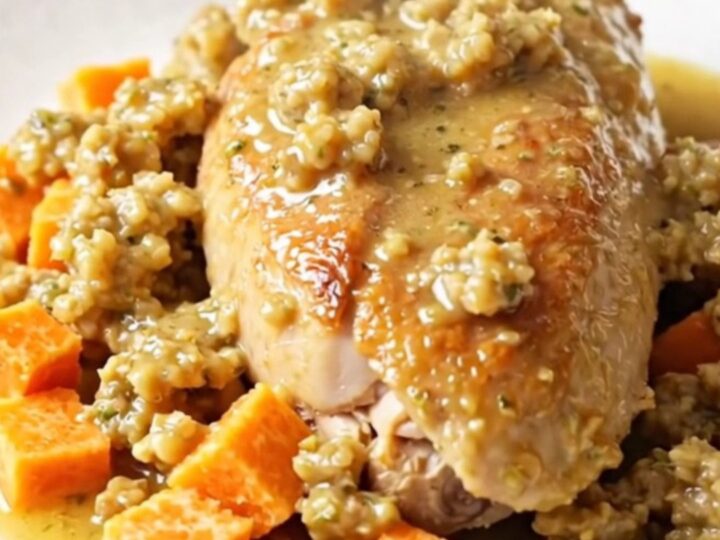
Slow Cooker Thanksgiving Chicken with Sweet Potatoes and Stuffing
- Prep
- Cook
- Total
- Serves
- 4
Simplify your holiday cooking with this foolproof slow cooker Thanksgiving dinner. By combining chicken, sweet potatoes, and savory stuffing in one appliance, you create a complete, comforting meal that frees up your oven for other holiday baking needs.
This method delivers tender, flavorful results with minimal active preparation time, making it perfect for busy days when you want a hearty, home-cooked meal without the stress of managing multiple pots and pans on the stovetop.
This slow cooker Thanksgiving chicken dish is designed for efficiency and comfort. It brings together the essential flavors of a holiday feast—savory herbs, tender poultry, and sweet, earthy potatoes—into one cohesive meal.
By using a slow cooker, the ingredients meld together as the gravy keeps the chicken succulent and the stuffing absorbs all the rich, savory juices. It is a straightforward approach to a classic meal that provides consistent, delicious results every time, ensuring that even a small-scale celebration feels special and well-prepared.
Ingredients
- 4 pieces boneless skinless chicken breasts
- 2 cups sweet potato cubes
- 2 cups dry herb stuffing cubes
- 1 cup chicken gravy
Why this recipe works
The slow cooker method works by creating a moist, enclosed environment that gently braises the chicken breasts. As the chicken cooks, it releases natural juices that combine with the gravy, creating a flavorful poaching liquid. The sweet potatoes and stuffing cubes act as sponges, soaking up these juices, which results in a balanced texture where the stuffing remains soft but substantial, and the potatoes turn tender and sweet.
Furthermore, the low and slow cooking process allows the herb seasoning from the stuffing to permeate the chicken and vegetables evenly. Because the ingredients are layered rather than mixed, the stuffing on top maintains a pleasant consistency while the bottom ingredients benefit from the concentrated heat of the slow cooker base.
This layered approach prevents the individual components from losing their structural integrity, resulting in a beautifully composed plate that looks as good as it tastes.
Notes and substitutions
For the best results, use high-quality chicken breasts that are uniform in size to ensure they cook at the same rate. The choice of stuffing mix is flexible, but a traditional herb-seasoned variety works best to complement the Thanksgiving profile.
Ensure the chicken gravy is at room temperature before pouring, as this helps maintain the internal temperature of the slow cooker once the lid is closed, leading to a more consistent cooking time throughout the process.
Equipment-wise, a standard oval slow cooker is ideal for this recipe. If you prefer a different flavor profile, you can swap the herb stuffing for a cornbread-based mix, though keep in mind that different types of bread cubes may absorb liquid at varying rates. Always verify the internal temperature of the chicken with a meat thermometer to guarantee it reaches the required safe heat level before serving, ensuring both safety and optimal texture in your final dish.
- chicken gravy: Use turkey gravy or a store-bought poultry gravy for a different flavor profile.
- sweet potato cubes: Butternut squash or yams can be used as a direct replacement for the sweet potatoes.
Equipment
- Slow cooker
- Chef's knife
- Cutting board
Up next · Part 2 of 3
3 steps · 4 h of cooking · what to look for at each stage
Step-by-step instructions (Part 2)