Dinner · Part 2 of 3: Instructions
Slow Cooker Thai-Style Peanut Pork Chops Step-by-step instructions
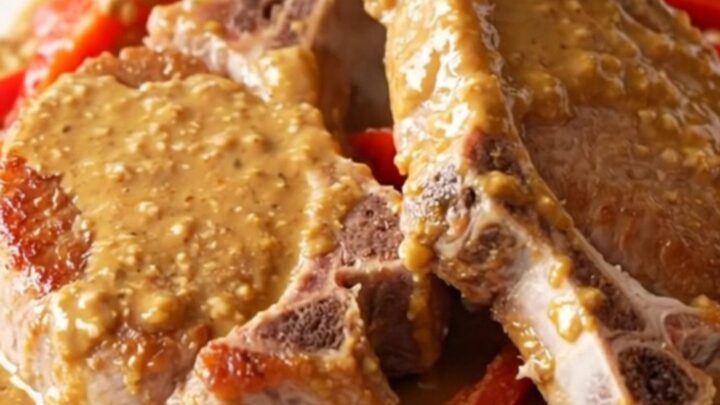
- Prep
- Cook
- Total
- Serves
- 4
Before you start
Before beginning this recipe, ensure your workspace is clean and organized. Have your slow cooker placed on a stable, heat-resistant surface near an outlet. Prepare all your ingredients: measure the peanut sauce, gather your pork chops, and ensure your bell peppers are washed and sliced into uniform strips.
Having everything ready before you start assembling the slow cooker will make the process seamless. Check that your slow cooker is plugged in and ready to be set to the low heat setting. Keeping your ingredients at room temperature for about 15-20 minutes before cooking can help with the initial heat distribution, but do not exceed 30 minutes outside the refrigerator for food safety reasons.
Ingredients at a glance (4)
- 4 pieces boneless pork chops
- 1 cup red bell pepper strips
- 1 tsp ground ginger
- 1 cup creamy peanut sauce
Instructions
Assembly Phase
- Prepare the slow cookerArrange the boneless pork chops in the bottom of the slow cooker, creating an overlapping row to ensure they cook evenly. This placement allows the sauce to coat the meat thoroughly during the braising process.Look for The pork chops should be fanned out in a single layer or slightly overlapping to fit the base of the slow cooker.Tip Ensure the slow cooker is clean and dry before placing the meat inside.
During the assembly phase, ensure the pork chops are arranged neatly in the slow cooker. The meat should be in a single layer to ensure even heat distribution. Once the peppers, ginger, and peanut sauce are added, verify that the sauce has coated the pork chops thoroughly.
At this point, the slow cooker should look organized, with the peppers and sauce layered over the pork. Double-check that you have not added any extra liquid, as the moisture from the pork and peppers will suffice during the slow cooking process.
Braising Phase
- Season and add sauceScatter the red bell pepper strips over the top of the pork. Sprinkle the ground ginger evenly across the meat and peppers. Finally, pour the thick peanut sauce over the entire assembly, ensuring the meat is well-coated.Look for The sauce should cover the pork and peppers entirely to keep the meat moist during the long cooking time.Tip Use a silicone spatula to scrape every bit of sauce from the bowl into the slow cooker.
As the dish braises, the smell of ginger and peanuts should begin to fill the kitchen. The slow cooker will be quiet, with minimal bubbling. You may see some condensation forming on the lid, which is perfectly normal. Avoid the temptation to open the lid to check on the progress, as this releases heat and moisture. By the end of this phase, the peppers should be soft and the sauce should have reduced slightly, indicating that the pork is nearing the desired level of tenderness.
Finishing Phase
- Slow cook and serveCover the slow cooker and cook on low for 4 hours until the pork is tender and cooked through. Verify that the meat reaches an internal temperature of 145°F (63°C). Let the pork rest for 3 minutes before serving.Look for The pork is done when it is fork-tender and the sauce has thickened slightly around the edges.Safe temperature 145°F (63°C) internal temperature (steaks, chops and roasts)Tip Check the temperature at the thickest part of the chop to ensure it is fully cooked.
In the final phase, the pork should be thoroughly cooked and the sauce should be thick enough to coat the back of a spoon. The meat should be easily pierced with a fork. Before serving, verify the internal temperature with a thermometer to ensure it has reached 145°F (63°C). The dish should look glossy and smell aromatic, with the ginger and peanut notes prominent. Once you confirm the temperature, turn off the slow cooker and allow the meat to rest briefly before plating.
Common mistakes
A common mistake is overcooking the pork chops by leaving them in the slow cooker for too long, which can result in a dry or stringy texture even in a moist environment. Stick to the recommended 4-hour window on the low setting. Another error is not ensuring the pork is fully covered or coated in the sauce, which can cause the top portions to dry out.
Always ensure the sauce is spread evenly. Finally, avoid lifting the lid frequently during the cooking process, as each time the lid is opened, heat escapes and the cooking time is extended, which disrupts the steady, low-heat braising environment necessary for success.
How to tell it’s done
The pork chops are perfectly done when they reach an internal temperature of 145°F (63°C). At this stage, the meat should be opaque throughout and fork-tender, meaning it pulls apart easily with gentle pressure. The peanut sauce should be thick and clinging to the meat rather than watery.
Always use a meat thermometer inserted into the thickest part of the chop to verify the temperature. After removing the pork from the slow cooker, allow it to rest for at least 3 minutes; this step is crucial as it allows the juices to redistribute, ensuring the meat remains moist and tender when sliced or served.
- Steaks, chops and roasts: 145°F (63°C) in the thickest part, then a 3-minute rest
Up next · Part 3 of 3
2 variations · storage & make-ahead · 3 answers · printable card
Tips, FAQ & printable recipe (Part 3)← Back to the ingredients (Part 1)