Dinner · Part 2 of 3: Instructions
Slow Cooker Teriyaki Sesame Baby Back Ribs Step-by-step instructions
- Prep
- Cook
- Total
- Serves
- 4
Before you start
Before you begin, ensure your slow cooker insert is clean and dry. Prepare the ingredients by chopping the green onions into uniform pieces and measuring out the teriyaki glaze.
If the ribs are in one large rack, cut them into manageable sections of two or three ribs each to facilitate easier placement and serving.
Have your garlic powder and toasted sesame seeds ready on the counter so you can assemble the dish quickly without fumbling for supplies once you start the process.
Ingredients at a glance (5)
- 2 lb baby back ribs, cut into sections
- 1/2 cup green onions, chopped
- 1 tsp garlic powder
- 1 cup teriyaki glaze
- toasted sesame seeds, for serving
Instructions
Assembling the Ribs
- Prepare the Slow CookerPlace the rib sections vertically into the slow cooker insert, ensuring they are arranged to allow even cooking throughout the process.Look for Ribs are standing upright.Tip Avoid overcrowding the cooker to ensure even heat distribution.
- Add SeasoningsScatter the chopped green onions evenly over the ribs, then sprinkle the garlic powder over the top of the meat.Look for Seasoning is evenly distributed.Tip Ensure the garlic powder covers all pieces.
The ribs should stand vertically in the slow cooker insert, packed neatly without being crushed together. Chopped green onions and garlic powder must be spread evenly over the surfaces of the meat, creating an aromatic foundation ready to receive the thick glaze before the lid goes on.
Cooking the Meat
- Glaze and CookPour the teriyaki glaze over the seasoned ribs, coating each piece thoroughly. Cover the slow cooker and cook on high for 5 hours until the meat reaches 145°F (63°C). Let the meat rest for at least 3 minutes before serving.Look for Glaze is coating the ribs.Safe temperature 145°F (63°C) internal temperature (steaks, chops and roasts)Tip Use a thick glaze for better adherence.
During the cooking phase, the kitchen will fill with a savory, sweet aroma. The ribs should be submerged enough in the glaze to stay moist, becoming increasingly tender over time.
Serving the Dish
- Finish and ServeRemove the ribs carefully from the slow cooker. Arrange them on a serving plate and sprinkle with toasted sesame seeds before serving.Look for Meat is glistening and tender.Tip Rest the meat for 5 minutes before serving.
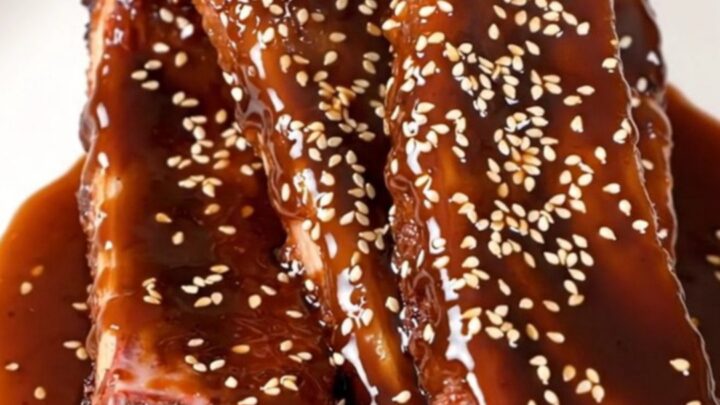
The final platter should display deeply glazed, dark amber ribs that yield tenderly at the slightest touch and pull cleanly from the bone. Toasted sesame seeds ought to cling visibly across the glistening sauce, providing an enticing contrast and a fragrant aroma right before carving and tasting.
Common mistakes
A common mistake is overcrowding the slow cooker, which prevents the heat from circulating properly and can lead to unevenly cooked meat. Another error is checking the ribs too frequently; every time you lift the lid, heat escapes and the cooking time increases significantly.
Additionally, failing to measure the glaze properly can lead to a dish that is either too dry or overly salty, so stick to the recommended amount to maintain the right balance of flavors.
How to tell it’s done
The ribs are perfectly done when the meat is extremely tender and begins to pull away from the bone with very little resistance. You can test this by gently pulling at the meat with a fork; it should separate easily.
For food safety, the internal temperature of the pork should reach at least 145°F (63°C). Always let the ribs rest for at least 5 minutes after removing them from the slow cooker to allow the juices to redistribute throughout the meat, ensuring maximum succulence.
- Steaks, chops and roasts: 145°F (63°C) in the thickest part, then a 3-minute rest
Up next · Part 3 of 3
2 variations · storage & make-ahead · 3 answers · printable card
Tips, FAQ & printable recipe (Part 3)← Back to the ingredients (Part 1)