Dinner · Part 2 of 3: Instructions
Slow Cooker Teriyaki Pineapple Pulled Pork Step-by-step instructions
- Prep
- Cook
- Total
- Serves
- 6
Before you start
Before beginning, ensure your slow cooker insert is clean and dry. Remove the pork shoulder from the refrigerator about 20 minutes before cooking to take the chill off, which helps with more even heat distribution. Have your small ramekins and pitcher ready to measure out the ginger, garlic, and teriyaki sauce.
Clear enough counter space to work comfortably, and ensure you have two sturdy forks nearby for the shredding process later on. Organizing these items beforehand makes the assembly phase quick and efficient, allowing you to get the pork into the cooker in just a few minutes.
Ingredients at a glance (5)
- 3 lb boneless pork shoulder
- 2 cups pineapple chunks
- 1 tsp ground ginger
- 1 tsp garlic powder
- 1 cup teriyaki sauce
Instructions
Assembly Phase
- Prepare the Slow CookerPlace the boneless pork shoulder into the center of the slow cooker insert. Ensure it is positioned flat for even cooking.Look for The pork sits firmly at the bottom of the cooker.Tip Remove excess fat from the pork shoulder before placing it in the cooker if desired.
The pork shoulder is placed neatly in the slow cooker, surrounded by the pineapple chunks and coated with the teriyaki sauce and spices. Everything should look ready for the long, slow heat.
There is no need for extra liquid, as the pork and pineapple will release plenty of moisture as they cook. Ensure the lid is securely in place so that the heat and steam are trapped inside, which is essential for the slow cooking process to work effectively.
Cooking Phase
- Season and Add AromaticsScatter the pineapple chunks evenly over the pork. Sprinkle the ground ginger and garlic powder over the meat and fruit, then pour the teriyaki sauce over the entire mixture to ensure it coats the meat.Look for The ingredients are layered and the sauce covers the pork.Tip Pour the sauce slowly to ensure it reaches the bottom of the insert.
During the cooking phase, the kitchen will begin to smell savory and sweet. The pork will slowly release its juices, and the pineapple will soften into the sauce. The meat should be bubbling gently. You do not need to check on it frequently; in fact, keeping the lid closed is important to maintain the internal temperature. The pork is ready for the next step once it is fork-tender, meaning it can be easily pulled apart with minimal effort.
Shredding Phase
- Cook and ShredCover the slow cooker and cook on low for 8 hours or high for 4 hours. Once the pork reaches an internal temperature of 145°F (63°C), remove it from the cooker. Shred the meat using two forks, discarding any remaining hard fat, and return it to the sauce before serving. Let the meat rest for 5 minutes before final shredding.Look for The meat pulls apart easily with a fork and is steaming hot.Safe temperature 145°F (63°C) internal temperature (steaks, chops and roasts)Tip Use two forks to pull the meat apart into bite-sized shreds.
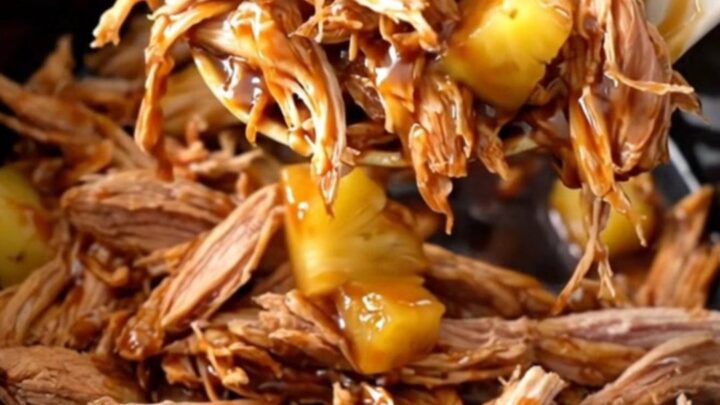
After cooking, the pork will be very hot and extremely tender. When you pull the meat apart with two forks, the strands should be moist and well-coated in the thickened teriyaki and pineapple sauce. The pineapple chunks may be partially disintegrated, which is expected and adds body to the final sauce. Once the meat is fully shredded and combined with the sauce, it is ready to be served immediately while hot and steaming.
Common mistakes
A common mistake is overcrowding the slow cooker, which can prevent the meat from cooking evenly. Always leave a little room for the juices to circulate. Another error is not allowing the meat to rest for at least 5 minutes before shredding; resting allows the juices to redistribute, resulting in much moister meat.
Additionally, ensure the pork is fully covered by the sauce if possible, or stir the mixture halfway through if your cooker model allows for it, though it is usually not strictly necessary for this recipe.
How to tell it’s done
The pork is done when it is extremely tender and shreds easily with the gentle pressure of two forks. Using a meat thermometer, ensure the thickest part of the roast has reached an internal temperature of at least 145°F (63°C).
The meat should be opaque throughout and show no signs of resistance when pulled apart. If the pork still feels firm or tough, continue cooking for another 30 to 60 minutes, as the time required can vary based on the specific shape and density of the meat cut.
- Steaks, chops and roasts: 145°F (63°C) in the thickest part, then a 3-minute rest
Up next · Part 3 of 3
2 variations · storage & make-ahead · 3 answers · printable card
Tips, FAQ & printable recipe (Part 3)← Back to the ingredients (Part 1)