Dinner · Part 2 of 3: Instructions
Slow Cooker Tangy BBQ Pork Steaks Step-by-step instructions
- Prep
- Cook
- Total
- Serves
- 4
Before you start
Before starting, ensure your slow cooker is clean and positioned on a stable, heat-resistant surface away from any edges. Take the pork steaks out of the refrigerator about 20 minutes before you are ready to assemble the dish, as this helps them cook more evenly.
Gather your BBQ sauce, brown sugar, and cider vinegar, and have a medium mixing bowl ready to combine these ingredients. Make sure you have a pair of tongs or a large spoon available for moving the steaks into the cooker. If you have extra sauce, have a silicone spatula ready to ensure no flavor is wasted.
Ingredients at a glance (4)
- 4 pieces bone-in pork shoulder steaks
- 2 cups BBQ sauce
- 1/4 cup brown sugar
- 2 tbsp cider vinegar
Instructions
Prep and Assembly
- Prepare the slow cookerPlace the bone-in pork shoulder steaks into the bottom of the slow cooker, ensuring they are arranged in a single layer for even cooking. If the slow cooker is small, you can slightly overlap them, but try to keep them flat against the base.Look for The pork steaks should be neatly arranged in the base of the slow cooker.Tip Remove excess fat from the edges of the steaks if desired to keep the final sauce less greasy.
The pork steaks should be arranged in the slow cooker in a single layer. The sauce mixture should be well-combined and ready to pour, ensuring a consistent flavor distribution across all pieces of meat.
Slow Cooking
- Combine the sauce ingredientsIn a medium bowl, whisk together the BBQ sauce, brown sugar, and cider vinegar until the sugar is fully dissolved. Pour this mixture evenly over the pork steaks in the slow cooker, making sure every piece is thoroughly coated.Look for The sauce should look glossy and well-combined before pouring.Tip Use a silicone spatula to scrape all the sauce from the bowl into the slow cooker.
During the cooking phase, the pork will begin to release its natural juices, which mix with the BBQ sauce. You should notice a fragrant aroma filling the kitchen as the sauce thickens and the pork softens.
Final Resting and Serving
- Slow cook and serveCover the slow cooker and cook on low for 8 hours or on high for 4 hours. Once the time is up, ensure the pork reaches a minimum internal temperature of 145°F (63°C). Let the meat rest for at least 3 minutes before serving with the pooled sauce from the pot.Look for The pork is done when it is fork-tender and pulls away easily from the bone.Safe temperature 145°F (63°C) internal temperature (steaks, chops and roasts)Tip Check the temperature at the thickest part of the steak, avoiding the bone.
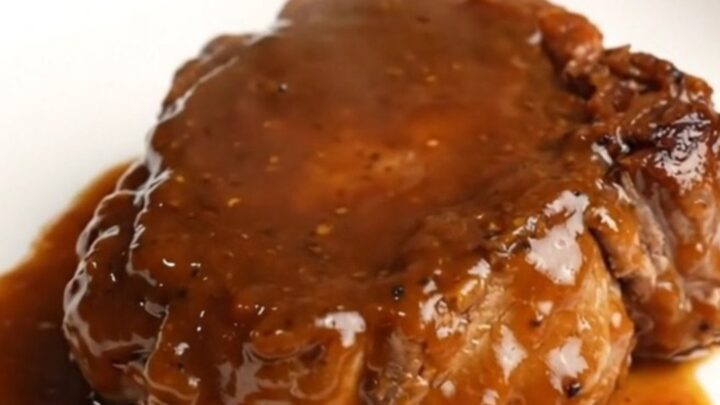
After the cooking time concludes, the pork should be dark, glazed, and extremely tender. Ensure the internal temperature is safe and allow for the mandatory resting period before plating the dish to serve.
Common mistakes
A common mistake is overcrowding the slow cooker, which can prevent the steaks from cooking evenly. Try to keep them in a single layer. Another error is checking the food too frequently; opening the lid lets out steam and heat, which increases the cooking time significantly.
Avoid using high heat if you have the time to cook on low, as the slower process is what gives the pork its signature tenderness. Finally, do not forget to taste your sauce mix before pouring it, as you may want to adjust the sugar or vinegar levels.
How to tell it’s done
The pork steaks are perfectly done when they are fork-tender, meaning they yield easily when pierced with a fork and the meat pulls away from the bone with little resistance.
Using a digital meat thermometer, verify that the internal temperature has reached at least 145°F (63°C) at the thickest part of the steak.
It is crucial to let the meat rest for at least 3 minutes after removing it from the slow cooker, which allows the juices to redistribute throughout the meat, ensuring that each bite remains moist and flavorful.
- Steaks, chops and roasts: 145°F (63°C) in the thickest part, then a 3-minute rest
Up next · Part 3 of 3
2 variations · storage & make-ahead · 3 answers · printable card
Tips, FAQ & printable recipe (Part 3)← Back to the ingredients (Part 1)