Dinner · Part 2 of 3: Instructions
Slow Cooker Spinach Lasagna Bolognese Step-by-step instructions
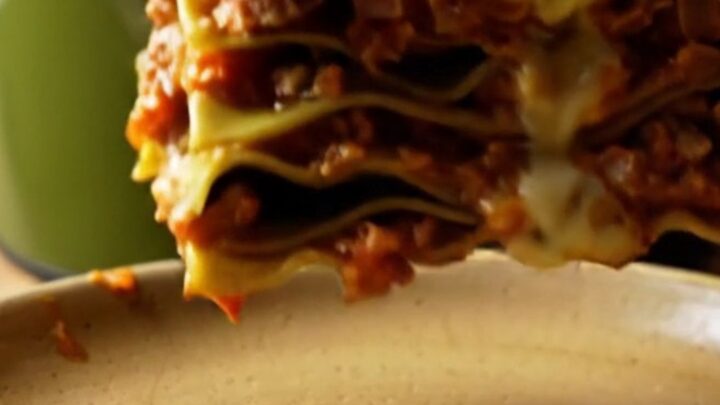
- Prep
- Cook
- Total
- Serves
- 8
Before you start
Before beginning, ensure all your components are ready. If you are preparing your own bolognese and béchamel, have them fully cooked and cooled to room temperature before starting the assembly.
This prevents the slow cooker from starting with cold ingredients, which can significantly alter the required cooking time. Have your butter softened for greasing and all cheeses grated or shredded, ready for the final topping step.
Ingredients at a glance (5)
- 2 lbs ground pork and ground beef bolognese ragu, store-bought or made ahead
- 2 cups creamy nutmeg béchamel sauce, store-bought or made ahead
- 1 lb fresh spinach lasagna sheets
- 1 cup grated parmigiano-reggiano
- 1 cup shredded fontina cheese
Instructions
Preparation and assembly
- Prepare the slow cookerGenerously butter the interior of your ceramic slow cooker to ensure the lasagna does not stick during the long cook. Keep the ragu refrigerated until the moment you are ready to assemble the layers to maintain food safety.Look for The interior should be evenly coated with a thin layer of butter.Tip Use chilled butter for easier spreading across the bottom and sides.
The slow cooker should be well-greased and the layers should be organized to ensure even distribution. Each layer of pasta must be completely covered by either the ragu or the béchamel to ensure proper hydration.
Once assembled, the ingredients should fill the cooker to about three-quarters of its capacity to allow for gentle expansion and bubbling during the cooking cycle.
Slow simmering
- Layer the ingredientsBegin by spreading a thin layer of the bolognese ragu on the bottom of the slow cooker. Follow with a layer of fresh spinach lasagna sheets, then a layer of creamy béchamel sauce. Repeat these layers until all ingredients are used, finishing with a generous coating of sauce on the final layer of pasta.Look for Ensure the pasta sheets are fully submerged or covered by the sauce to prevent drying.Tip Break the pasta sheets as needed to fit the shape of your slow cooker.
During the simmer, the aromas of the meat and nutmeg-scented béchamel will fill the kitchen. The lasagna should remain covered to maintain the internal moisture.
You can check the progress by looking through the glass lid; the edges should start to bubble, and the pasta should lose its raw appearance, becoming soft and integrated into the surrounding sauces as the cooking time concludes.
Final melting
- Slow cook and meltCover the slow cooker and set to low. Cook for 3.5 hours until the pasta is tender. Sprinkle the parmigiano-reggiano and fontina over the top, then cover again for 10 minutes until the cheese is melted, golden, and bubbly. Ensure the internal temperature of the meat sauce reaches 160°F (71°C) to confirm it is thoroughly cooked.Look for The edges should look bubbling and the top cheese layer should be melted and lightly browned.Safe temperature 160°F (71°C) internal temperature (ground meat)Tip Do not remove the lid during the first 3 hours to maintain a steady internal temperature.
The final stage involves the addition of the cheeses. Once the lasagna is fully tender, the cheese should melt into a golden, gooey layer on top. This final heating step should be brief, just enough to melt the fontina and crisp the edges of the parmigiano-reggiano without drying out the base. The dish is ready when the center is hot and the top is perfectly golden.
Common mistakes
A common mistake is overcrowding the slow cooker or failing to ensure the pasta is fully covered by the sauce. If the edges of the pasta are exposed, they will become hard and dry rather than silky.
Another error is adding too much cheese too early; the parmigiano-reggiano and fontina should only be added at the very end to prevent them from burning or becoming oily during the long simmer.
How to tell it’s done
The lasagna is finished when the pasta sheets are tender and the internal temperature of the meat ragu reaches 160°F (71°C). The top should be covered in a layer of melted, slightly browned cheese that is bubbling at the edges. Using a probe thermometer is the most reliable way to ensure the meat is fully cooked through without over-processing the tender pasta layers.
- Ground meat: 160°F (71°C) in the thickest part
Up next · Part 3 of 3
2 variations · storage & make-ahead · 3 answers · printable card
Tips, FAQ & printable recipe (Part 3)← Back to the ingredients (Part 1)