Dinner · Part 2 of 3: Instructions
Slow Cooker Sour Cream French Onion Ribeye Bites Step-by-step instructions
- Prep
- Cook
- Total
- Serves
- 4
Before you start
Before you start, cut the ribeye into 1-inch cubes if not already done. Slice the onions thinly—about 1/4-inch thick. Measure out the sour cream and have the gravy mix packet ready.
Have a 5- to 6-quart slow cooker clean and ready. You'll also want a large pot for the noodles, though that can be done later. No need to brown the beef or sauté the onions—the slow cooker handles all of that.
Ingredients at a glance (8)
- 2 lb well-marbled ribeye steak, cut into 1-inch cubes
- 2 large Vidalia onions, thinly sliced
- 1 can (10.5 oz) beef consommé
- 1 cup sour cream
- 1 oz brown gravy mix (1 packet)
- 12 oz wide egg noodles, for serving
- 2 tbsp unsalted butter, for serving
- Chopped fresh parsley, for garnish (optional)
Instructions
Layer and Set
- Layer the IngredientsPlace the cubed ribeye bites in the bottom of the slow cooker in an even layer. Scatter the sliced Vidalia onions over the top. Pour the beef consommé over the beef and onions, making sure the liquid covers the bottom of the pot.Look for The beef and onions should be nestled together in the pot, with the consommé pooling around them.Tip No need to stir—the layers will meld as they cook.
- Add the Sauce BaseDollop the sour cream over the top of the beef and onions using a spoon. Sprinkle the brown gravy mix evenly over the surface. Do not stir; let the ingredients sit as they are.Look for The sour cream and gravy mix will look like a patchwork on top—that's fine.Tip Stirring now can make the sauce gritty; leave it be.
- Cover and Cook LowPlace the lid on the slow cooker and set it to low. Cook for 6 to 8 hours, until the beef is fork-tender and the onions are deeply caramelized. The sauce will darken and become velvety as the sour cream melds with the consommé and gravy mix. Let it rest for 3 minutes before slicing.Look for The aroma will fill the kitchen, and the sauce will be bubbling gently around the edges.Safe temperature 145°F (63°C) internal temperature (steaks, chops and roasts)Tip Resist lifting the lid—each peek adds 20 minutes to the cooking time.
At this point, the slow cooker contains raw beef, sliced onions, consommé, sour cream, and gravy mix in distinct layers. The consommé should cover the bottom of the pot, and the sour cream and gravy mix sit on top.
The beef is still raw, so the temperature is not yet safe. The scene is tidy and promising, with the ingredients waiting to transform.
Cook Low and Slow
- Cook the NoodlesAbout 15 minutes before the beef is done, bring a large pot of salted water to a boil. Add the egg noodles and cook according to package directions until al dente. Drain well and toss with the butter until melted.Look for The noodles should be tender but still have a slight bite.Tip Butter the noodles while they're hot so they don't stick together.
- Check the Beef TemperatureUsing an instant-read thermometer, check the internal temperature of a few beef cubes. The beef should register at least 145°F (63°C). If it hasn't reached that temperature, continue cooking for another 30 minutes and check again. Let it rest for 3 minutes before slicing.Look for The beef should be easily pierced with a fork, and the thermometer reads 145°F (63°C) or higher.Safe temperature 145°F (63°C) internal temperature (steaks, chops and roasts)Tip For extra-tender bites, cook to 160°F (71°C) if desired—the slow cooker will keep them moist.
- Rest the BeefOnce the beef reaches the safe temperature, turn off the slow cooker and let the beef rest in the warm sauce for at least 3 minutes. This allows the juices to redistribute, keeping the meat moist and tender.Look for The sauce will settle, and the beef will look glossy.Tip Resting is short but essential for the best texture.
After several hours, the slow cooker is bubbling gently around the edges. The onions have turned translucent and are beginning to caramelize, and the sauce has darkened to a rich mahogany. The beef is tender and easily pierced with a fork. The kitchen smells deeply savory and slightly sweet. The beef should be at 145°F (63°C) before moving on.
Finish and Serve
- Serve Over NoodlesDivide the buttered noodles among serving plates. Using a slotted spoon, pile the ribeye bites and onions over the noodles. Ladle the rich sour cream gravy over the top, letting it soak into the noodles.Look for The beef should be glistening, and the gravy should coat the back of a spoon.Tip For a prettier plate, spoon the gravy over the beef rather than mixing everything together.
- Garnish and FinishSprinkle chopped fresh parsley over each serving if desired. Serve immediately while hot, with extra gravy on the side if you like.Look for The parsley adds a fresh green contrast to the rich, dark gravy.Tip A final crack of black pepper is a nice touch.
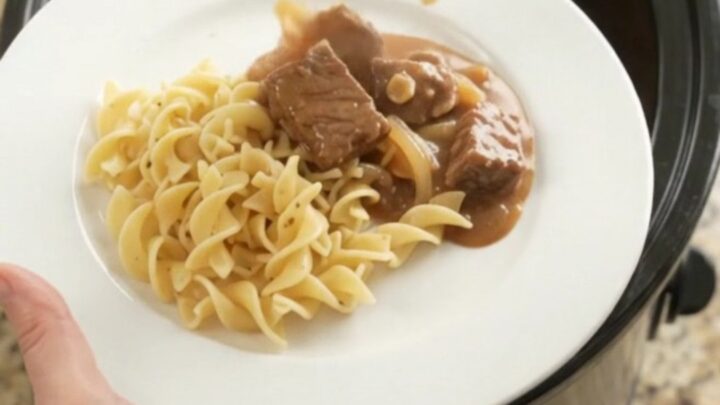
The finished dish is a glossy, bubbling pot of beef and onions in a velvety, dark gravy. The beef cubes are plump and tender, the onions are silky and sweet, and the sauce clings to a spoon. When served over buttered noodles, it's a hearty, comforting plate that looks and smells incredible.
Common mistakes
One common mistake is lifting the lid during cooking, which lets out heat and extends the cooking time. Another is stirring the ingredients at the start, which can cause the sour cream to separate and make the sauce grainy.
Also, don't use a lean cut like sirloin—it can dry out. Finally, resist the urge to add extra liquid; the consommé and the juices from the beef and onions are enough.
How to tell it’s done
The dish is done when the beef is fork-tender and easily pierced with no resistance. The onions should be soft and caramelized, and the sauce should be thick enough to coat the back of a spoon.
If you prefer a thicker sauce, remove the beef and onions and simmer the sauce on high with the lid off for 15–20 minutes. Always check that the beef has reached an internal temperature of at least 145°F (63°C) with an instant-read thermometer before serving.
- Steaks, chops and roasts: 145°F (63°C) in the thickest part, then a 3-minute rest
Up next · Part 3 of 3
4 variations · storage & make-ahead · 5 answers · printable card
Tips, FAQ & printable recipe (Part 3)← Back to the ingredients (Part 1)