Dinner · Part 1 of 3: Ingredients
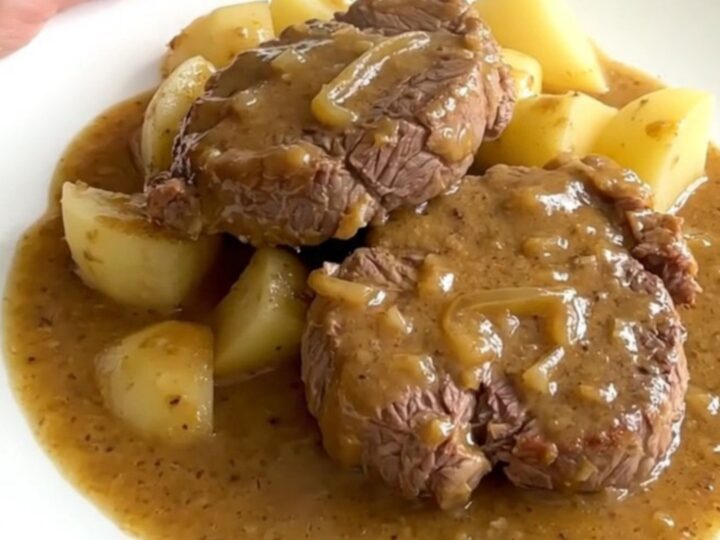
Slow Cooker Smothered Round Steak and Potatoes
- Prep
- Cook
- Total
- Serves
- 4
Transform tough cuts of beef into a fork-tender meal with minimal effort using this reliable slow cooker method that delivers deep, savory flavor in every bite. This recipe is designed for those who appreciate the convenience of modern kitchen appliances while still craving the deep, slow-cooked flavors that define classic comfort food.
By utilizing the gentle, consistent heat of a slow cooker, you can achieve professional-level results at home, ensuring that even the most economical cuts of meat become succulent, flavorful, and incredibly satisfying for the entire family to enjoy.
This slow cooker smothered round steak and potatoes recipe is the perfect solution for busy weeknights when a comforting, hearty meal is desired without spending hours in the kitchen. By combining simple pantry staples like canned onion soup with fresh potatoes and onions, the slow cooker works its magic to break down the connective tissue in the round steak, resulting in incredibly tender meat and a rich, flavorful gravy.
This recipe relies on the slow, low-heat environment to marry the flavors together, ensuring that each ingredient is seasoned perfectly throughout the long cooking time. It is a foolproof method that guarantees a delicious outcome every single time you prepare it.
Ingredients
Main Ingredients
- 2 lbs round steak, cut into palm-sized pieces
- 4 cups potatoes, cut into chunks
- 2 cups onions, sliced
Seasoning
- 1 tsp black pepper
- 1 tsp garlic powder
Sauce
- 1 can (10.5 oz) canned onion soup
Why this recipe works
The slow cooker environment is ideal for cooking tougher cuts of meat like round steak. Over several hours, the low heat gently breaks down the muscle fibers and connective tissue, transforming a potentially chewy cut into a tender, succulent protein that practically falls apart with a fork.
This process is essential for achieving the perfect texture that defines a classic smothered steak dish, allowing the meat to absorb all the savory notes from the surrounding ingredients while remaining perfectly moist and tender throughout the entire cooking duration.
By layering the ingredients and adding the liquid last, the flavors of the onion soup and seasonings permeate the potatoes and meat as they steam. This method ensures the potatoes absorb the savory onion juices while the meat remains moist throughout the entire eight-hour cooking process. The natural juices released by the onions and the potatoes combine with the soup to create a rich, velvety gravy that coats every bite, providing a depth of flavor that is difficult to replicate with faster cooking methods or higher heat settings.
Notes and substitutions
Round steak is a lean, flavorful cut that benefits significantly from braising or slow cooking. If round steak is unavailable, a chuck roast cut into similar-sized pieces serves as an excellent alternative, offering similar results due to its higher fat content and collagen structure.
Always choose a piece of meat that is well-trimmed to ensure the best texture, as the slow cooking process will soften the meat but will not break down large, tough gristle or excessive fat deposits, so some minor trimming before you begin is highly recommended.
For the best results, use a standard 6-quart slow cooker. The size allows for even heat distribution across the ingredients. Ensure all vegetables are cut to a uniform size to promote even cooking, preventing some pieces from becoming mushy while others remain undercooked. If your slow cooker runs hot, you may want to check the progress after seven hours to ensure the potatoes have reached the desired level of tenderness without breaking down too much into the sauce, which can happen if the cooking time is extended beyond the necessary point.
- round steak: chuck roast cut into similar sized portions
- canned onion soup: beef broth mixed with a tablespoon of onion soup mix
Equipment
- Slow cooker
- Knife
- Cutting board
- Measuring spoons
Up next · Part 2 of 3
3 steps · 8 h of cooking · what to look for at each stage
Step-by-step instructions (Part 2)