Dinner · Part 2 of 3: Instructions
Slow Cooker Smoky Raspberry Pork Tenderloin Step-by-step instructions
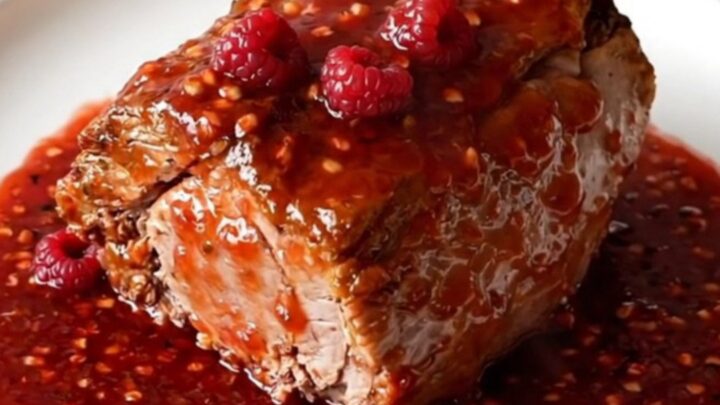
- Prep
- Cook
- Total
- Serves
- 4
Before you start
Before beginning, gather all ingredients and ensure the slow cooker is clean and positioned on a level, heat-resistant surface. Trim any excess fat or silver skin from the pork tenderloin to ensure even cooking.
Prepare the sauce in a small bowl first so that everything is ready to be added to the slow cooker immediately. Having your ingredients prepped and ready will make the assembly process seamless, allowing you to start the slow-cooking process without unnecessary delays or disruptions in your kitchen workflow.
Ingredients at a glance (4)
- 2 lbs pork tenderloin
- 1 cup raspberry jam
- 2 tbsp adobo peppers, minced
- 2 tbsp vinegar
Instructions
Sauce Preparation
- Prepare the sauceIn a medium bowl, combine the raspberry jam, minced adobo peppers, and vinegar. Whisk the mixture thoroughly until the ingredients are fully incorporated into a smooth, uniform sauce base.Look for The sauce should appear glossy and well-blended without any large clumps of jam remaining.Tip Ensure the adobo peppers are finely minced to distribute the smoky flavor evenly throughout the sauce.
The sauce should be thoroughly mixed, with the raspberry jam completely broken down and combined with the vinegar and peppers. It should have a vibrant, deep red color and a consistent, pourable texture. Check that there are no large clumps of jam remaining, as this ensures the glaze will distribute evenly over the pork once added to the slow cooker, creating a uniform flavor profile across the entire surface of the tenderloin.
Slow Cooking
- Slow cook the porkPlace the pork tenderloins into the bowl of the slow cooker. Pour the prepared raspberry pepper sauce over the meat, ensuring each piece is evenly coated. Cover the slow cooker and cook on low for 4 hours until the pork reaches an internal temperature of 145°F (63°C). Let the meat rest for at least 3 minutes before serving.Look for The pork should be opaque throughout and easily pierced with a fork when tender.Safe temperature 145°F (63°C) internal temperature (steaks, chops and roasts)Tip Avoid lifting the lid frequently, as this releases heat and increases the required cooking time.
At the end of the cooking phase, the pork should be fully opaque and tender. The sauce should have thickened slightly from the juices released by the meat, creating a rich, glossy coating. You can test for readiness by gently pressing the meat with a fork; it should offer very little resistance. Ensure the internal temperature has reached the safe threshold of 145°F (63°C) before proceeding to the final resting stage of the cooking process.
Resting and Serving
- Rest and serveRemove the pork tenderloin from the slow cooker and transfer it to a cutting board. Let the meat rest for at least 5 minutes before slicing. Spoon the warm sauce from the slow cooker over the sliced pork before serving.Look for The sauce should have thickened slightly and the meat should be succulent and moist.Safe temperature 145°F (63°C) internal temperature (steaks, chops and roasts)Tip Resting the meat is crucial for keeping the juices inside the tenderloin for the best texture.
After resting, the pork should have retained its moisture, and the sauce should cling beautifully to the sliced pieces. The meat should be easy to carve into clean, uniform slices.
Verify that the sauce has pooled slightly around the meat on the serving plate, indicating a perfect consistency. The aroma should be a pleasant balance of smoky, sweet, and tangy, signaling that the dish is ready for immediate service to ensure the best possible eating experience.
Common mistakes
A common mistake is overcooking the pork tenderloin, which can lead to a dry, stringy texture even in a slow cooker. Avoid cooking for longer than necessary, and always use a thermometer to check for doneness rather than relying solely on the clock.
Another mistake is failing to let the meat rest; cutting the pork immediately after removing it from the heat source causes the flavorful juices to leak out onto the cutting board, resulting in less moist and less tasty meat.
How to tell it’s done
The pork is done when it reaches an internal temperature of 145°F (63°C) as measured by an instant-read thermometer inserted into the thickest part of the meat. The exterior should be coated in a glossy, reduced sauce, and the meat should feel firm but yielding to the touch.
Always allow the meat to rest for at least 5 minutes before carving to ensure the juices redistribute throughout the fibers, resulting in the most tender and flavorful slices possible for serving.
- Steaks, chops and roasts: 145°F (63°C) in the thickest part, then a 3-minute rest
Up next · Part 3 of 3
2 variations · storage & make-ahead · 3 answers · printable card
Tips, FAQ & printable recipe (Part 3)← Back to the ingredients (Part 1)