Dinner · Part 2 of 3: Instructions
Slow-Cooker Scottish Smoked Haddock Chowder Step-by-step instructions
- Prep
- Cook
- Total
- Serves
- 4
Before you start
Before you begin, ensure all your vegetables are properly prepared. Peel and dice the Yukon gold potatoes into uniform, bite-sized cubes to ensure they cook at the same rate.
Thoroughly wash the leeks to remove any hidden grit between the layers, then slice them into thin rounds.
Have your smoked haddock ready to go, and ensure your heavy cream is at room temperature to prevent it from curdling when added to the hot soup base.
Ingredients at a glance (10)
- 3 cups Yukon gold potatoes, peeled and diced
- 3 leeks, sliced
- 1 sweet onion, diced
- 3 tbsp salted butter
- 1 bay leaf
- 3 cups fish or vegetable stock
- 1.5 lbs oak-smoked haddock fillets, undyed
- 1.5 cups heavy cream
- snipped chives, for serving
- crusty oat bread, for serving
Instructions
Layering the base
- Assemble the basePlace the peeled and diced Yukon gold potatoes, sliced leeks, diced sweet onion, salted butter, and bay leaf into the slow cooker. Pour in the fish or vegetable stock. Ensure all ingredients are distributed evenly to allow the flavors to meld perfectly during the long, gentle cooking process.Look for The vegetables are fully submerged in the stock.Tip Slice leeks thinly to ensure they soften completely.
The slow cooker should be filled with the layered vegetables and stock, with the bay leaf tucked in for aromatic infusion. Everything should look neat and organized, ready to start the slow, gentle simmering process that will meld the flavors.
Simmering and thickening
- Slow cook and mashCover the slow cooker and cook on LOW for four hours. Once the time has elapsed, remove the lid and use a potato masher to gently crush about half of the potatoes directly in the pot. This technique releases the natural starches from the potatoes, which thickens the chowder naturally without needing flour or cornstarch.Look for Potatoes should be tender enough to mash with minimal effort.Tip Mashing half the potatoes creates a perfect balance of creamy texture and chunky bites.
After four hours on low heat, the vegetables should be soft and fragrant. The broth will have taken on a golden, savory appearance, and the mashing step will have successfully transformed the liquid into a slightly thicker, more substantial base.
Poaching and serving
- Poach fish and finishAdd the undyed oak-smoked haddock fillets on top of the potato mixture and pour in the heavy cream. Cover and continue cooking for 25 minutes, or until the fish is opaque and flakes easily with a fork, reaching an internal temperature of at least 145°F (63°C). Stir in the snipped chives and serve with crusty oat bread.Look for The fish turns opaque and flakes easily when tested with a fork.Safe temperature 145°F (63°C) internal temperature (fish)Tip Be gentle when stirring so the fish chunks remain large and impressive.
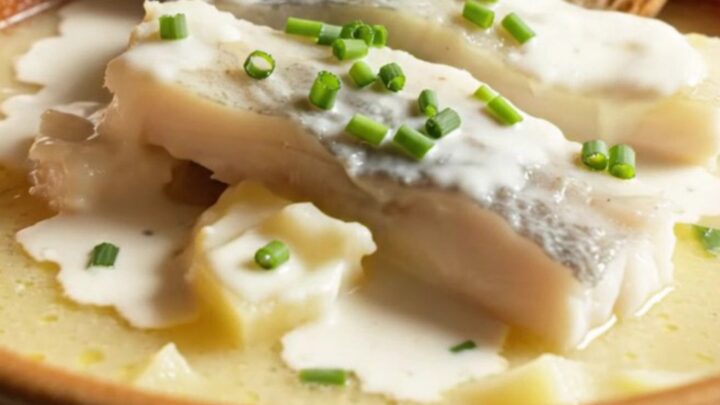
The addition of the haddock and cream creates a beautiful, creamy white swirl. The fish should be tender and perfectly poached, and the final dish should smell rich, smoky, and inviting, ready to be ladled into bowls and garnished.
Common mistakes
A common mistake is over-mashing the potatoes, which can turn the soup into a thick puree rather than a chunky, rustic chowder. Be careful to only mash about half of the potatoes to preserve some texture.
Another error is adding the fish too early; the haddock is delicate and only requires a short poaching time in the cream. Overcooking the fish will cause it to disintegrate completely and lose its pleasant, flaky texture.
How to tell it’s done
The chowder is ready when the potatoes are fork-tender and have thickened the broth through the mashing process. The haddock is fully cooked when it reaches an internal temperature of at least 145°F (63°C).
At this point, the fish should be completely opaque and flake easily into distinct, large pieces when touched with a fork, indicating it has been perfectly poached in the cream.
- Fish: 145°F (63°C) in the thickest part
Up next · Part 3 of 3
2 variations · storage & make-ahead · 3 answers · printable card
Tips, FAQ & printable recipe (Part 3)← Back to the ingredients (Part 1)