Dinner · Part 2 of 3: Instructions
Slow Cooker Salted Pork with Cabbage and Carrots Step-by-step instructions
- Prep
- Cook
- Total
- Serves
- 6
Before you start
Before starting, ensure your slow cooker is clean and placed on a stable, heat-resistant surface. Prepare the vegetables by washing them thoroughly; trim the cabbage and cut it into thick, sturdy wedges, and peel the carrots before slicing them in half.
If you are using a large piece of salted pork, ensure it fits comfortably within the vessel. Having all ingredients measured and ready to assemble will make the process seamless and stress-free.
Ingredients at a glance (5)
- 3 lb salted pork shoulder
- 1 head green cabbage, cut into wedges
- 4 large carrots, halved
- 1 tbsp whole black peppercorns
- 2 cups water
Instructions
Assembly of ingredients
- Prepare the slow cooker ingredientsPlace the raw salted pork shoulder into the base of the slow cooker. Arrange the cabbage wedges and halved carrots neatly around the meat. Scatter the whole black peppercorns over the top of the ingredients to distribute the seasoning evenly throughout the pot.Look for The pork should sit firmly at the bottom with vegetables surrounding it.Tip Ensure the cabbage wedges are cut into similar sizes so they cook at a consistent rate.
At this stage, the slow cooker should be filled with the raw components. The pork is positioned at the base, surrounded by the cabbage and carrots, with the peppercorns scattered on top. Everything is raw and neatly arranged, ready to begin the transformation process. Ensure the lid is clean and ready to provide a tight seal, which is crucial for retaining the moisture and heat necessary for the long cooking time ahead.
Slow cooking process
- Add liquid and cookPour the water into the slow cooker. Cover with the lid and set to cook on low for 8 hours or high for 4 hours. The slow, moist heat is essential for breaking down the connective tissue in the pork shoulder, ensuring the final result is tender enough to slice.Look for The liquid should partially submerge the vegetables and pork.Tip Do not lift the lid during the cooking process to maintain a consistent internal temperature.
During the cooking phase, the kitchen will begin to fill with the savory aroma of the pork and vegetables. The liquid at the bottom of the pot will gradually increase as the vegetables release their water.
By the end of this phase, the meat should look significantly paler and more tender. You can gently check the progress by lifting the lid briefly to ensure the liquid level is sufficient and the vegetables are softening properly.
Final preparation and serving
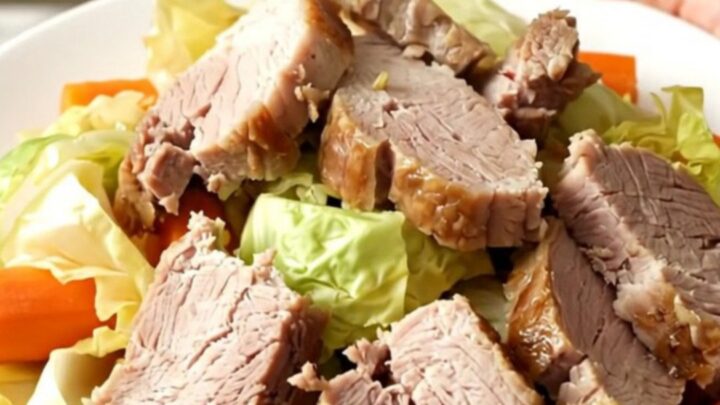
- Final check and servingCarefully remove the pork and ensure it has reached an internal temperature of at least 145°F (63°C). Let the pork rest for 10 minutes before slicing. Verify that the cabbage is tender and the carrots are soft enough to pierce easily with a fork before serving.Look for The pork should be tender and easily sliced with a knife.Safe temperature 145°F (63°C) internal temperature (steaks, chops and roasts)Tip Use a meat thermometer to check the thickest part of the pork for accuracy.
The final stage involves verifying that the pork has reached the safe internal temperature of 145°F (63°C). The meat should be tender and the vegetables fully cooked through with a soft, buttery texture. The broth should be rich and flavorful. Once the resting time is complete, the dish is ready to be sliced and served immediately while hot, ensuring the best possible texture and flavor for every portion plated.
Common mistakes
A common mistake is adding too much water; only use enough to create a small amount of braising liquid, as the vegetables and pork will release their own moisture during the long cooking cycle. Another error is overloading the slow cooker, which prevents even heat distribution.
Ensure there is enough space for steam to circulate around the ingredients. Finally, always allow the pork to rest for at least 10 minutes before slicing to ensure the juices redistribute, keeping the meat moist.
How to tell it’s done
The pork is perfectly done when it reaches an internal temperature of 145°F (63°C) and can be easily pulled apart with a fork. The texture should be soft and succulent, not tough or chewy.
The carrots should be tender but still hold their shape, and the cabbage should be soft and translucent. If the meat offers resistance when pierced, continue cooking for an additional 30 minutes, as the connective tissue needs more time to break down.
- Steaks, chops and roasts: 145°F (63°C) in the thickest part, then a 3-minute rest
Up next · Part 3 of 3
2 variations · storage & make-ahead · 3 answers · printable card
Tips, FAQ & printable recipe (Part 3)← Back to the ingredients (Part 1)