Dinner · Part 2 of 3: Instructions
Slow Cooker Salmon and Leek Lasagna Step-by-step instructions
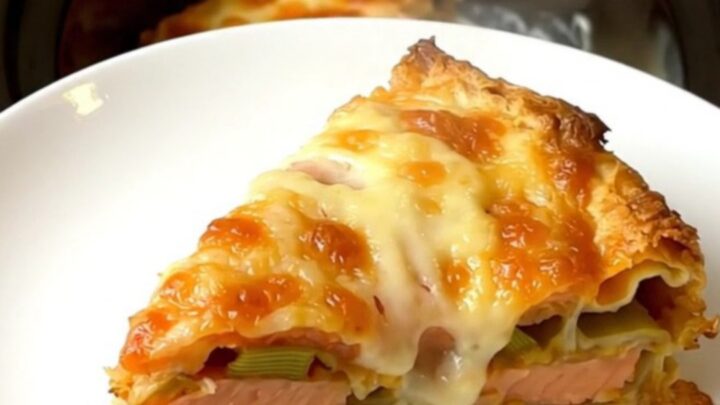
- Prep
- Cook
- Total
- Serves
- 4
Before you start
Before beginning, ensure all ingredients are ready for assembly. Wash the leeks thoroughly to remove any grit trapped between the layers, then slice them into thin, even rounds. Cut the salmon into consistent strips to ensure they cook at the same rate.
If you are making the béchamel sauce from scratch, ensure it has cooled to room temperature, as a very hot sauce can cause the cheese to separate prematurely. Have your slow cooker clean and placed on a flat, heat-resistant surface near a power outlet, ensuring the cord is clear of any water or obstructions.
Ingredients at a glance (5)
- 1 lb salmon fillets, cut into strips
- 2 cups leeks, thinly sliced
- 1 cup emmental cheese, shredded
- 2 cups béchamel sauce, store-bought or made ahead
- 8 ounces no-boil lasagna noodles
Instructions
Preparation and Layering
- Layering the BasePlace a layer of no-boil lasagna noodles at the bottom of the slow cooker. Arrange the salmon strips evenly over the noodles, then scatter the thinly sliced leeks on top of the fish.Look for Ensure the salmon strips are distributed in a single layer for even cooking.Tip Slice leeks thinly to ensure they soften completely during the slow cooking process.
At the end of this phase, the slow cooker should be neatly layered with noodles, salmon, leeks, and cheese. The ingredients should be distributed evenly to ensure that the heat circulates correctly.
Check that the salmon strips are not overlapping too heavily, as this could prevent even cooking. The assembly should look organized, with the final layer of sauce providing a smooth, uniform surface ready for the slow-cooking process to begin.
Sauce and Cheese Incorporation
- Adding Sauce and CheeseSprinkle a generous portion of the shredded emmental cheese over the leeks. Pour the béchamel sauce evenly over the top, ensuring that all noodles are covered to allow them to rehydrate and cook properly in the sauce.Look for The sauce should cover the edges of the noodles to prevent them from becoming crunchy.Tip Use a spatula to spread the béchamel into the corners of the slow cooker.
The slow cooker should now be fully assembled, with the béchamel sauce covering the top layer of noodles. The cheese should be visible through the sauce, and the entire mixture should appear moist. Ensure the edges of the noodles are tucked in or covered by the sauce to prevent them from drying out. The slow cooker is now ready to be covered, signaling the start of the three-hour cooking phase where the flavors will meld together.
Slow Cooking and Resting
- Slow Cooking and FinishingCover the slow cooker and cook on low for 3 hours. Once finished, ensure the salmon has reached an internal temperature of 145°F (63°C). Allow the lasagna to rest for 10 minutes before serving to let the layers set.Look for The edges should be bubbling and the pasta tender when pierced with a fork.Safe temperature 145°F (63°C) internal temperature (fish)Tip Letting the lasagna rest is essential for clean slices.
After the three-hour cook, the kitchen should smell savory and fresh, with the salmon and leeks having released their aromas. The lasagna will be bubbling, and the sauce will have thickened slightly. After the ten-minute rest, the lasagna should appear set and firm enough to be sliced into clean, steaming portions. The salmon should be perfectly flaky and the noodles tender, indicating the dish is ready to be served immediately.
Common mistakes
Avoid overloading the slow cooker, as this can lead to uneven cooking and soggy noodles. Ensure that every piece of pasta is covered with enough béchamel sauce, as any exposed edges will become hard and dry during the long cooking time.
Do not lift the lid repeatedly during the cooking process, as this releases essential heat and steam, significantly increasing the total cook time. Finally, do not rush the resting period; cutting into the lasagna too soon will cause the layers to collapse, resulting in a messy presentation rather than defined, beautiful slices.
How to tell it’s done
The lasagna is finished when the noodles are tender throughout and the salmon is cooked to an internal temperature of 145°F (63°C). You can check this by inserting an instant-read thermometer into the thickest part of the salmon.
The edges of the lasagna should be bubbling, and the cheese on top should be melted and lightly golden. If the center still feels slightly firm, cover and cook for an additional fifteen minutes. Always allow the dish to rest for at least ten minutes before slicing to ensure the layers hold together.
- Fish: 145°F (63°C) in the thickest part
Up next · Part 3 of 3
2 variations · storage & make-ahead · 3 answers · printable card
Tips, FAQ & printable recipe (Part 3)← Back to the ingredients (Part 1)