Dinner · Part 2 of 3: Instructions
Slow Cooker Saint-Nectaire Tartiflette Step-by-step instructions
- Prep
- Cook
- Total
- Serves
- 4
Before you start
Before beginning, ensure that your potatoes are peeled and sliced to an even thickness of about 1/8 inch. This uniformity is critical for achieving a consistent texture throughout the dish.
Prepare your bacon by cutting it into small, uniform lardons, and ensure your Saint-Nectaire cheese is at room temperature for about 30 minutes before you start.
Clear a space on your counter and ensure your slow cooker is plugged in and ready for assembly. Proper preparation allows the ingredients to meld effectively once the heat is applied, leading to a superior final result.
Ingredients at a glance (4)
- 8 oz smoked bacon lardons
- 1.5 lb potatoes, peeled and thinly sliced
- ground black pepper, to taste
- 1 whole Saint-Nectaire cheese, halved
Instructions
Assembly of the base
- Layering the basePlace the smoked bacon lardons into the bottom of the slow cooker insert. Ensure they are spread out evenly to allow the fat to render properly during the cooking process.Look for The bacon should form a single layer at the bottom of the slow cooker insert.Tip Using cold bacon helps the fat render slowly as the slow cooker heats up.
The bacon lardons should be evenly distributed at the bottom of the slow cooker. This layer is the foundation of the dish, providing the essential fat and smoky profile that will season the potatoes as they steam. Ensure the bacon is in direct contact with the bottom of the ceramic insert for optimal rendering.
Layering the potatoes
- Adding potatoes and seasoningLayer the thinly sliced potatoes over the bacon. Sprinkle generously with freshly ground black pepper to provide a subtle heat that cuts through the richness of the cheese.Look for Potatoes should be sliced about 1/8 inch thick for even cooking.Tip Uniform potato slices ensure that everything cooks at the same rate.
The potatoes should be neatly arranged over the bacon, creating a solid bed that allows for even heat distribution. The black pepper should be visible on the surface. At this stage, the ingredients are ready for the final addition of cheese, ensuring that the flavors will be balanced once the cooking process begins.
Melting the cheese
- Finishing and cookingPlace the halved Saint-Nectaire cheese rind-side up on top of the potatoes. Cover and cook on high for 4 hours until the internal temperature of the bacon reaches 160°F (71°C) and the cheese is completely melted and bubbly.Look for The cheese should be melted into the potatoes, creating a creamy sauce.Safe temperature 160°F (71°C) internal temperature (ground meat)Tip Avoid lifting the lid during the last hour to maintain consistent heat.
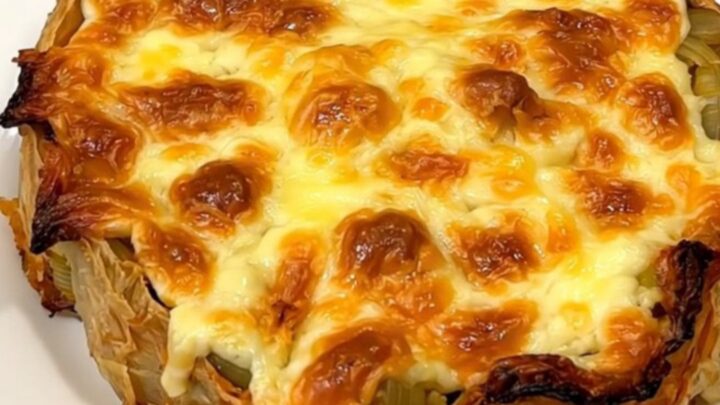
The cheese should be positioned rind-up on top, ready to melt down into the potato and bacon layers. Once the cooking is complete, the cheese should have transformed into a creamy, golden layer that covers the potatoes. Check that the sauce is thick and glossy, indicating that the fats have emulsified properly.
Common mistakes
A common mistake is slicing the potatoes too thickly, which prevents them from cooking through at the same rate as the bacon. Another error is using a cheese that does not melt well; always choose a high-fat, washed-rind variety for the authentic texture.
Additionally, avoid overcrowding the slow cooker, as this can lead to uneven cooking. Finally, ensure you do not skip the resting period, as this is vital for the sauce to reach the perfect consistency before serving to your guests.
How to tell it’s done
The tartiflette is ready when the potatoes are fork-tender and the cheese has completely melted into a smooth, thick sauce that coats the potatoes. The bacon should be fully cooked, reaching an internal temperature of at least 160°F (71°C).
The edges of the dish may show slight browning, and the aroma should be rich and savory. Allow the dish to rest for 5 minutes before serving so the sauce can settle and thicken slightly, making it easier to portion onto plates.
- Ground meat: 160°F (71°C) in the thickest part
Up next · Part 3 of 3
2 variations · storage & make-ahead · 3 answers · printable card
Tips, FAQ & printable recipe (Part 3)← Back to the ingredients (Part 1)